Stay connected with BizTech Community—follow us on Instagram and Facebook for the latest news and reviews delivered straight to you.
When Donald Trump tore up the Joint Comprehensive Plan of Action in 2018, his administration promised a new era of “maximum pressure” that would bring Tehran to its knees. Seven years on, the ledger reads rather differently.
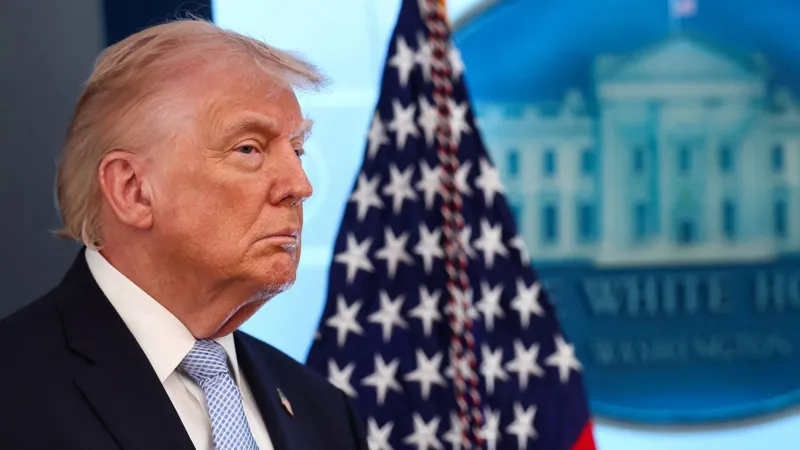
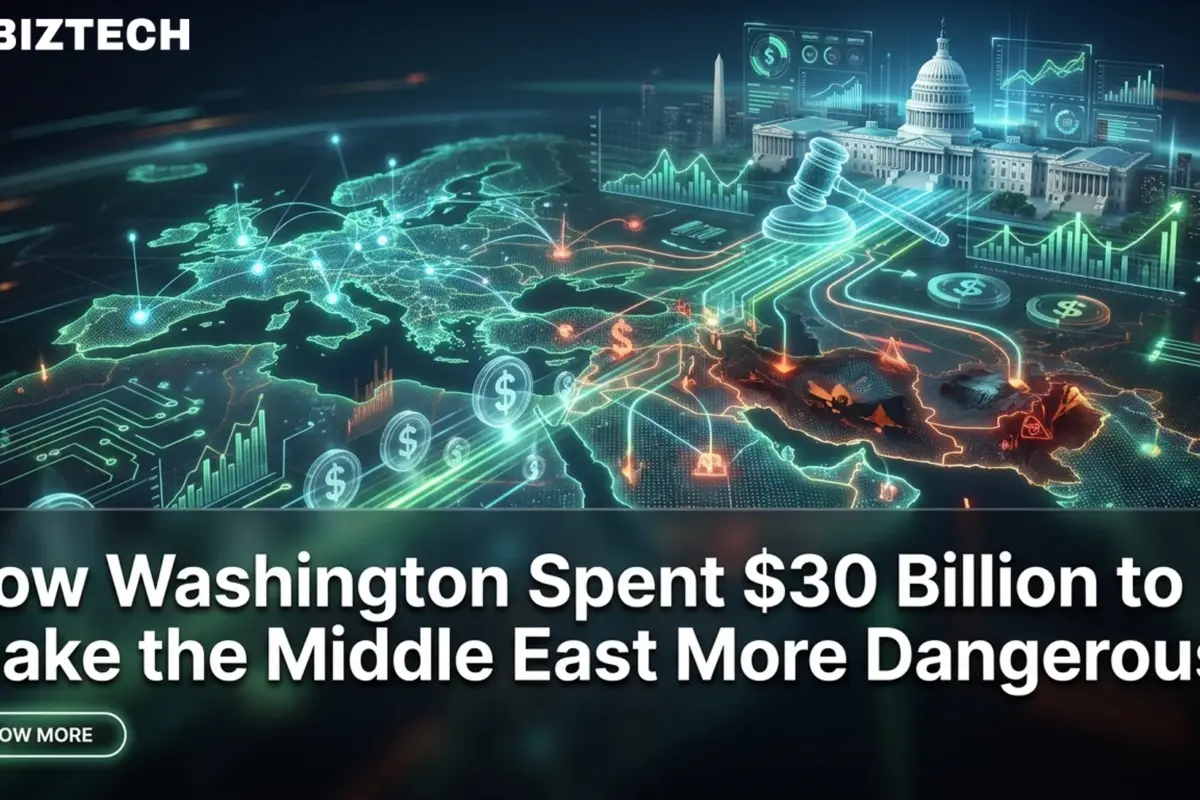
The United States has spent an estimated $30 billion on its Iran policy since the JCPOA’s collapse — in deployments, sanctions enforcement, regional force posturing, and proxy engagements. What it purchased, by most strategic assessments, was a more entrenched adversary, a fractured alliance system, and a Middle East measurably less stable than the one the policy was designed to fix.
A Choke Point Transformed
The Strait of Hormuz, through which nearly a fifth of the world’s oil passes, was never a tranquil waterway. But the collapse of diplomatic engagement converted a contested maritime corridor into something approaching a permanent low-grade conflict zone. American naval assets remain locked in an attritional staring match with Iranian Revolutionary Guard vessels and proxy networks — a posture that strains resources without delivering resolution.
The Nuclear Paradox
Perhaps the most consequential unintended consequence of Washington’s Iran policy is the signal it broadcast to every mid-tier power with regional ambitions. By abandoning a functioning — if imperfect — arms control agreement, the United States effectively demonstrated that diplomacy offers no durable security guarantees.
Iran’s subsequent acceleration of its nuclear program, including uranium enrichment well beyond JCPOA thresholds, has reinforced a lesson several governments were already internalising: the only credible deterrent, in a world where Washington tears up agreements, may be a nuclear weapon itself. Proliferation analysts are watching several capitals carefully.
The Unification Effect
Before 2018, Iranian domestic politics reflected genuine tension between reformist factions who believed engagement with the West remained possible and hardliners who had long argued otherwise. Maximum pressure settled that argument — in the hardliners’ favour. Anti-American sentiment, once politically divisive within Iran, has become a rare point of national consensus. Washington did not weaken the Iranian government. It gave the Iranian government a gift.
Exposure as Strategy
American forward-deployed positions across Iraq, Syria, and the Gulf were once considered projections of strength. They have increasingly become what military planners call “high-value, high-risk” assets — visible, fixed, and within range of Iranian ballistic capabilities and allied militia networks. The strategic logic that once justified the footprint has been complicated, if not inverted.
Alliance Erosion
European partners, NATO counterparts, and key Gulf states invested political capital in coordinating with Washington on Iran. What they received in return was a unilateral policy reversal, no consultation, and the secondary sanctions threat that punished their own companies for continuing to do business under a deal Washington had abandoned. Trust, once spent, is not easily replenished.
The Opportunity Cost
Thirty billion dollars is, by Washington’s standards, not an extraordinary sum. But it is a number that invites comparison — to crumbling infrastructure, underfunded public health systems, and the compounding costs of deferred domestic investment. The question of what that expenditure produced strategically is a legitimate one for American taxpayers to ask.
The Diplomatic Wreckage
What remains most damaging is the institutional harm. The Iran nuclear negotiations represented years of painstaking multilateral diplomacy. Their destruction did not merely end a single agreement — it demonstrated that American commitments carry an expiration date tied to electoral cycles. For any future negotiating partner, that lesson will not be easily forgotten.
Maximum pressure produced maximum complications. The bill, in dollars and in strategic credibility, is still being counted.
Read Also: Revived US-China Trade Tensions Rattle Global Markets Amid Tariff Escalations