Stay connected with BizTech Community—follow us on Instagram and Facebook for the latest news and reviews delivered straight to you.
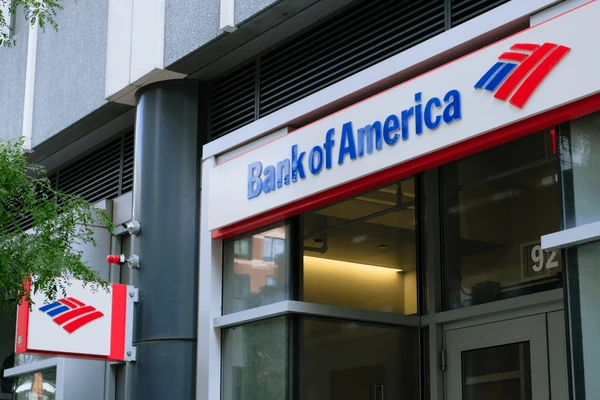
The American banking system was never designed to be a purely free-market enterprise. Banks operate under federal and state charters — government-granted licenses that confer extraordinary privileges, chief among them the ability to create credit. In exchange, the implicit compact has always been clear: broad access, fair lending, and financial inclusion. What the system delivers today is something rather different.
The Cost of Participation
For tens of millions of Americans, simply having a bank account is expensive. Aggregate fees and interest payments extracted from American consumers now run to an estimated $455 billion annually — a figure that reflects not market efficiency, but the systematic monetisation of financial necessity. The burden is not evenly distributed. Low-income households and communities of colour bear a disproportionate share, facing overdraft penalties, monthly maintenance charges, and credit card interest rates that function less as pricing mechanisms than as wealth transfers from the economically marginal to the institutionally powerful.
Small businesses occupy an equally precarious position. Despite representing the backbone of American employment, they face a structural credit gap that conventional banking has shown little appetite to close. Nearly 60 per cent of small business owners report turning to merchant cash advances — instruments that deliver capital quickly but at repayment terms that closely resemble the predatory logic of payday lending. The desperation that drives that choice is a policy failure masquerading as a market outcome.
The Architecture of Evasion
The more structurally significant development is not what banks charge, but how a growing segment of the lending industry has engineered its way around the rules designed to govern them. The mechanism is straightforward: online lenders form partnerships with federally chartered banks, borrowing their regulatory status to bypass state-level interest rate caps. The resulting loan products — carrying annual percentage rates of 100 to 180 per cent or more — are then distributed nationwide, technically compliant but substantively indistinguishable from the high-cost lending such caps were designed to prohibit.
This “rent-a-bank” model is not a loophole in the conventional sense. It is a business model — one built on deliberate regulatory arbitrage, in which the architecture of consumer protection is navigated around rather than dismantled outright. The chartered bank provides legal cover; the online lender extracts the margin. The borrower absorbs the cost.
The Regulator That Wasn’t
The Consumer Financial Protection Bureau was established precisely to address the structural asymmetries described above. Its mandate was never popular among the institutions it oversaw. Sustained lobbying efforts by major financial players sought to “right-size” the agency — a phrase that, in practice, meant constraining its enforcement capacity and limiting its jurisdictional reach.
Those efforts have now largely succeeded. Under the current administration, the CFPB has been reduced, in the assessment of regulatory observers, to a zombie agency — institutionally present but operationally hollowed. The consequences are not abstract. Public market analyses estimate that deregulation delivered an aggregate $600 billion increase in market capitalisation for the six largest American banks in 2025 alone. That is not value created. It is value redistributed — upward, and at scale.
A Franchise in Default
The language of free markets is frequently invoked to defend these arrangements. It should not be. Banks do not compete on level terrain. They operate with government backing, deposit insurance, Federal Reserve liquidity access, and charter protections unavailable to ordinary businesses. The market freedom they invoke is, in substantial measure, publicly subsidised.
The question is not whether banks should be profitable. It is whether the terms of the original franchise — access, fairness, inclusion — are being honoured. By any credible accounting, they are not. What operates in their place is an extraction system, functioning within regulatory structures designed to check it, now freed from meaningful restraint.
The franchise has not been broken. It has been quietly renegotiated — and the public was not at the table.
Read Also: Revived US-China Trade Tensions Rattle Global Markets Amid Tariff Escalations