Stay connected with BizTech Community—follow us on Instagram and Facebook for the latest news and reviews delivered straight to you.
In late June 2025, the cryptocurrency market was quite unstable because of rising geopolitical tensions in the Middle East and efforts to calm them down.
The price of Bitcoin (BTC), the most popular cryptocurrency, dropped below the important $100,000 mark before quickly rising to $105,380 after a ceasefire between Israel and Iran negotiated by the U.S.
This article looks at how these geopolitical events affect the crypto market and the economy as a whole, especially in relation to the key Selat Hormuz.
Market Falls Because of Geopolitical Shock
The bitcoin market took a big hit on June 22, 2025, when the US bombed three important Iranian nuclear sites in Fordow, Natanz, and Isfahan.
The strikes, which were said to be in response to rising tensions and U.S. Backing for Israel, were called by then-President Donald Trump a definitive step to stop Iran’s nuclear ambitions.
Al Jazeera says that the bombings were a big step up in the tension between Israel and Iran, which has many worried about a bigger war in the area.
The market reacted very strongly right away. According to CoinMarketCap, Bitcoin fell from $103,000 to a daily low of $98,460 on June 23, 2025. This was a reduction of more than 4%.
This drop broke through the psychologically important $100,000 threshold, which made the market even more anxious. The total market capitalization of the crypto market dropped 2% to $3.09 trillion, following the same trend. Altcoins took a big knock, with Ether (ETH) dropping 9% to $2,200 and BNB, XRP, and Solana (SOL) all dropping 2–3%. Meme coins, which are notorious for being quite volatile, also went down. Dogecoin (DOGE), Shiba Inu (SHIB), and Pepe (PEPE) all went down by 3–4%.
CoinGlass said that $654 million worth of derivatives were liquidated in 24 hours, $521 million of which were long positions—bets that prices would go up that were wiped out when the markets fell.
Most of these liquidations were of Bitcoin and Ether, which shows how much money traders lost when they guessed wrong about which way the market was going.

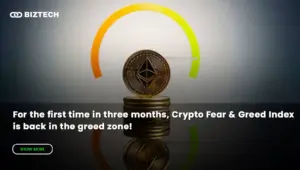
The Fear and Greed Index, which measures how people feel about the market, stayed at a neutral 47/100, which was a small improvement from the previous week’s “Fear” zone after Israel’s first attacks on Iran on June 13.
Iran’s response made people even more worried about the market. The Iranian parliament voted to close the Selat Hormuz, which is a very important site for the global oil trade. About 17–18 million barrels of oil per day, or 20% of the world’s supply, travels through it.
The strait is very important for oil-producing countries like Iran, Saudi Arabia, Iraq, Kuwait, and the United Arab Emirates since it connects the Persian Gulf to open seas.
For a long time, analysts have said that problems in this area might cause energy prices to rise around the world, inflation to rise, and financial markets to become unstable, including high-risk assets like cryptocurrency.
Iran’s decision, which was seen as a way to get back at the US, made people more worried about energy supply problems, which led to the crypto market’s drop.
Ceasefire Leads to Market Recovery
On June 24, 2025, President Trump established a “total ceasefire” between Israel and Iran, with a lot of help from Qatar. This brought relief quickly. Trump called the deal a victory for “courage and intelligence” in a post on Truth Social. He called the fighting the “12-Day War” and said the ceasefire was “indefinite” and may last forever. According to Reuters, Qatar’s Prime Minister was very important in getting Iran to calm down through diplomatic means. Israel promised to stop fighting as long as Iran didn’t attack again. There was a ceasefire after Iran fired missiles at a U.S. military base in Al Udeid, Qatar. No one was hurt because Qatar’s air defenses were so good and Iran had already warned them.
The market reacted right away and in a good way. Bitcoin rose to a daily high of $106,116 before ending at $105,380, which is a 7% gain from its low of $98,600 over the weekend.
According to TradingView, Bitcoin’s daily trading volume rose by 2% to $64 billion, and its market cap rose to $2.08 trillion.
Altcoins also went up. Ether went up 7% to $2,400, XRP and Solana went up 6–7%, while meme currencies Dogecoin and Shiba Inu went up 8%. The total value of all cryptocurrencies around the world went up 5% to $3.24 trillion, showing that investors are once again confident.
The Fear and Greed Index moved to “Greed” at 65/100, which is an indication of strong bullish mood. This quick recovery showed how sensitive the crypto market is to changes in geopolitics and how quickly it can bounce back when tensions lessen.
The Hormuz Strait Factor
During this time, the temporary closing of the Selat Hormuz had a big effect on how the market worked. Iran’s choice to close the strait, even for a short time, showed how important it is strategically.
Closing the waterway might have cut off oil supplies around the world, which could have caused energy prices to skyrocket and inflation to rise.
When things are like this, investors usually move their money into safer places, like gold or government bonds, which hurts riskier assets like cryptocurrency. These worries went away when the crisis was quickly resolved and the strait was reopened, which helped the market bounce again.
Analysts say that the Selat Hormuz does more than only oil. If it closes, it might mess up trade routes around the world, which could hurt supply networks and the economy in the Middle East and other places. The crypto market is not immune to big economic shocks, as seen by the dramatic drop in prices during the climax of the conflict.
Conclusion
The events of June 2025 show how complicated the relationship is between global events and cryptocurrency prices.
Bitcoin fell below $100,000 when the U.S. bombed Iran and closed the Selat Hormuz, but it quickly rose back to $105,380 following the truce.
This shows how sensitive the market is to happenings across the world. The altcoins and meme currencies in the larger crypto market also saw similar price swings. The Selat Hormuz’s strategic importance raised the economic stakes by connecting worries about oil supply to how the financial markets work.
As the crypto market moves through this rough terrain, investors need to be careful and weigh the chances of making quick money against the hazards of sudden changes in world politics.