
Stay connected with BizTech Community—follow us on Instagram and Facebook for the latest news and reviews delivered straight to you.
When Washington imposed a 25 per cent tariff on advanced computing chips in January 2026 — specifically targeting processors such as Nvidia’s H200 and AMD’s MI325X — the move was widely framed as a protectionist gesture in a long-running trade drama. That framing is dangerously inadequate.
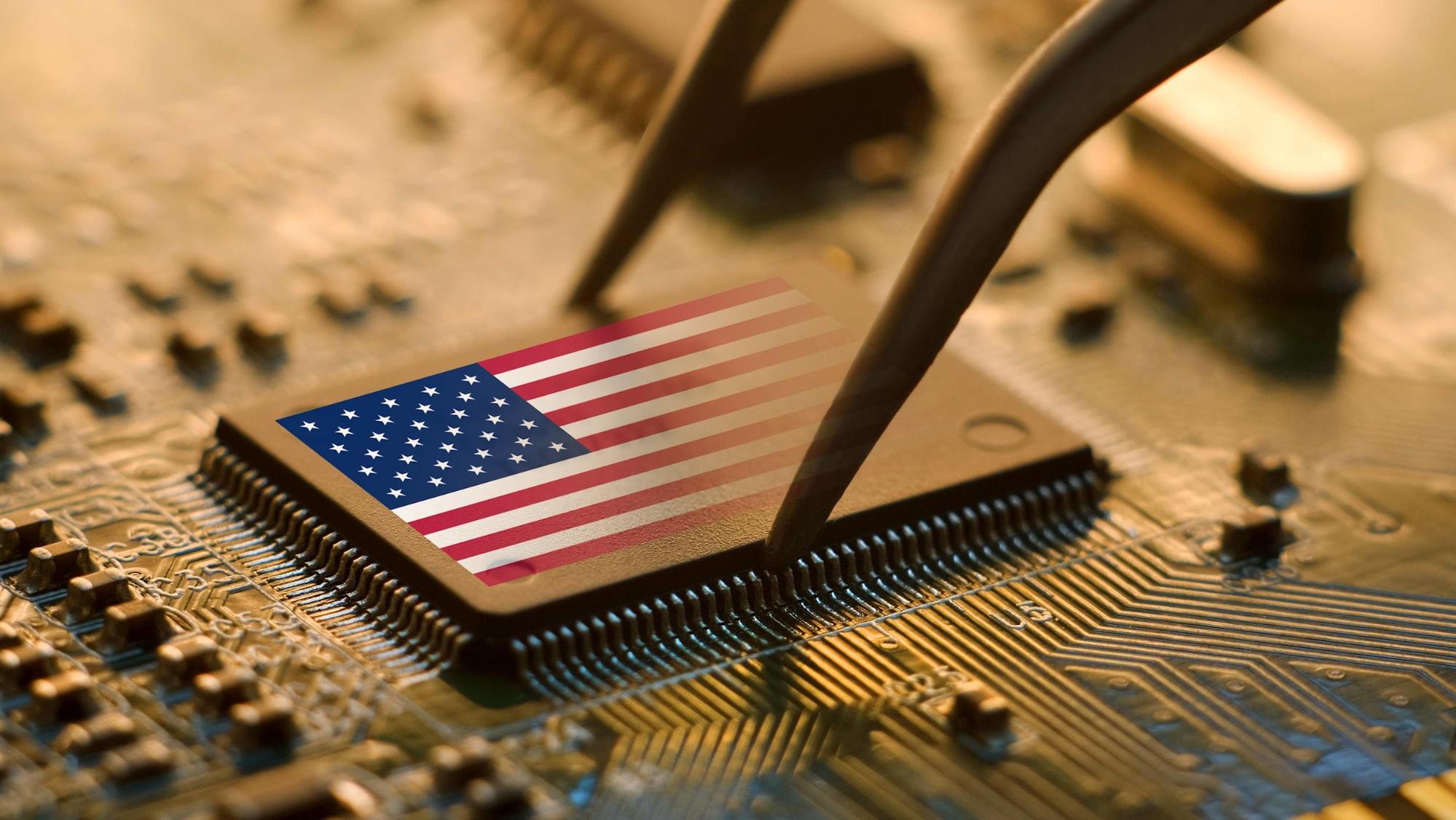
The architecture of this policy is more sophisticated than its critics allow. The tariffs carry a strategically important exemption: chips imported to support the buildout of American data centres, domestic research and development, and the national technology supply chain are explicitly shielded from the levy. The intent is unmistakable — to penalise foreign procurement while incentivising the construction of a domestic semiconductor ecosystem. In effect, Washington is offering the world’s chip designers a binary proposition: build in America, or pay to access it.
China’s Counter-Move
The most consequential consequence of American export controls — which have effectively blocked Nvidia’s advanced chips from Chinese markets — has not been to cripple China’s AI ambitions. It has been to accelerate them. Shanghai Biren Technology’s listing on the Hong Kong Stock Exchange at the start of 2026 — with shares surging nearly 120 per cent on debut — offers a vivid illustration of this dynamic. Domestic alternatives from companies such as Cambricon, Moore Threads, and Metax are drawing billions in capital. Baidu’s AI chip unit is preparing its own public offering.
This is not to say that Chinese chips are yet competitive with the frontier products from Santa Clara. They are not. But the gap is narrowing under conditions of extreme competitive pressure, and the trajectory matters as much as the present position.
The Infrastructure Reckoning
Beneath the geopolitical drama lies a more fundamental and underappreciated story: the energy and infrastructure demands of the artificial intelligence economy are now straining the physical limits of the power grid in ways that no amount of tariff policy can address.
American data centres consumed approximately 176 terawatt-hours of electricity in early 2026 — roughly 4.4 per cent of total US consumption — with demand growing at 15 to 20 per cent annually. Power draw per individual rack has surged from around 10 kilowatts to over 100 kilowatts as AI accelerators have grown more powerful.
This is the infrastructure debt of the AI boom, and it is coming due. Technology companies investing in sovereign AI and data centre programmes across Southeast Asia — in Malaysia, Vietnam, and Singapore — would do well to model their power consumption projections conservatively. The lesson from the American experience is that grid capacity is a binding constraint that cannot be wished away by capital commitments alone.
What This Means for Emerging Economies
For technology ecosystems across Southeast Asia, the implications of all this are complex and deserve more serious analysis than they typically receive.
On the one hand, the tariff architecture creates openings. Malaysia faces a 25 per cent tariff under current Section 301 investigations — a figure that adds to the cost of doing business for manufacturers operating there. At the same time, the restructuring of global supply chains creates genuine demand for alternative production hubs that are geographically and politically outside the US-China fault line. Countries that can offer skilled labour, reliable infrastructure, and regulatory predictability stand to benefit from the diversification strategies that multinational technology firms are urgently pursuing.
On the other hand, the assumption that Southeast Asian economies can remain neutral in an increasingly bifurcated global technology system deserves scrutiny. As Washington’s trade policy grows more transactional — with tariff exemptions increasingly tied to explicit commitments of domestic investment in the United States — the cost of hedging between the two great powers is rising. The Taiwan agreement, under which Taiwanese semiconductor firms investing in American production capacity receive exemptions from chip tariffs, is a template. Other governments are watching closely, and drawing their own conclusions about what it costs to remain in Washington’s good graces.
The Long View
The semiconductor industry has always been a long-cycle business, measured in decades rather than quarters. Fabs take years to plan and build; the human capital required to operate them takes a generation to develop. The industrial policies now being deployed in Washington, Beijing, Brussels and Tokyo are not responses to immediate crises. They are bets on where technological and geopolitical advantage will reside in 2035 and beyond.
History offers some guidance on how these contests typically resolve. Dominant incumbents rarely lose their positions overnight; they lose them incrementally, through a combination of complacency, underinvestment, and the gradual maturation of the challengers they once dismissed. The United States remains, for now, the unambiguous leader in semiconductor design. But leadership in design has limited strategic value if the capacity to manufacture the resulting chips continues to be concentrated in a handful of factories on a contested island in the Taiwan Strait.
That is the fundamental anxiety driving American policy — and it is not an irrational one. The question is whether the instruments being deployed are equal to the challenge. That verdict will not be delivered by courts or by markets. It will be delivered by the balance sheet of history, written in factories not yet built.
Read Also: OpenAI Unveils GPT-5.4 Mini and Nano to Power Faster, Cheaper AI Applications