Stay connected with BizTech Community—follow us on Instagram and Facebook for the latest news and reviews delivered straight to you.
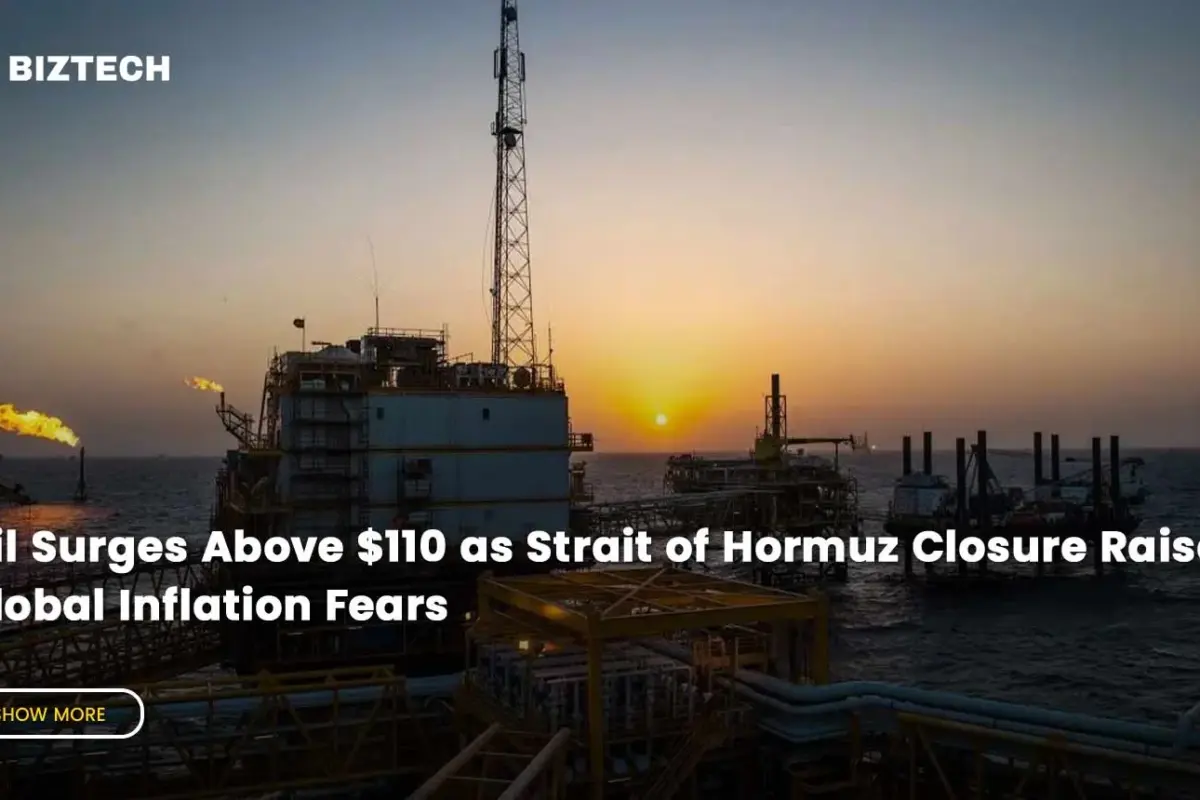
Oil prices have climbed above $110 a barrel for the first time since 2022 after Iran halted tanker traffic through the Strait of Hormuz, a key shipping route for global energy supplies, intensifying concerns over inflation and economic stability.
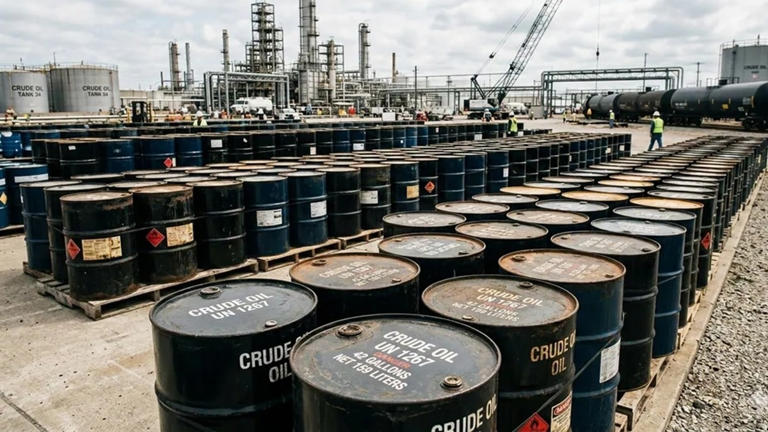
Benchmark Brent Crude rose sharply in early trading, at one point surging by as much as 27%, as the disruption threatened nearly a fifth of the world’s oil supply. The sudden spike has prompted urgent discussions among G7 nations over the possible release of strategic petroleum reserves to stabilise markets.
The Strait of Hormuz, which links the Persian Gulf to global markets, is one of the world’s most critical energy chokepoints. Its closure has injected fresh uncertainty into the global economic outlook, particularly as policymakers had been anticipating a gradual easing of inflationary pressures in 2026.
Central Banks Signal Caution
Central banks have responded swiftly to the renewed volatility. The Bank of Canada held interest rates steady on 18 March, warning that the conflict had “heightened risks” to growth through rising energy costs and financial market instability.
Governor Tiff Macklem said the bank expects weaker near-term economic performance and will closely monitor the duration of the disruption.
In the United States, Federal Reserve Chair Jerome Powell described the oil shock as a “significant new factor” in the economic outlook. While the Fed kept its benchmark interest rate unchanged at 3.5% to 3.75%, Mr Powell cautioned that the path ahead remains uncertain and that inflation risks are now tilted to the upside.
The Fed’s latest projections indicate only one rate cut in 2026 — a more cautious stance than markets had previously expected.
Markets React to Energy Shock
Financial markets have responded with volatility. In the United States, the Dow Jones Industrial Average fell more than 750 points, while the S&P 500 and the Nasdaq Composite declined between 1.3% and 1.5%.
The sell-off wiped out an estimated $700bn in market value, reflecting investor concerns that higher energy costs could slow growth while reigniting inflation.
Economists at Goldman Sachs estimate that a temporary rise in oil prices to $100 per barrel could reduce global economic growth by around 0.4 percentage points and push inflation up by 0.2 points.
Global Economic Implications
The shock is expected to weigh particularly heavily on energy-importing economies in Europe and Asia. China, the world’s largest oil importer, has shown resilience in recent economic data, but analysts caution that sustained high energy prices could dampen consumer demand and erode export competitiveness.
The International Energy Agency has warned that a prolonged closure of the Strait of Hormuz could lead to further price spikes and disrupt global supply chains.
Policy Challenges Ahead
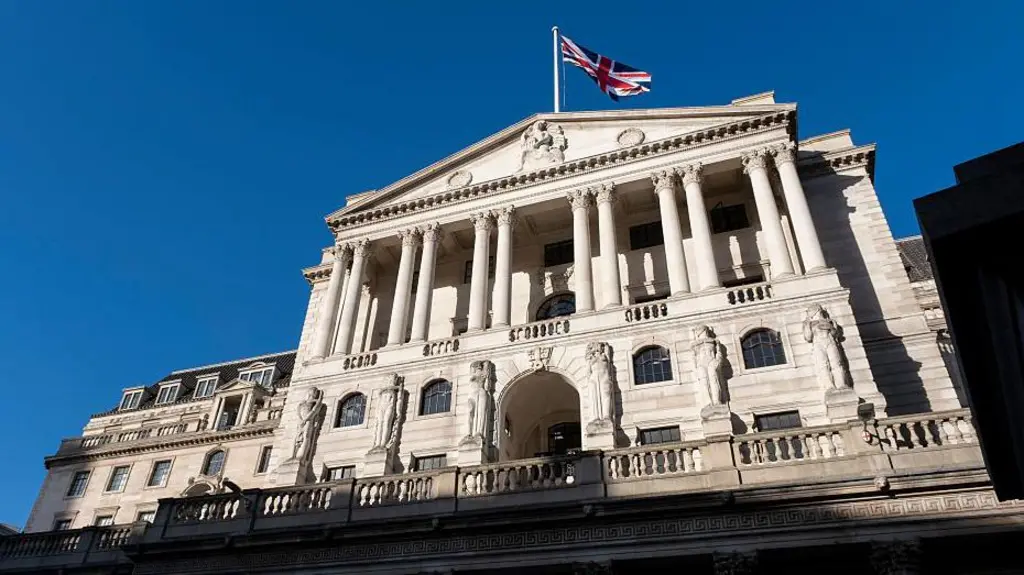
The situation presents a complex challenge for policymakers. Central banks, including the Federal Reserve, the European Central Bank and the Bank of England, must now balance the need to control inflation with the risk of slowing already fragile economic growth.
Emerging market economies may face additional pressure, as rising oil prices could weaken currencies and force tighter monetary policy.
Meanwhile, G7 officials are considering coordinated interventions to calm markets, including the release of emergency oil reserves. Such measures could provide temporary relief but are unlikely to fully offset a sustained supply disruption.
A Fragile Recovery at Risk
The latest developments highlight the vulnerability of the global economy to geopolitical shocks. After years of pandemic-related disruption and inflationary pressures, policymakers had been hoping for a more stable period of recovery.
Instead, the closure of a single strategic waterway has once again exposed the interconnected nature of global energy markets — and the speed at which external events can reshape economic expectations.
As the situation unfolds, much will depend on how long the disruption lasts. For now, the surge in oil prices has added a new layer of uncertainty to an already delicate global outlook.
Read Also: Revived US-China Trade Tensions Rattle Global Markets Amid Tariff Escalations