Stay connected with BizTech Community—follow us on Instagram and Facebook for the latest news and reviews delivered straight to you.
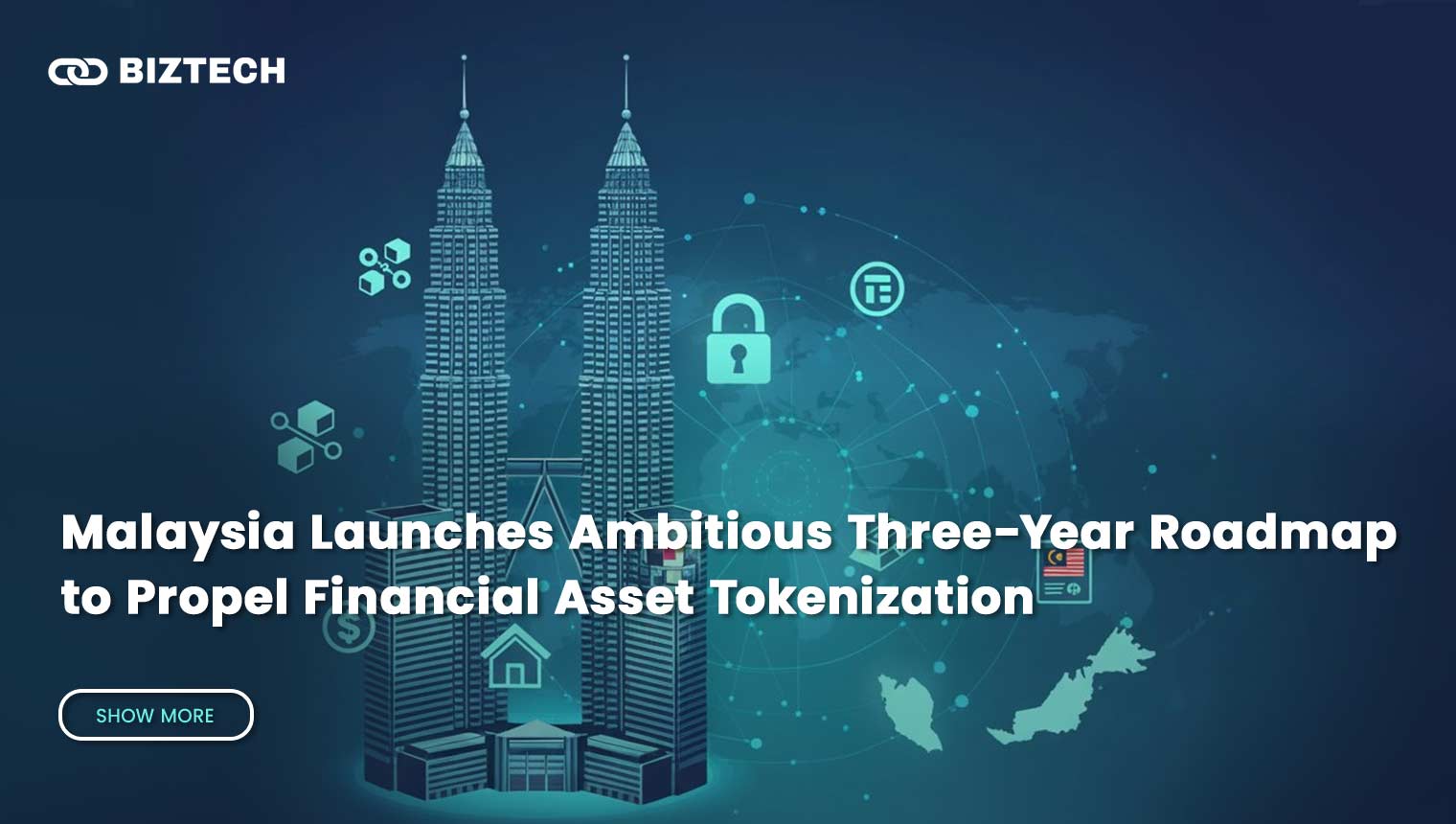
Bank Negara Malaysia (BNM) has officially announced a three-year plan to test and deploy the tokenization of assets across its national financial sector. This is a big step toward modernizing its financial system. The plan puts Malaysia at the forefront of the global race to bring blockchain technology into mainstream finance, with a strong focus on real-world economic advantages rather than speculative crypto-assets.
The central bank said it would start a number of proof-of-concept (POC) projects and live pilots through its new Digital Asset Innovation Hub (DAIH). This coordinated effort intends to thoroughly test the technology readiness and real economic benefit of several tokenization techniques through experimentation across industries.
The central bank said, “BNM supports a collaborative approach in exploring tokenization, with the goal of creating a safe and sustainable roadmap for the development of token-based financial services in Malaysia.” This shows that the bank is careful and aware of risks.
An approach that is led by the industry and works together
The creation of an Asset Tokenization Industry Working Group (IWG) is a key part of this national strategy. BNM and Malaysia’s Securities Commission (SC) will both be in charge of this body, making sure that the rules are closely followed. The IWG’s job is to lead industry exploration, help people share what they know, and—most importantly—find possible legal and regulatory problems early on.
At first, the working group will focus on basic use cases that show clear, measurable economic value. This practical approach shows that Malaysia wants to gain momentum with applications that have already been validated before moving on to more difficult ones.
A Focus on Real-World Assets, Not Speculative Crypto
BNM made it very clear that this effort is not meant for speculative crypto assets. Instead, the whole roadmap is centered on tokenizing Real-World Assets (RWA), which is in line with the global institutional trend found in recent studies, such Standard Chartered’s positive $2 trillion market prediction.
The use cases highlighted by BNM are deeply rooted in solving practical economic challenges:
- Supply Chain Finance: Utilizing tokenization to expand credit access for Micro, Small, and Medium Enterprises (MSMEs), a critical segment of the Malaysian economy, by unlocking value in their digital assets and transaction histories.
- Tokenized Liquidity Management: Exploring ways to use tokens for faster and more efficient transaction settlement.
- Islamic Finance: Leveraging programmable tokens to automate and ensure compliance with Shariah principles, potentially positioning Malaysia as a global leader in digital Islamic finance.
- Other Key Areas: The roadmap will also explore programmable payments, green financing, and more efficient 24/7 cross-border trade settlement.
The Digital Malaysian Ringgit and Wholesale CBDCs
In a major development, BNM’s plan involves looking at the role of a tokenized deposit and a stablecoin pegged to the Malaysian Ringgit (MYR). The goal is to keep the “singleness of money,” which is a basic premise of central banking, while making digital settlement more efficient. This means that BNM is carefully considering the future of money and trying to use the efficiency of digital assets without giving up control of the monetary system.
The central bank will also look into ways to connect these systems to a wholesale Central Bank Digital Currency (CBDC). This might lead to a fully integrated, high-efficiency digital financial infrastructure for institutional transactions.
Three main factors will influence the choice of individual pilot projects: clear economic value, consistency with current legislative frameworks, and the possibility of wider use in the industry.
Working with regional leaders and changing the rules
This strategic move puts Malaysia firmly in line with other leading Asian financial centers like Singapore and Hong Kong, whose central banks are already actively testing asset tokenization. Malaysia is showing that it wants to compete and work together in the new digital asset space by starting its own structured program.
Concurrently with BNM’s announcement, the Securities Commission is advancing its own reforms. A proposal from July 2024 suggests a new framework that would let registered digital asset exchanges offer some assets without having to get permission from regulators first. To qualify, assets must undergo a public security examination and have a trading history of at least one year on platforms that comply with global Financial Action Task Force (FATF) standards. This strategy is meant to make innovation easier while keeping strong oversight.
BNM has also opened a public consultation period on the roadmap document, inviting feedback from industry stakeholders until March 1, 2026, ensuring the final strategy is well-informed and broadly supported.