Stay connected with BizTech Community—follow us on Instagram and Facebook for the latest news and reviews delivered straight to you.
Nvidia has unveiled its latest advancements in artificial intelligence hardware at the Consumer Electronics Show (CES) 2026, including a new generation of AI superchips designed to power autonomous vehicles and advanced robotics. The announcements, made during the opening day keynote on Tuesday, highlight the company’s push to integrate AI more deeply into everyday technologies, from self-driving cars to consumer devices.
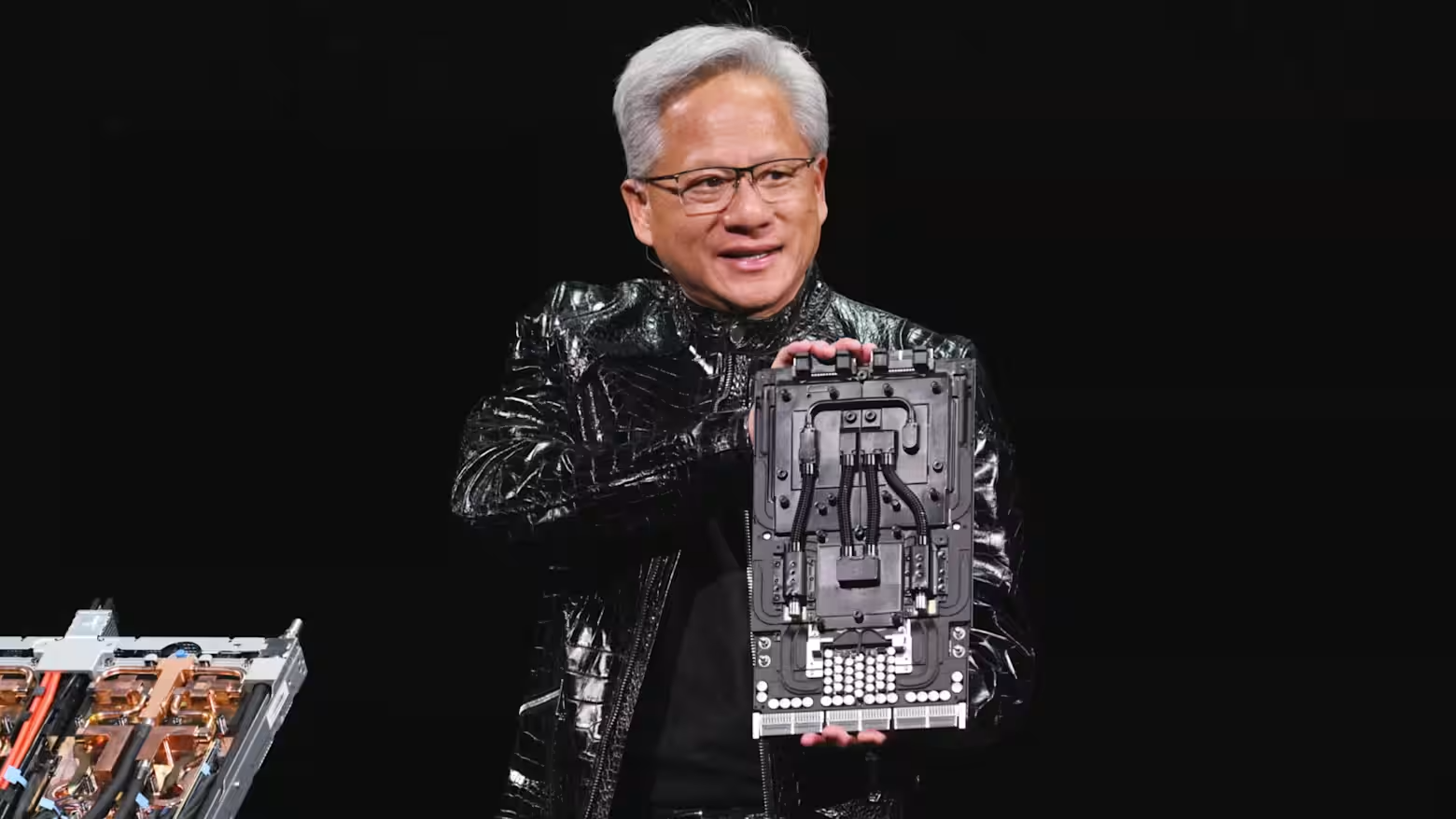
Chief executive Jensen Huang presented the Blackwell B200 superchip, which promises to deliver unprecedented performance for AI workloads, with improvements in energy efficiency and processing speed. The chip is set to underpin Nvidia’s expanding ecosystem for automotive AI, including partnerships with major carmakers. Huang also introduced Alpamayo, a specialised AI model tailored for autonomous driving, capable of real-time decision-making in complex urban environments.
The reveals come amid surging demand for AI infrastructure, as industries from healthcare to entertainment seek to leverage generative models and computer vision. Nvidia’s stock rose 3.5 per cent in after-hours trading following the presentation, reflecting investor optimism about the company’s dominance in the $500 billion AI chip market.
Technical Innovations and Partnerships
The Blackwell B200 builds on Nvidia’s previous Hopper architecture, offering up to 30 per cent better efficiency for training large language models and inference tasks. It incorporates advanced tensor cores optimised for multimodal data, enabling seamless processing of video, audio and sensor inputs—critical for applications in robotics and augmented reality.
Huang demonstrated the chip’s capabilities through live demos, including a self-driving vehicle navigating a simulated cityscape with zero latency responses to dynamic obstacles. The presentation also featured collaborations with Tesla and Waymo, where the B200 will be integrated into next-generation fleets.
Read also: OpenAI Releases GPT-5.2: Incremental Upgrade Amid Fierce Competition from Google
Alpamayo, named after a Peruvian mountain to symbolise “peak performance,” is an AI model trained on billions of miles of driving data. It achieves 95 per cent accuracy in edge-case scenarios, surpassing previous benchmarks. Nvidia plans to make it available via its Drive platform for automotive developers.
These developments address key challenges in AI deployment, such as power consumption and real-time computing, which have hindered widespread adoption in consumer electronics. The company also teased integrations with its Omniverse platform for virtual simulations, aiding industries like manufacturing and film production.
Market and Regulatory Context
The announcements arrive as the AI sector faces scrutiny over energy demands and ethical concerns. Data centres powering AI already consume 2-3 per cent of global electricity, a figure projected to rise to 8 per cent by 2030. Nvidia emphasised sustainability, claiming the B200 reduces carbon footprints by 25 per cent compared to predecessors through optimised architecture.
Regulators are watching closely. The US Federal Trade Commission is investigating AI chip markets for antitrust issues, while the European Union enforces its AI Act, classifying high-risk systems like autonomous vehicles under strict oversight.
Investor sentiment remains bullish, with Nvidia’s market cap exceeding $3 trillion. However, analysts warn of potential supply chain disruptions from US-China trade tensions, which could affect chip fabrication by partners like TSMC.

Broader economic implications include job shifts in transportation and logistics, as AI-driven autonomy matures. The International Labour Organization estimates up to 5 million roles could be affected globally by 2030.
As CES continues, Nvidia’s reveals set the tone for 2026, a year likely to see AI further embedded in consumer tech. The emphasis on efficiency and partnerships signals a maturing industry, balancing ambition with practical constraints.