Stay connected with BizTech Community—follow us on Instagram and Facebook for the latest news and reviews delivered straight to you.
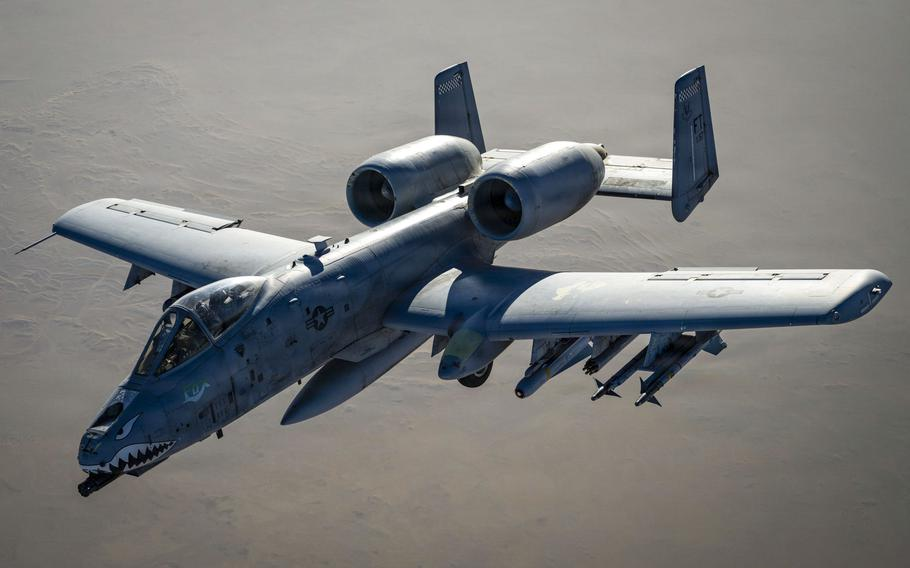
Rising tensions in the Middle East and the deployment of A-10 Thunderbolt II aircraft have renewed debate over whether the United States could contemplate a ground operation in Iran — and what the consequences might be.
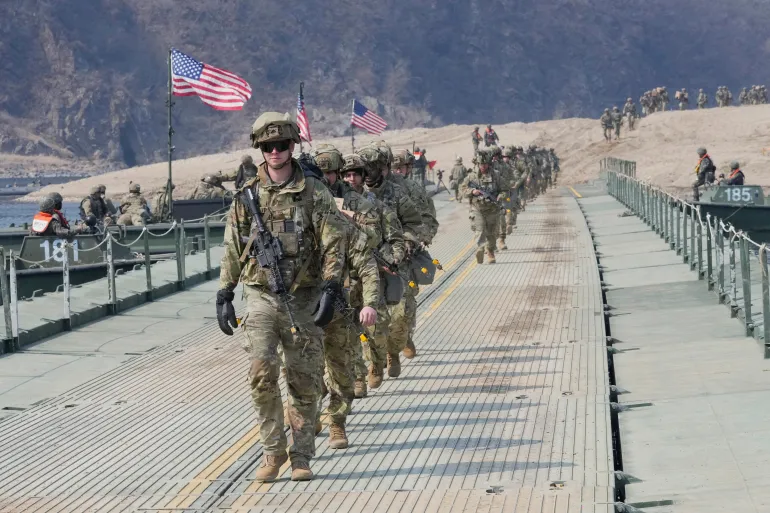
Military analysts widely caution that such a scenario would present profound challenges, with lessons drawn from past conflicts and the unique realities of Iran’s geography, doctrine and regional influence.
A War With No Clear Endgame
One of the central concerns is the absence of a clear pathway to a decisive and lasting outcome.
The United States’ experiences in Afghanistan and Iraq are frequently cited as cautionary examples. In both cases, initial military objectives were achieved relatively quickly, but stabilising the country and securing long-term political outcomes proved far more difficult.
Despite vast financial costs and years of military presence, both conflicts evolved into prolonged engagements with shifting objectives and no straightforward exit strategy. Analysts argue that Iran — with its larger population, stronger state institutions and regional networks — would likely pose an even more complex challenge.
Geography as a Strategic Barrier
Iran’s physical landscape is another critical factor shaping any potential conflict.
The country’s terrain — a mix of mountain ranges, deserts and densely populated urban centres — naturally favours defensive warfare. Narrow passes, difficult terrain and extended distances would complicate troop movements and stretch supply lines.
Such conditions can limit the effectiveness of technologically advanced forces, forcing them into predictable routes and increasing vulnerability to ambushes and disruption.
A Decentralised Military Doctrine
Iran’s military strategy is designed to absorb and respond to external pressure.
Often described as a decentralised or “mosaic” defence system, it allows regional and semi-autonomous units to continue operating even if central command structures are disrupted. This approach reduces the impact of targeted strikes and makes it harder for an adversary to achieve a decisive blow.
In practical terms, analysts suggest this could transform any ground operation into a prolonged, multi-front conflict involving both conventional forces and irregular tactics.
The Limits of Air Superiority
While the United States maintains significant airpower advantages, experts note that control of the skies does not necessarily translate into control on the ground.
Aircraft such as the A-10 — designed for close air support — can be effective in specific scenarios, but their impact depends heavily on reliable intelligence, secure supply lines and clear frontlines. In a fragmented battlefield, those conditions are harder to maintain.
Emerging technologies also present new challenges. The increasing use of drones, including coordinated swarm tactics, has introduced risks that traditional air defence systems may struggle to fully counter.
Regional and Global Consequences
Beyond the battlefield, a ground war in Iran could have far-reaching implications.
Iran’s strategic position and regional alliances mean any conflict could quickly expand beyond its borders, potentially drawing in neighbouring countries and disrupting critical global supply routes — including energy corridors in the Gulf.
Such escalation would not only affect regional stability but could also have significant economic consequences worldwide, particularly in energy markets.
A High-Risk Calculation
For military planners, the question is not simply whether a ground operation is possible, but whether it is sustainable — politically, economically and strategically.
While the United States retains unmatched military capabilities in many areas, analysts stress that modern conflicts are shaped as much by local conditions and long-term dynamics as by technological superiority.
In that context, a ground war in Iran is widely viewed not as a straightforward military campaign, but as a high-risk scenario with uncertain outcomes and potentially far-reaching consequences.
Read Also: Revived US-China Trade Tensions Rattle Global Markets Amid Tariff Escalations