Stay connected with BizTech Community—follow us on Instagram and Facebook for the latest news and reviews delivered straight to you.
In a significant move to de-escalate one of the most disruptive trade conflicts in recent history, the United States and China announced on Monday a 90-day rollback of reciprocal tariffs, easing tensions that have rattled global markets and strained both economies.
The joint statement followed a weekend of intensive negotiations in Geneva, where officials from the world’s two largest economies described “substantial progress” toward resolving long-standing trade disputes.
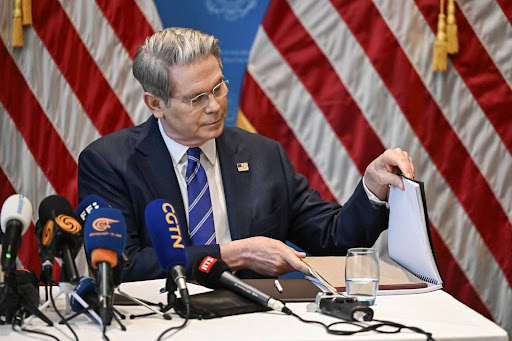
Photo: AFP
Under the agreement, both countries will reduce their tariffs on each other’s goods by 115 percentage points.
For the U.S., that brings the average tariff on Chinese goods down from 145% to 30%. China, which had levied tariffs up to 125% on American products, will reduce its average rate to 10%.
These reductions will go into effect on May 14 and last for 90 days.
Markets Rally on Signs of Stability
Global financial markets responded with optimism.
Dow, S&P 500, and Nasdaq futures jumped between 2% and 3.5%, while Hong Kong’s Hang Seng index closed about 3% higher. The U.S. dollar gained against major currencies, and gold prices fell — a typical sign of reduced investor anxiety.
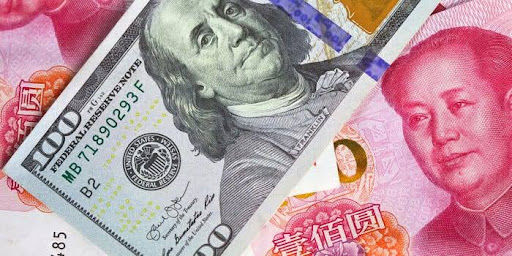
China’s yuan surged to a six-month high amid renewed confidence. Analysts say the rollback has helped stabilize market expectations, which had been roiled by fears of a deepening economic decoupling between the two nations.
William Xin, chair of Spring Mountain Pu Jiang Investment Management, said the deal “far exceeds market expectations,” noting that just a resumption of dialogue had been the most optimistic forecast.
“Now, there’s more certainty. Both Chinese stocks and the yuan will be in an upswing for a while,” he told Reuters.
Trade Dialogue Framework Established
The agreement also establishes a formal mechanism for continued negotiations.
Chinese Vice Premier He Lifeng will lead talks on behalf of Beijing, while U.S. Treasury Secretary Scott Bessent and U.S. Trade Representative Jamieson Greer will represent Washington.
According to the statement, these talks may alternate between China, the United States, or neutral locations.
At a press conference in Geneva, Bessent emphasized that neither side wants a full economic decoupling.
“What has occurred with these very high tariffs was the equivalent of an embargo,” he said. “We do want trade. We want more balance in trade. And I think both sides are committed to achieving that.”
Greer added that previous Chinese retaliation, including export restrictions on critical minerals, had been viewed as disproportionate by the U.S., highlighting the urgency of finding a balanced path forward.
Cautious Optimism, Lingering Issues
Despite the breakthrough, not all tariffs are being lifted. The 20% U.S. tariff tied to China’s role in the fentanyl crisis remains in place.
Chinese officials have reportedly acknowledged the gravity of the issue for the first time, a point Bessent praised as a “notable shift” in dialogue.
China’s Ministry of Commerce welcomed the agreement, calling it an “important step” and urging the U.S. to abandon “unilateral tariff hikes” in favor of cooperative engagement.
Beijing also reiterated its support for multilateralism and “mutually beneficial cooperation.”
The broader economic context adds urgency to the temporary truce.
In the U.S., GDP contracted for the first time since early 2022 as businesses rushed to import goods ahead of tariff hikes. In China, exports to the U.S. have fallen sharply, and factory activity in April contracted at its fastest rate in 16 months.
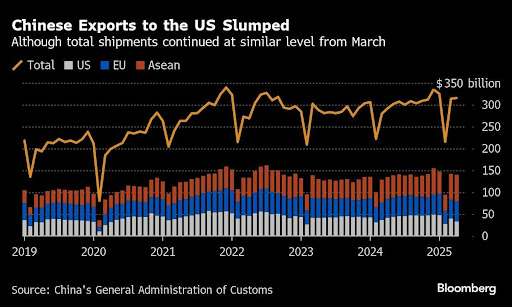
Photo: Bloomberg
Former Global Times editor Hu Xijin framed the agreement on social media as a “great victory for China,” contrasting it with recent deals like the UK-US trade agreement, where London accepted continued U.S. tariffs without reciprocal measures.
While it remains uncertain whether this 90-day period will result in a more permanent deal, the markets and millions of affected workers feel a collective sense of relief.