Stay connected with BizTech Community—follow us on Instagram and Facebook for the latest news and reviews delivered straight to you.
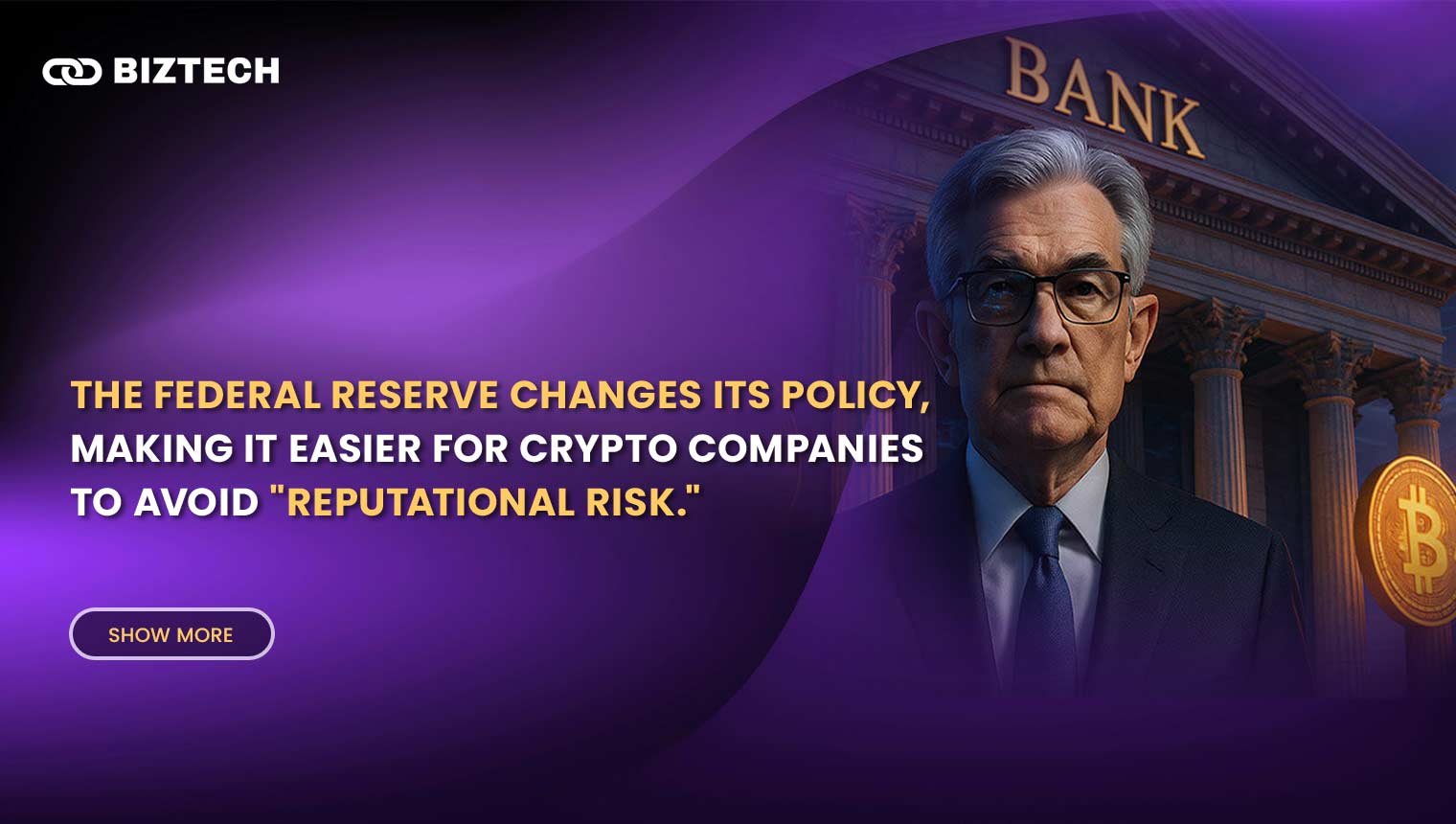
The U.S. Federal Reserve has made a big change to its policies by saying that it will no longer focus on “reputational risk” when it supervises banks. The cryptocurrency sector sees this as a step toward stopping unfair banking practices.
The judgment, which was made public on Monday, June 23, 2025, addresses long-standing worries that reputational risk assessments were used to unfairly target and debank crypto and tech companies through programs like Operation Choke Point 2.0.
This essay looks at what this shift means, how it fits into the bigger picture of regulations, and what it could mean for the crypto industry, which has had a lot of trouble with banks since crypto-friendly institutions went out of business in 2023.
Crypto Debanking and Operation Chokepoint 2.0
The crypto industry has had a lot of trouble getting banking services in the U.S., especially after several crypto-friendly banks, like Silvergate and Signature Bank, went out of business in 2023. extra than 30 tech and crypto companies were denied banking services under what the industry called Operation Chokepoint 2.0.
This was said to be because regulators were paying extra attention to industries that were seen as “high-risk.”
People thought that the Federal Reserve’s use of “reputational risk” as a way to supervise was a big part of this crackdown.
Reputational risk is the chance that bad press, whether true or not, would hurt a bank’s customers, lead to lawsuits, or lower its revenue. This gave authorities the power to pressure banks to cut relations with crypto companies.
Industry advocates strongly criticized this strategy, saying it gave regulators the power to go after crypto firms without clear proof of financial wrongdoing.
Cynthia Lummis, U.S. Senator who is a strong proponent of digital assets, said that the harsh reputational risk policies had “assassinated American Bitcoin and digital asset businesses.” The lack of openness and uniformity in how these rules were applied led to claims of regulatory overreach, which stifled innovation in the fast-growing crypto sector.
Change in the Federal Reserve’s Policy
To address these worries, the Federal Reserve Board has started a full review of its supervisory materials. It has taken out mentions of reputational risk and replaced them with “specific discussions” on financial risk. The board also wants to train examiners to make sure that all of the banks it oversees follow the same rules.
It is working with other federal banking regulators, like the Office of the Comptroller of the Currency (OCC) and the Federal Deposit Insurance Corporation (FDIC), to make sure that everyone is following the same rules.
This change is meant to make the supervisory process more clear and fair, which is what the crypto sector has been complaining about when banks randomly debank people.
The Federal Reserve, on the other hand, stressed that banks must still follow all laws and regulations when it comes to risk management. The change in policy doesn’t affect how banks employ reputational risk in their own risk management systems, so they can still evaluate non-financial risks on their own.
People who don’t like the idea say that taking reputational risk out of regulatory scrutiny could hide problems that aren’t financial, which could make banks less stable and lead to riskier behavior. They warn that if this change isn’t carefully planned, it might weaken the larger regulatory system that is meant to keep finances safe.
Reactions and Effects in the Industry
The Federal Reserve’s decision has been mostly well-received by the crypto and banking industries. Senator Lummis said it was a “win” for the business, but she also said that “more work remains” to adequately deal with regulatory issues.
Rob Nichols, the president and CEO of the American Bankers Association, said that the adjustment was good since it made the supervisory process clearer and more consistent. He said that banks should make business decisions based on good risk management and how the market works, not on how regulators see things.
The change in regulation could make it easier for crypto companies to get the banking services they need, which would help them grow and come up with new ideas.
It’s very important for crypto enterprises to be able to build and keep banking partnerships since they need banks to hold their money, make payments, and meet other business demands.
The Federal Reserve’s decision may inspire more banks to work with digital asset companies by lowering the stigma around the crypto business. This could lead to new chances for collaboration.
Trends in Regulation More Generally
The Federal Reserve’s action is in line with a larger trend of making rules less strict for the crypto business in 2025.
In May, the OCC said that banks it oversees might trade cryptocurrencies for their customers and hire third parties to do some crypto tasks. In March, the FDIC also made it clear that institutions it oversees could do anything connected to cryptocurrencies without getting permission first.
These changes signal that the regulatory freeze that lasted from 2023 to now is slowly starting to thaw, which shows that people are starting to realize how important cryptocurrencies are becoming in the financial world.
The way forward, meanwhile, is still complicated. Even while regulatory barriers are getting easier, the crypto business still has to deal with constant scrutiny over things like market stability, consumer protection, and compliance with anti-money laundering (AML) laws.
The Federal Reserve’s concentration on financial risk instead of reputational risk may lead to more careful regulation of these areas, which would mean that crypto companies need to improve their compliance procedures.
Read also: Vietnam is the first country in Southeast Asia to make Cryptocurrency Legal
What Comes Next
The Federal Reserve’s choice to downplay reputational risk is a turning point for the U.S. crypto business, as it frees it from the debanking policies that have slowed its expansion.
The reform could lead to closer collaborations between banks and crypto companies by making supervision more open and consistent. This would help digital assets become more widely used. However, the business needs to be on its toes since regulators still expect strong risk management, and critics warn of possible unexpected effects.
The crypto industry will change as it grows, and the balance between regulation, innovation, and financial stability will determine its path. The Federal Reserve’s change in policy for now shows that it is more open to business, which gives crypto companies a cautiously optimistic view of their chances of success in the U.S. financial scene.