Stay connected with BizTech Community—follow us on Instagram and Facebook for the latest news and reviews delivered straight to you.
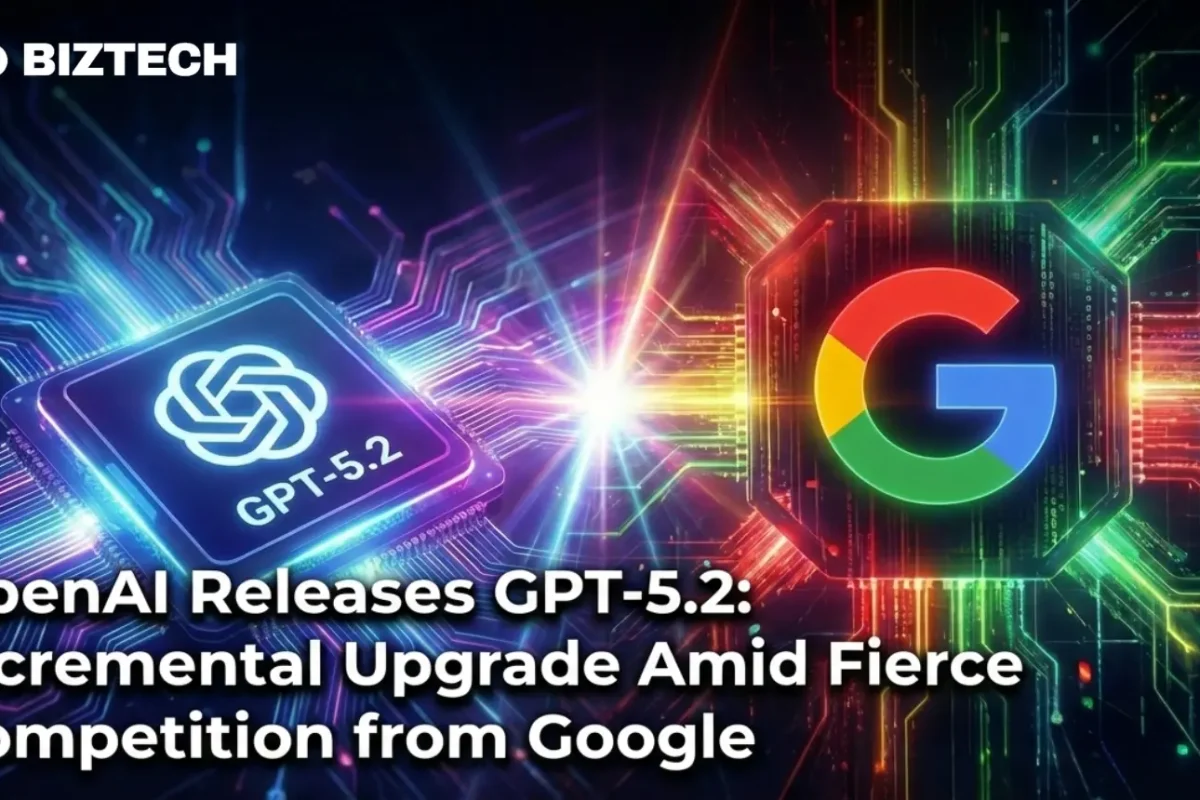
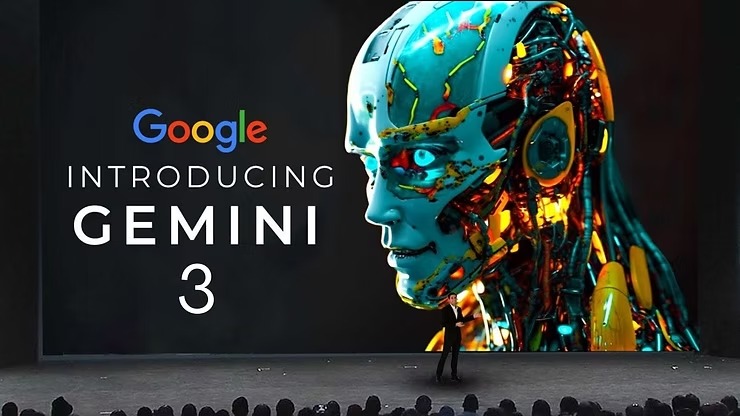
OpenAI has launched GPT-5.2, a refined iteration of its leading large language model, incorporating enhancements in reasoning accuracy, multimodal integration and response efficiency. The update, released on 11 December, responds to recent advancements from Google’s Gemini 3 series, which had temporarily claimed superiority on several key benchmarks.
The model introduces improved chain-of-thought processing, enabling more reliable handling of intricate problems in areas such as mathematics, programming and contextual analysis. Independent assessments indicate reductions in error rates and faster inference times compared with the prior GPT-5 release. It remains accessible through existing channels, including ChatGPT for premium users and the OpenAI API for developers, without alterations to pricing.
Chief executive Sam Altman described the release as part of a continuous improvement cycle, emphasising the need for rapid iteration in a highly competitive field. Reports suggest the accelerated timeline followed an internal push to counter Google’s progress.
Competitive Landscape and Technical Advances
The update arrives in a period of intense rivalry among frontier AI developers. Google’s Gemini 3, introduced in November, demonstrated strengths in long-context retrieval and agentic tasks, prompting OpenAI to prioritise reliability and speed. GPT-5.2 addresses these areas with optimised token handling and better alignment mechanisms to minimise inconsistencies.
Safety protocols have been bolstered, with additional filters to reduce biases and inappropriate outputs. OpenAI maintains its focus on responsible deployment, incorporating user feedback loops for ongoing refinement.
The launch reflects broader trends: Model releases are occurring at shorter intervals, driven by escalating investments and talent competition. Analysts note that while incremental gains dominate, foundational breakthroughs may emerge in 2026 with scaled computing resources.
Market and Regulatory Context
Investor response has been subdued, with tech indices showing limited movement amid year-end adjustments. The development occurs against evolving regulatory frameworks, including enforcement of the EU AI Act and proposed US guidelines for high-capability systems.
Read also this: Mistral AI Unveils Mistral 3 Family: Frontier Models at Every Scale Under Apache 2.0 Licence
As adoption grows—ChatGPT now serves hundreds of millions weekly—the emphasis shifts towards practical utility and trustworthiness. GPT-5.2 reinforces OpenAI’s position, though the field remains fluid with anticipated updates from peers.