Stay connected with BizTech Community—follow us on Instagram and Facebook for the latest news and reviews delivered straight to you.
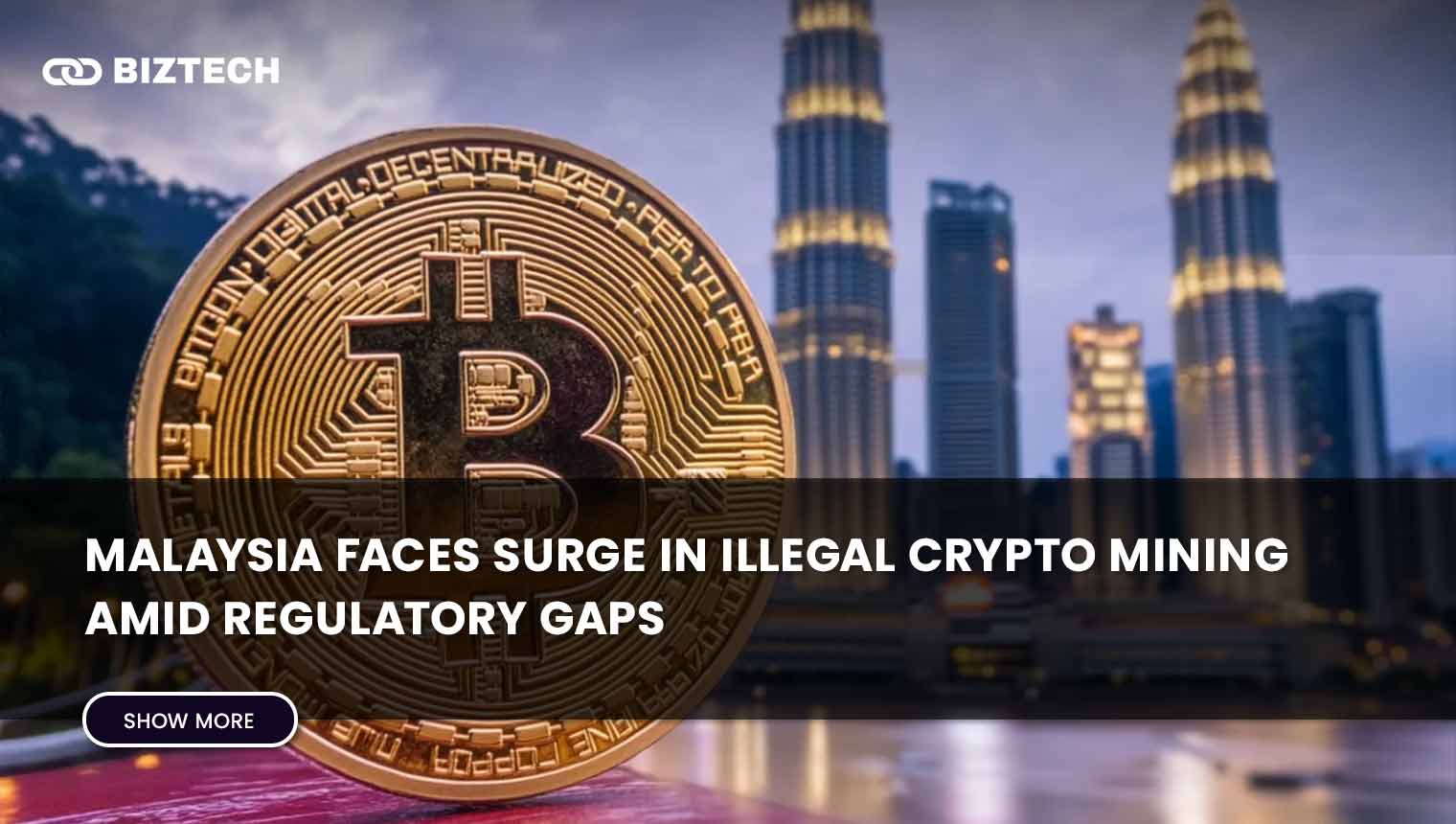
Malaysia is reaching a turning point in its quest to become a major player in the global bitcoin mining business. The country has all it needs to do well in this energy-intensive field: a good position in Southeast Asia, a growing digital ecosystem, and a banking sector that is becoming more in line with Sharia-compliant norms. But a recent rise in illegal crypto mining, along with unclear rules, might hurt its potential, costing the country millions and putting a strain on its infrastructure.
A Costly Rise in Illegal Mining
The problem is really big. Tenaga Nasional Berhad (TNB), Malaysia’s national electricity provider, says that illegal cryptocurrency mining has caused a 300% increase in electricity theft over the past six years.
Between 2020 and September 2024, the company lost RM441.6 million (about $104.2 million). Some estimates say that the total amount of money lost between 2018 and 2024 might be as high as RM3.4 billion (about $722 million).
These numbers show that there are more than 9,000 illegal mining operations going on in cities like Johor Bahru and rural areas like Terengganu. These operations typically involve advanced ways of tampering with smart meters to avoid being found.
The cost to TNB is only part of the story. Illegal mining operations that operate powerful rigs around the clock put a lot of stress on Malaysia’s power supply, which causes outages and shortages in some areas.
Authorities recently raided Terengganu and took 45 Bitcoin mining machines worth RM225,000 ($52,200). These computers were stealing RM36,000 ($8,352) worth of electricity per month. These operations, which are typically hidden in homes or businesses, show how brave illegal miners are to use Malaysia’s subsidized power.
A booming industry with untapped potential
Even with these problems, Malaysia’s potential in the global crypto mining business is clear. The country is in the top 7 or 8 in the world for Bitcoin mining hashrate, which is 2.5% to 3% of the total.
This makes Malaysia one of the best mining countries in the world, which is amazing given that there are no formal rules.
The Access Blockchain Association of Malaysia says that Malaysia has a competitive edge since it has strong internet connections, a lot of hydroelectric power, and a developing knowledge of Sharia-compliant finance, which is important for attracting ethical investment in the area.
The paper says that making the crypto mining sector legal may turn stolen energy into legal cash for TNB and bring in millions of dollars in taxes each year. If Malaysia can take advantage of this hidden demand by clear and supportive legislation, it might make a lot of money. The global crypto mining market is predicted to be worth $5.13 billion by 2025.
Legal miners work in the dark
Illegal mining gets a lot of attention in the news, but Malaysia is also home to an increasing number of legal miners who have to keep their activities secret since the rules are unclear.
Many legitimate participants have gone underground because they are afraid about cyberattacks, physical theft, and sudden changes in legislation. This lack of clarity makes it hard for miners to come up with new ideas and makes them less likely to invest, since they don’t want to expand their businesses without a strong legal framework.
But some businesses are doing brave things to make the industry more legitimate. Hatten Land is working with Hydra X and Frontier Digital Asset Management to build a big, open mining site in Melaka.
This project will employ Malaysia’s excellent infrastructure and potential for renewable energy to house thousands of mining rigs.
These kinds of projects show that Malaysia may go from being a center for illegal activities to a model for sustainable crypto mining in Southeast Asia with the correct help.
Policy Suggestions and Regulatory Gaps
The Securities Commission Malaysia oversees cryptocurrency trading, but crypto mining is still not regulated.
Because there is no control, criminal activities have thrived and genuine miners are at risk. The Access Blockchain Association of Malaysia has come up with a number of ways to deal with these problems:
- Specialized Mining Licenses: By creating a license system, the industry would become more official, making sure that miners follow the law and help the economy.
- Green Energy Tariffs: Encouraging the use of renewable energy, like Malaysia’s plentiful hydroelectric electricity, could lessen the environmental effects of mining and help meet global sustainability goals.
- Closing Legal Loopholes: It is very important to strictly implement the Electricity Supply Act, which makes stealing power punishable by fines of up to RM1 million ($232,720) and 10 years in prison. TNB’s use of smart meters that can find strange patterns of use in real time is a step in the right direction.
- Sharia-Compliant Mining Models: Creating frameworks that are in line with Islamic financial principles could bring in ethical investors and make Malaysia a leader in this area.
TNB has already taken steps to stop this by working with the Royal Malaysian Police, the Energy Commission, and local governments to carry out raids across the country.
The utility’s Special Engagement Against Losses (SEAL) team, which is backed by drone monitoring, has proved very helpful in finding illegal activities.
Public awareness is also expanding, as seen by the 1,699 complaints against unlawful mining made between 2020 and 2024. This shows that people are becoming more aware of their surroundings.
A Way to Move Forward
Malaysia’s crypto mining industry is a paradox: it has a lot of potential, but it is also plagued by lawlessness and unclear rules.
The stakes are high: illicit mining that isn’t stopped might cause more problems with the grid and cost the country money.
On the other hand, a well-regulated business could help Malaysia’s economy and reputation around the world.
The government needs to move quickly to make the industry official as Malaysia navigates this complicated situation.
By balancing enforcement with incentives, the country may transform an expensive problem into a profitable opportunity.
This will make sure that its energy resources and technological know-how are used for progress instead of being stolen in the dark.