Stay connected with BizTech Community—follow us on Instagram and Facebook for the latest news and reviews delivered straight to you.
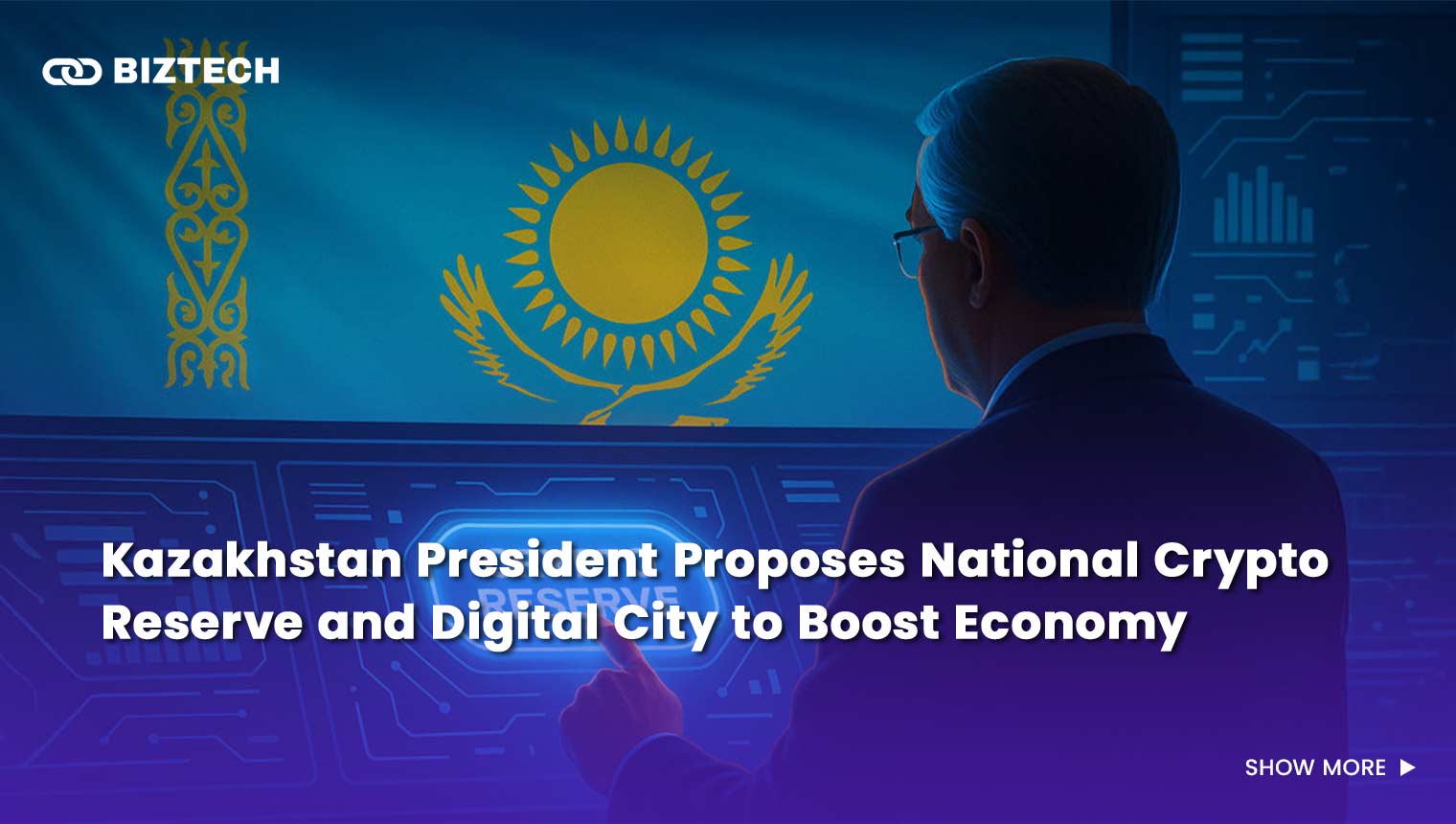
President Kassym-Jomart Tokayev has laid out ambitious plans for a national cryptocurrency reserve and the building of Central Asia’s first fully digitalized smart city. These ambitions are part of a bold attempt to make Kazakhstan a world leader in digital finance and technology.
Tokayev’s vision, shared in his annual state-of-the-nation address on September 8, 2025, focuses on speeding up the development of a mature digital asset ecosystem that will direct banking funds into productive areas of the economy. Kazakhstan is already a key hub for Bitcoin mining, and this plan is part of a larger global trend to include cryptocurrencies in national strategies.
Tokayev aims to diversify the economy, enhance stability, and encourage innovation in AI and blockchain technology by creating a State Fund of Digital Assets and transforming Alatau into a “CryptoCity.” These initiatives could significantly impact the global crypto market, signaling increased sovereign adoption and clearer regulatory frameworks.
The Proposal for a National Crypto Reserve Fund
Tokayev’s main point is that the State Fund of Digital Assets should be set up and run by the Investment Corporation of the National Bank of Kazakhstan. This fund would build up a strategic reserve of “promising” cryptocurrencies and tokenized assets, functioning like a national treasury for digital financial systems. Tokayev called it a “wise step” to develop reserves from assets that are important to the growing digital economy, such as Bitcoin and other digital assets with significant potential.
The notion is based on reports from July 2025, when Kazakhstan’s central bank considered using seized digital assets to start such a reserve. Tokayev directed the Agency for Regulation and Development of the Financial Market to draft a comprehensive set of laws by December 2025, with full implementation planned before 2026. This collection of laws would liberalize the crypto market, regulate fintech activities, and integrate digital assets into regular business operations.
Tokayev emphasized that banking money should be used to its fullest potential, criticizing domestic banks for making safe investments instead of lending to the real economy. Kazakhstan wants to use this fund to channel money into high-tech initiatives, with up to $1 billion allocated toward technological advancement. The digital tenge, Kazakhstan’s central bank digital currency (CBDC), has been in a pilot phase since November 2023 and will be used to fund the National Fund by mid-2025. It will be a crucial part of this ecosystem. The digital tenge is projected to be fully available by the end of 2025, further connecting traditional finance with digital assets.
Kazakhstan’s crypto-friendly laws have drawn miners due to low electricity prices and easy-to-follow regulations. This proposal aligns with such policies. At its peak, the country accounted for around 13% of the world’s Bitcoin hashrate. However, illegal mining activities have burdened the national grid, leading to stricter regulations. The new fund could help balance these issues by formalizing state involvement in crypto ownership.
Alatau: Building Central Asia’s First Digital City
Tokayev also announced that Alatau, a city in southeastern Kazakhstan with about 52,000 residents, would become the first fully digitalized smart city in Central Asia. Alatau, dubbed “CryptoCity,” will be a testing ground for blockchain integration, allowing residents to use cryptocurrencies, stablecoins, and the digital tenge to pay for goods and services. “This city will represent the future of Kazakhstan, combining technological progress with the best living conditions,” Tokayev said. Smart City technologies, such as AI-powered infrastructure and seamless digital payments, will be part of the initiative starting in 2026. In September 2025, Kazakhstan became the first Central Asian country to permit regulated companies to pay government fees with stablecoins like USDT and USDC, setting the stage for broader adoption.
Alatau builds on a pilot zone for crypto payments launched in May 2025, aiming to demonstrate Kazakhstan’s commitment to innovation. This concept could help Kazakhstan become a fintech hotspot and encourage more retail cryptocurrency use. However, Tokayev warned that the growing risk of online fraud necessitates stronger cybersecurity measures to accompany these advancements.
Kazakhstan’s Crypto Journey in the Global Context
Kazakhstan’s move toward digital assets is not new. Since 2022, the Astana International Financial Centre (AIFC), a special economic zone with progressive cryptocurrency regulations, has solidified its status as a mining powerhouse. However, recent grid issues have prompted tighter controls on energy use for mining. The June 2025 launch of a crypto card initiative compatible with Mastercard further signals the government’s push for practical integration.
Kazakhstan’s intentions align with global trends. In early 2025, U.S. President Donald Trump signed an executive order establishing strategic Bitcoin reserves. Tokocrypto’s CEO has advocated for Bitcoin as a national reserve asset, noting that countries like Indonesia are exploring similar diversification strategies. Recent discussions highlight a “snowball effect” in sovereign crypto adoption, with El Salvador’s full embrace of Bitcoin and Brazil’s institutional moves setting precedents.
On X, reactions have been enthusiastic. Influencers like @RoundtableSpace emphasized the “snowball effect” of national reserves, while @flyp_me praised Alatau as a step toward digital economy leadership. Analysts predict these initiatives could attract foreign investment, boosting Kazakhstan’s GDP through fintech and AI sectors, including a proposed Ministry of AI.
Implications for the Economy and Crypto Market
Tokayev’s ideas could have a significant impact. A national crypto reserve could stabilize local markets by adding liquidity and demonstrating confidence in digital assets. If mining regulations are relaxed, this could increase Kazakhstan’s share of global Bitcoin hashrate. Alatau’s CryptoCity may serve as a model for other nations, accelerating the adoption of stablecoins and CBDCs while fostering blockchain startups.
For investors, this enhances Kazakhstan’s appeal as a jurisdiction for crypto ventures. The country aims to attract high-tech capital by offering tax breaks for significant projects and investor-friendly policies. However, challenges like energy constraints and fraud risks must be addressed to ensure sustainable growth. Overall, these efforts position Kazakhstan at the forefront of the digital economy, combining regulation with innovation to hedge against fiat currency instability.
Conclusion
President Tokayev’s vision for a national crypto reserve and Alatau CryptoCity marks a transformative step for Kazakhstan, leveraging its mining expertise to build a robust digital asset ecosystem. By targeting legislation before 2026 and integrating AI and blockchain into national strategy, the country is diversifying its economy and contributing to the global narrative of sovereign crypto adoption. As nations worldwide explore similar reserves, Kazakhstan’s proactive approach could spark a new wave of institutional investment, underscoring cryptocurrencies’ evolution from speculative assets to strategic national tools. Investors and policymakers should closely monitor these developments, as they may reshape Central Asia’s role in the blockchain era.