Stay connected with BizTech Community—follow us on Instagram and Facebook for the latest news and reviews delivered straight to you.
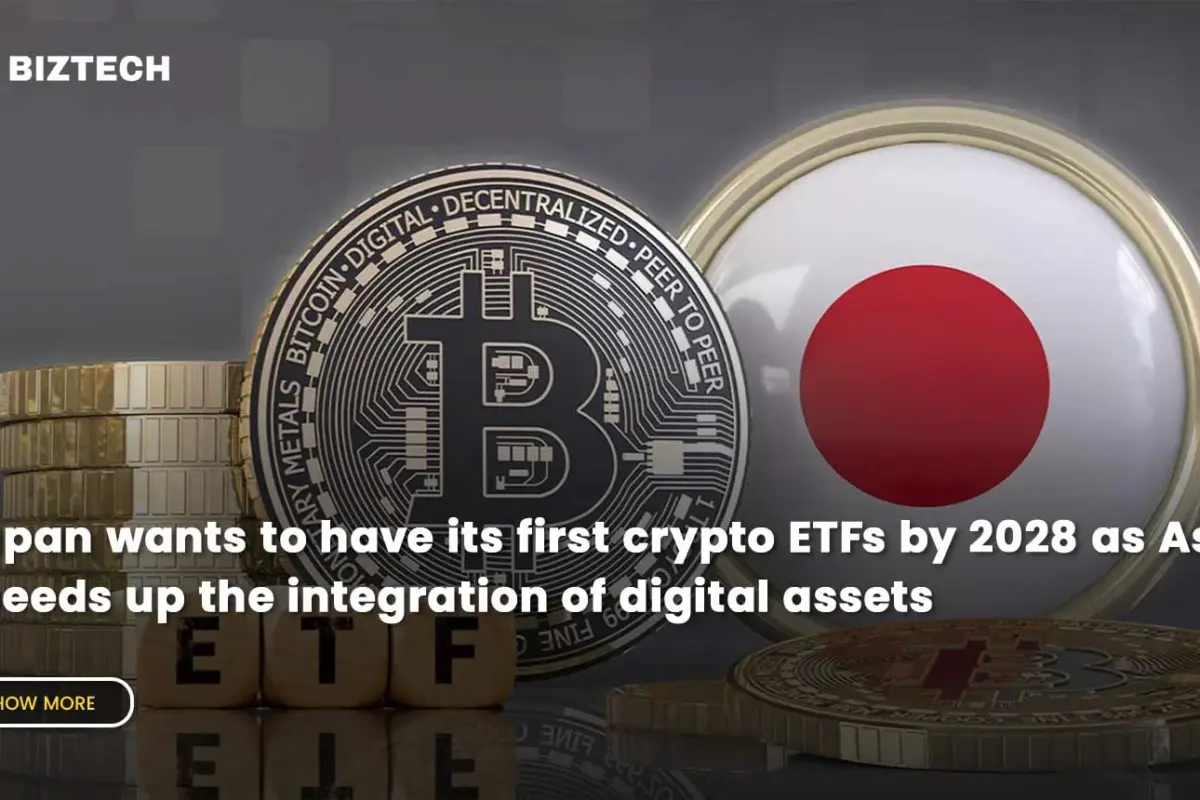
According to a report from Nikkei Asia on January 26, 2026, Japan is getting ready to approve its first cryptocurrency exchange-traded funds (ETFs) by 2028. The Financial Services Agency (FSA) is working hard to create a policy framework that would let crypto assets be used as underlying assets for ETFs, putting them on the same level as other financial products.
The move comes as more and more institutions in Asia are interested in digital assets. Hong Kong and South Korea are also working on their own stablecoin and crypto investment products.
Nomura Holdings and SBI Holdings are likely to be the first companies to issue the new ETFs on the Tokyo Stock Exchange.
These two banks already have a lot of experience with digital assets and will be able to handle the new rules that the FSA is likely to put in place.
The regulator’s main goal is to improve protections for investors while also allowing both retail and institutional investors to invest in regulated cryptocurrencies.
This change comes after spot Bitcoin ETFs did well in the US, where net assets reached roughly $115.8 billion by early 2026—about 6.5% of Bitcoin’s overall market capitalisation.
By the end of 2025, the U.S. will have made it easier for ETFs based on altcoins to be listed. These ETFs will follow XRP, Solana, Dogecoin, Chainlink, Litecoin, and Hedera. More files are expected to come in during 2026, which will make it much easier for traditional investors to get into crypto.
Read also: Japan’s MUFG and Progmat merge to lead digital securities revolution
The Rise of Crypto ETFs in Asia
Japan’s timeframe puts it behind Hong Kong but ahead of a few other big markets. In 2024, Hong Kong started selling crypto ETFs that let people invest in Bitcoin, Ethereum, and Solana.
Hong Kong ETFs let investors create and redeem units in kind, which means they can trade crypto assets directly for ETF units. This is different from U.S. models, This system has helped bring in institutional flows and cut down on tracking errors.
South Korea is going in the same direction. The Digital Asset Basic Act should be finished in the first quarter of 2026. And 3make it possible for spot crypto ETFs to exist. Once passed, the law would set the legal groundwork for regulated investment products linked to major cryptocurrencies, just to what happened in the U.S. once spot Bitcoin and Ethereum ETFs were approved.
The fact that stablecoin frameworks are being built at the same time across the area encourages the ETF trend even more. Japan gave the go-ahead for its first yen-pegged stablecoin, JPYC, in October 2025.
The goal was to have ¥10 trillion in circulation within three years. Hong Kong is getting ready to give out its first stablecoin licenses, and South Korea is moving forward with won-pegged stablecoin rules through the same Digital Asset Basic Act.
These measures are meant to make it easier for regulated digital currencies to be used in regular financial institutions, which would help crypto-based investment products.
Japan’s Road to Regulated Crypto ETFs
The FSA’s plan to include crypto currencies to the list of underlying assets for ETFs is a big change in policy. Japan has been careful with crypto investment products up to this point, putting the safety of investors and the stability of the economy first. The agency has set rigorous rules that crypto exchanges and wallet providers must follow, and it has also limited retail access to some high-risk items.
The 2028 goal takes into account the time it will take to create specific rules, talk to stakeholders, and make sure that investor protections are strong.
The FSA is likely to want complete disclosure of the assets that back the funds, frequent audits, safe storage, and simple ways to get your money back. These rules are meant to stop the tracking mistakes and operational concerns that have hurt several early ETF launches in other places.
Nomura and SBI Holdings are in a good position to lead the rollout. Both companies have previously built up their digital asset skills and have good contacts with institutional clients.
Having them involved would give the project credibility and liquidity, which would assist attract conservative Japanese investors who have traditionally liked traditional products.
The Tokyo Stock Exchange would be where the crypto ETFs would be listed. This would make sure that they benefit from the current market infrastructure and regulatory scrutiny.
Different from how things work in Hong Kong, where ETFs trade on the Hong Kong Stock Exchange but crypto assets can be created and redeemed directly in kind.
Effects on Institutions and Individuals
If Japan were to allow regulated crypto ETFs, it would have big effects on both institutional and retail investors.
Japan’s institutional adoption has been slower than the U.S. because there aren’t many investing options that people are used to.
ETFs would give pension funds, asset managers, and corporate treasuries a safe and clear way to invest in Bitcoin and other cryptocurrencies without actually owning digital assets.
The ETFs would make it easier for regular investors to get in. Many Japanese retail investors have stayed away from owning crypto directly because they are worried about security and the difficulty of filing taxes.
ETFs that are listed on the Tokyo Stock Exchange would trade like conventional equities, with clear prices, plenty of buyers and sellers, and protections for investors.
The timing is smart! Japan’s financial regulators have been keeping a close eye on the U.S.
ETF market By early 2026, spot Bitcoin ETFs in the U.S. had attracted more than $115 billion in net assets, showing that there was a lot of demand once regulatory hurdles were eliminated. Japan wants to do the same thing, but it will have greater protections for investors in line with its conservative financial culture.
The context in the region and the world
Japan’s action is part of a larger trend in Asia towards regulated crypto investment products.
Hong Kong’s 2024 ETF launches have drawn institutional money, and South Korea’s new laws are set to allow similar products in 2026. Through Project Guardian, Singapore keeps moving forward by testing tokenised assets and cross-border settlements.
The U.S. is still the leader in crypto ETF adoption around the world. There are already several cryptocurrency products trading, and more are on the way.
Because these funds have been so successful, other places are copying them and making changes to fit their own needs. Japan’s approach—slow but careful—shows that it cares more about stability and protecting investors than getting to market quickly.
Conclusion
Japan’s decision to approve its first crypto ETFs by 2028 is a small but important step towards making digital assets a part of regular finance.
If Nomura and SBI Holdings are the anticipated issuers and the Tokyo Stock Exchange is the listing venue, the products would give Japanese investors more trust and access to the market.
The schedule gives time for comprehensive policy development, input from stakeholders, and making sure that policies are in line with global standards.
Japan’s approach to digital assets is based on caution and faith in institutions, as Asia’s financial centres continue to compete for leadership in this area.
We don’t know if it can equal Hong Kong’s speed or the U.S.’s size yet, but Japan’s commitment to regulated crypto ETFs shows that it wants to be a full part of the next stage of financial growth. For investors, the 2028 aim gives them a clear goal and reminds them that in regulated markets, slow and steady growth is frequently better than quick experimentation.