Stay connected with BizTech Community—follow us on Instagram and Facebook for the latest news and reviews delivered straight to you.
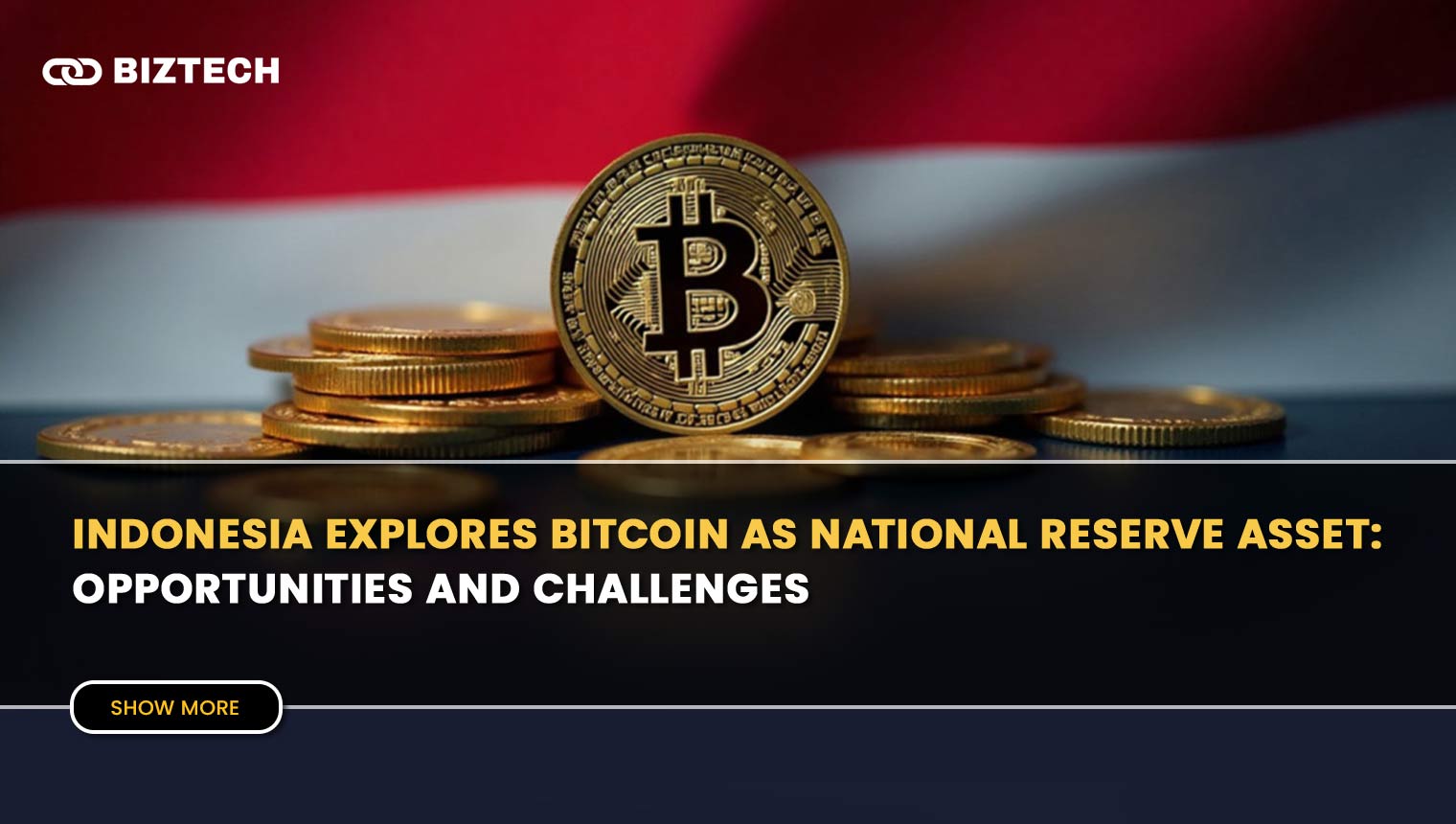
On August 5, 2025, a significant development in Indonesia’s financial landscape emerged as Bitcoin Indonesia, Asia’s largest Bitcoin community, announced it was invited to the office of Vice President Gibran Rakabuming Raka to discuss Bitcoin’s potential as a national reserve asset.
This meeting marks a pivotal moment, signaling the Indonesian government’s growing interest in integrating cryptocurrencies, particularly Bitcoin, into its economic strategy. With discussions focusing on Bitcoin mining and its role in long-term economic resilience, Indonesia is joining a small but growing list of nations exploring digital assets as strategic reserves.
This analysis delves into the implications, opportunities, and challenges of this bold proposal, set against the backdrop of Indonesia’s vision for economic prosperity by 2045.
A Progressive Dialogue with the Vice President
The invitation to Bitcoin Indonesia, as shared in their X post on August 5, 2025, underscores a proactive effort by the government to understand how Bitcoin can bolster national development.
The community presented Bitcoin’s potential to Vice President Gibran Rakabuming Raka, emphasizing its role in economic diversification and resilience. A key focus was the concept of Bitcoin mining as a national reserve strategy, inspired by countries like El Salvador and Bhutan. “We shared how @bitcoinindo21 is the largest Bitcoin community in Asia and how we’re ready to lead Bitcoin education at the national level,” the post stated, highlighting their commitment to fostering awareness and adoption.
The response from the Vice President’s office was encouraging. A special staff member, Adhit, emphasized the need for sustained Bitcoin education, stating, “Indonesia must continue to educate about Bitcoin in the future.” This positive reception suggests an openness to innovative financial strategies, aligning with Gibran’s campaign promises to support blockchain and digital technologies. His attendance at the 2023 launch of the Degree Crypto Token (DCT) Business Center in Solo further underscores his interest in crypto’s economic potential.
Bitcoin as a National Reserve: The Case and Context
The idea of Bitcoin as a national reserve asset is not new but has gained traction globally amid economic uncertainties. Indonesia’s exploration comes at a time when Bitcoin’s market cap stands at $2.3 trillion, despite a recent correction to $115,000 driven by whale profit-taking.
The proposal, initially championed by industry leaders like Gabriel Rey of Triv and Anthony Leong of HIPMI, envisions the Badan Pengelola Investasi Daya Anagata Nusantara (BPI Danantara) spearheading Bitcoin’s integration into Indonesia’s $900 billion sovereign wealth fund.
Danantara, launched by President Prabowo Subianto on February 24, 2025, manages state assets, including dividends from BUMNs like BRI, Mandiri, and BNI, totaling nearly Rp60 trillion in 2025. Allocating a portion to Bitcoin could diversify this portfolio, leveraging Bitcoin’s fixed 21-million-coin supply to hedge against inflation and currency devaluation.
Michael Saylor’s bold prediction, shared during the meeting, that Bitcoin could reach $13 million by 2045—coinciding with Indonesia’s centennial independence celebration—adds a long-term vision to the proposal, aligning with the Indonesia Emas 2045 agenda.
Globally, precedents exist. El Salvador’s adoption of Bitcoin as legal tender and Bhutan’s mining operations have generated significant returns, with Bhutan’s Bitcoin holdings reportedly worth over 25% of its GDP.
The U.S. is also exploring a Strategic Bitcoin Reserve, with proposals to amass 1–5 million BTC, driven by figures like Senator Cynthia Lummis and President Donald Trump. These examples highlight Bitcoin’s growing acceptance as a strategic asset, offering Indonesia a model to emulate.
Opportunities: Economic Resilience and Global Leadership
Incorporating Bitcoin into Danantara’s portfolio could yield multiple benefits. First, Bitcoin’s non-correlated nature makes it a hedge against global economic volatility, a critical factor given recent U.S. tariff escalations and Federal Reserve rate uncertainties. With Indonesia’s crypto transaction volume reaching Rp224.11 trillion and 15.85 million users by June 2025, domestic adoption is robust, providing a foundation for institutional investment.
Second, Bitcoin mining could leverage Indonesia’s abundant geothermal resources from its volcanic landscape. This approach, mirroring Bhutan’s hydropower-driven mining, could generate revenue while promoting sustainable energy use. Mining could also attract foreign investment by leasing strategic sites, boosting Indonesia’s position as a crypto hub.
Third, adopting Bitcoin could enhance Indonesia’s geopolitical leverage and financial innovation credentials. As Wan Iqbal of Tokocrypto noted, the U.S.’s inclusion of Bitcoin, Ethereum, XRP, Solana, and Cardano in its reserves sets a precedent for adaptive monetary policies. By following suit, Indonesia could signal its readiness for a digital financial future, potentially attracting global investors and reinforcing its ambition to become Asia’s crypto hub.
Challenges: Volatility, Regulation, and Public Perception
Despite the opportunities, significant hurdles remain. Bitcoin’s high volatility—evidenced by its recent drop from $118,800 to $115,000—poses risks to state-managed assets. Otoritas Jasa Keuangan (OJK) chief Hasan Fawzi emphasized prudence, noting that Danantara must prioritize risk management and measurable economic goals.
The OJK’s transition to overseeing crypto by January 2025, under POJK No. 22/2023, underscores the need for robust regulation, but specific guidelines for state-held crypto are lacking.
Public perception is another challenge. A CNBC CFO Council survey found 78% of CFOs view Bitcoin as speculative, with only 7% seeing it as a store of value. In Indonesia, where financial literacy lags inclusion (65.43% vs. 75.02% per OJK’s 2024 survey), public skepticism could hinder acceptance. Critics may label Bitcoin as “digital gambling,” risking reputational backlash for Danantara.
Regulatory ambiguity also looms. While crypto is recognized as a commodity under Bappebti, Bank Indonesia’s ban on crypto as a payment tool limits its utility. The OJK suggests exploring real-world asset (RWA) tokenization—such as property or infrastructure—before direct Bitcoin exposure, as it offers lower volatility and regulatory clarity.
The Path Forward: Balancing Innovation and Prudence
The OJK’s cautious optimism, echoed by Hasan Fawzi, reflects a balanced approach. The agency views the proposal as innovative but stresses governance and risk mitigation. A phased strategy, starting with RWA tokenization and small-scale Bitcoin mining pilots, could build public trust and regulatory frameworks. Indonesia’s PP 28/2025, recognizing blockchain as a legitimate sector, provides a legal foundation for such experiments.
Education, as highlighted by Adhit, is critical. With 10.9 million crypto users in Indonesia, programs like those led by Bitcoin Indonesia could bridge the literacy gap, ensuring informed adoption.
Danantara’s $900 billion asset base offers the scale to test Bitcoin allocations without destabilizing its portfolio, potentially following VanEck’s conservative 25% annual growth model to project returns.
A Vision for 2045
Indonesia’s exploration of Bitcoin as a national reserve asset is a bold step toward its Indonesia Emas 2045 vision. By leveraging Bitcoin’s scarcity and global adoption trends, the government could enhance economic resilience and establish itself as a digital finance leader.
However, volatility, regulatory gaps, and public skepticism demand a cautious approach. As Vice President Gibran and Danantara navigate this uncharted territory, collaboration with industry leaders, robust governance, and public education will be key to turning this vision into reality. For now, the dialogue initiated in the Vice President’s office marks a historic pivot, one that could redefine Indonesia’s place in the global financial landscape.