Stay connected with BizTech Community—follow us on Instagram and Facebook for the latest news and reviews delivered straight to you.
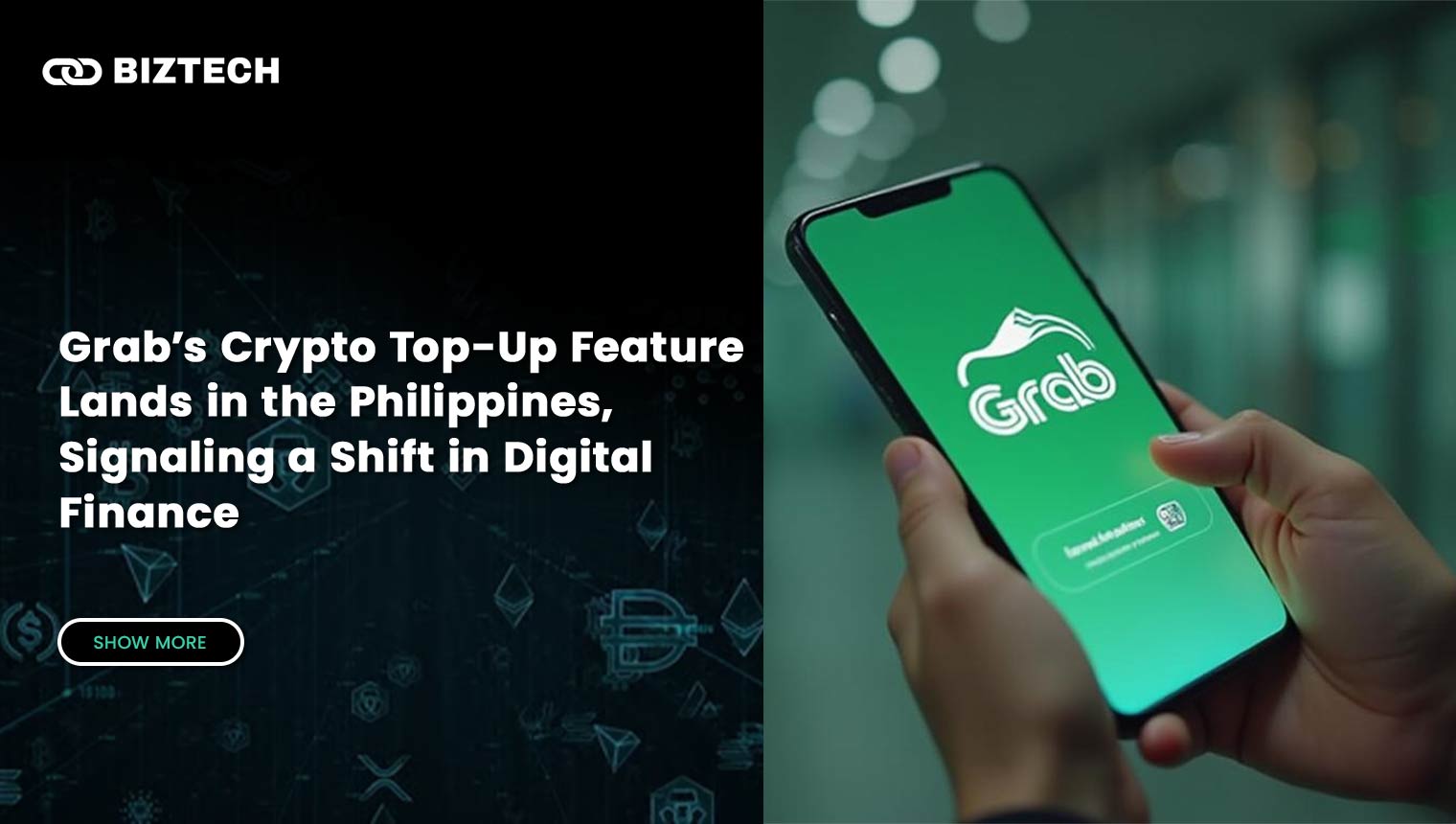
Imagine topping up your digital wallet with Bitcoin or Ethereum as easily as you’d load it with cash. For Grab users in the Philippines, that’s now a reality. On July 28, 2025, the Southeast Asian super-app rolled out a crypto top-up feature for its GrabPay wallet, a move that could redefine financial access in one of the world’s most crypto-savvy nations.
Through partnerships with global payment provider Triple-A and local digital asset exchange PDAX, Grab now lets users fund their wallets with Bitcoin, Ethereum, and stablecoins like USDC and USDT. The process is seamless: select your crypto, choose a network, specify the amount in Philippine pesos, and send the assets. Funds convert instantly and land in your GrabPay wallet, ready for everyday transactions like rides, food delivery, or bill payments.
This isn’t just a tech flex—it’s a bold step toward financial inclusion. “Integrating crypto as a cash-in option for GrabPay reflects our commitment to advancing financial inclusion in the Philippines,” said CJ Lacsican, Vice President for Urban Markets and Head of Grab Financial Group in the Philippines. With 70% of Filipinos still unbanked or underbanked, according to the Bangko Sentral ng Pilipinas (BSP), Grab’s move taps into a population eager for digital alternatives to traditional banking.
Why the Philippines? Why Now?
The Philippines is a crypto hotspot. A 2024 Chainalysis report ranked it among the top five countries globally for crypto adoption, driven by remittances, gaming, and decentralized finance (DeFi). PDAX CEO Nichel Gaba sees this as fertile ground. “The Philippines has one of the largest crypto user bases in the world,” he said. “This partnership offers an accessible use case that supports the existing crypto community while driving broader adoption.”
Grab’s timing is strategic. The BSP has fostered a crypto-friendly regulatory environment, overseeing the feature’s compliance alongside Triple-A’s licenses from Singapore’s Monetary Authority and the U.S. FinCEN.
This contrasts with neighbors like Indonesia and Malaysia, where crypto payments face stricter rules. In Indonesia, Bank Indonesia bans crypto as a payment tool, limiting it to a tradable commodity under the oversight of the Financial Services Authority (OJK). Malaysia’s stance is similarly cautious, with no clear path for crypto in digital wallets.
Grab’s crypto play builds on its 2024 Singapore pilot, where similar top-up features gained traction. The Philippines, with its 110 million-strong population and vibrant digital economy, is a natural next step. By bridging crypto to everyday spending, Grab isn’t just catering to tech enthusiasts—it’s offering a lifeline to those sidelined by traditional finance.
What’s at Stake?
This move could reshape how Southeast Asians interact with money. For Filipinos, it’s a chance to leverage crypto’s borderless nature for practical needs, from paying for groceries to sending funds to family.
The real-time conversion and BSP-backed security make it a low-friction entry point for crypto newcomers, while seasoned users gain a new way to spend their holdings.
But challenges loom. Regulatory hurdles in other markets like Indonesia, where a digital rupiah (CBDC) takes precedence, suggest Grab’s crypto ambitions may face uneven rollout across the region.
Scalability is another concern—can PDAX and Triple-A handle mass adoption without hiccups? And while crypto’s volatility is mitigated by instant conversion, user education will be key to building trust.
A Glimpse of the Future
Grab’s crypto top-up feature is more than a product launch; it’s a signal that digital finance is evolving.
As Southeast Asia’s middle class grows and crypto adoption surges, platforms like Grab are positioning themselves as gateways to a hybrid financial world—one where fiat and digital currencies coexist. For now, Filipinos are at the forefront, but the ripple effects could soon reach beyond Manila.
If this experiment succeeds, it might nudge regulators in Jakarta or Kuala Lumpur to rethink their stance. Until then, Grab’s move underscores a truth about the region: when it comes to financial innovation, the future often arrives unevenly—but it’s coming fast.