
Stay connected with BizTech Community—follow us on Instagram and Facebook for the latest news and reviews delivered straight to you.
For years, people in finance have been saying that Bitcoin is directly opposed to the US currency. Sam Lyman, head of research at the Bitcoin Policy Institute, a Washington, D.C.-based group that works to protect digital assets, has a different point of view, though. He says that Bitcoin and the dollar actually help each other out. As more people use both, they help each other flourish instead of competing in a zero-sum game.
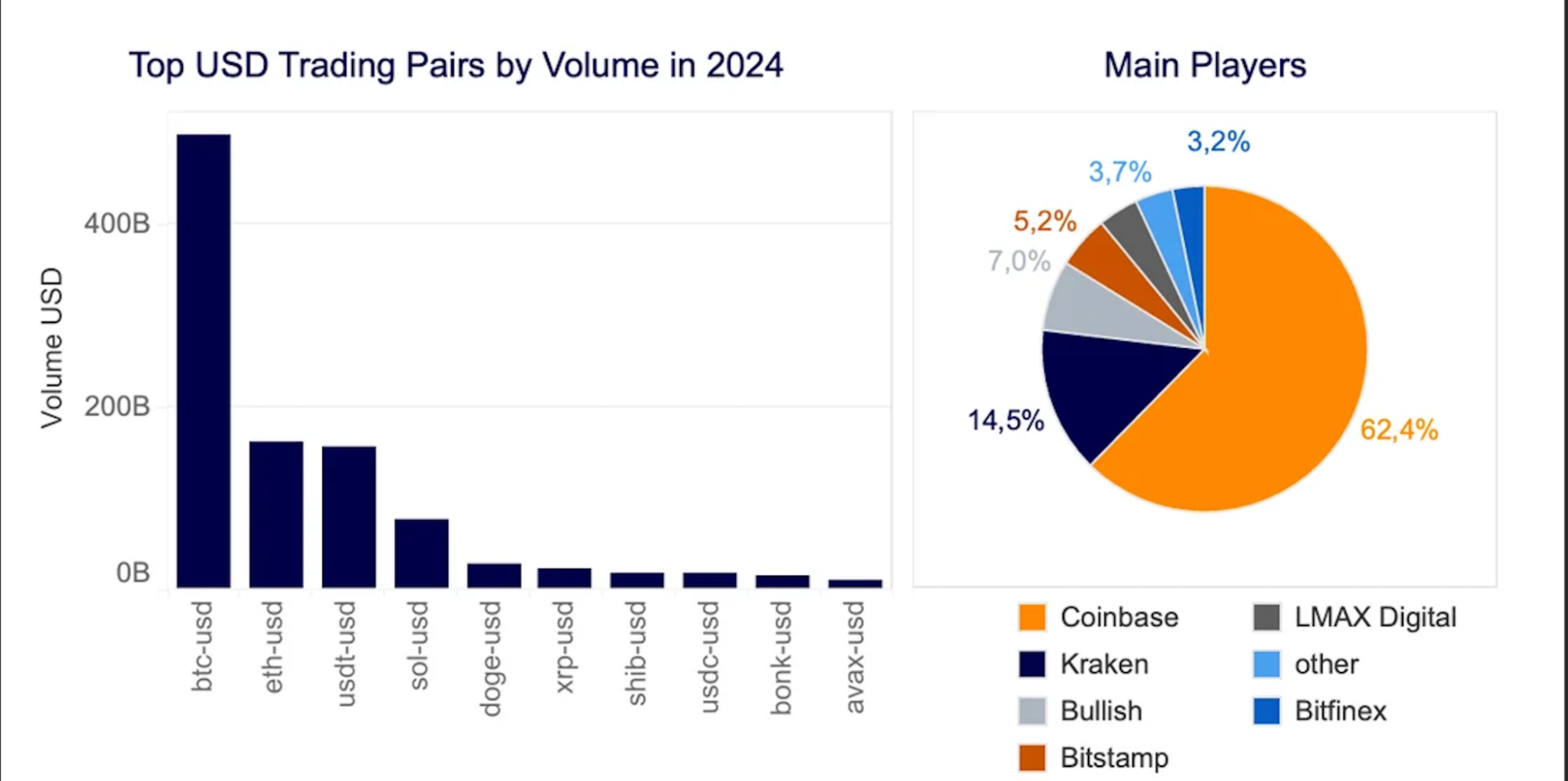
Lyman told Cointelegraph in an exclusive interview that most of the trading volume for Bitcoin happens in dollar-denominated pairs, especially against Tether’s USDT stablecoin, which is backed by cash deposits and short-term US government debt. This structural link makes the two systems incredibly dependent on each other, which is good for both the dollar system and Bitcoin’s liquidity and price discovery.
Stablecoins are the most important link between Bitcoin and the dollar
Stablecoins that are pegged to the dollar are a major part of this symbiotic relationship. USDT and USDC are the most popular crypto trading pairs. They give Bitcoin the liquidity and stability it needs to be a global asset while still being firmly related to the dollar economy. People who buy Bitcoin often use stablecoins that are backed by US dollars or assets that are denominated in US dollars. This means that more people wanting Bitcoin indirectly promotes the demand for dollars. At the same time, a strong, liquid Bitcoin market makes it easy for dollar holders to get into the larger crypto ecosystem. This keeps capital within dollar-based systems instead of moving to other currencies or assets.
Lyman said that this link is similar to other monetary systems, such the petrodollar system that started in the early 1970s. That means that oil sales between countries are priced and settled in US dollars, which creates a structural demand for the currency. Bitcoin’s dominance in dollar trading pairs provides a current version of the “crypto-dollar” loop, which strengthens the dollar’s power instead of replacing it. Data from CoinMarketCap and Kaiko shows this dominance very clearly. Even though alternative fiat currencies and stablecoins have emerged, US dollar-based trading pairs still make up the vast bulk of Bitcoin volume. This entrenched position implies that any new wave of Bitcoin acceptance tends to flow through dollar infrastructure, which strengthens the currency’s worldwide importance instead of undermining it.
Suggestions for Policy: Keep Working on the GENIUS Act
Lyman told US lawmakers to keep working on stablecoin regulation through laws like the GENIUS Act, which was passed in July 2025. He said that straying from its essential values—strict reserve requirements, openness, and regulatory oversight—could hurt the dollar’s standing in the global digital economy.
If we keep making rules for stablecoins that don’t go against the main ideas of the GENIUS Act, it will protect the US dollar’s dominance and keep the US competitive in world politics.
This position shows that more and more Bitcoin supporters agree that regulated stablecoins backed by dollars can be a strategic asset for the United States. The US can keep its monetary power in the blockchain era by staying ahead of other stablecoins. This way, it won’t have to give up ground to other currencies or decentralized alternatives that work without American authority.
The GENIUS Act has already made things lot clearer for dollar-backed stablecoins, which has led to more institutional engagement and less regulatory uncertainty. Lyman thinks that for America to stay at the top of digital banking, it needs to build on this base instead of making restrictions that are too strict or that don’t make sense.
China’s approach shows how the dollar has a strategic edge
Lyman compared the US’s stance on bitcoin to China’s, which is more rigorous. Beijing has banned Bitcoin and stablecoins many times because it sees them as threats to its capital restrictions, which are a key part of the Chinese economy.
Capital regulations are very important for the whole Chinese economy. By stopping its wealthy people from moving money out of the nation, China can keep money in the country. This is why China has put even more effort into its digital yuan (e-CNY), a central bank digital currency that earns interest and is meant to keep the government in tight control of financial flows and foreign exchange.
The e-CNY can be programmed and traced, but it doesn’t have the openness and worldwide appeal of decentralized cryptocurrencies like Bitcoin.
Even though the government has banned it, crypto activity in China has been very strong. According to Hashrate Index, Chinese mining pools still control more than 36% of Bitcoin’s worldwide hashrate.
Stablecoin flows are still going through different channels. This underground persistence shows how hard it is to completely shut down decentralized networks, even for a government that is quite centralized and has a lot of resources and monitoring tools. The difference is helpful. China wants to keep capital controls in place by having a fully controlled digital currency. The US, on the other hand, benefits from an open, dollar-linked crypto environment that lets it influence money without needing the same amount of authoritarian surveillance.
What this means for Bitcoin and the world economy
The relationship between Bitcoin and the dollar is good for both of them, and it has a lot of critical effects on the future of global banking. Dollar-based trading pairs give Bitcoin a lot of liquidity and good prices, which helps the whole crypto ecosystem and makes it more appealing to institutional investors.
Because the dollar is so strong, US institutions may easily invest in Bitcoin through well-known channels like spot ETFs, regulated custodians, and now tokenized securities platforms.
The US can keep its monetary power in the digital age by staying ahead in both traditional finance and stablecoin infrastructure. This will help it compete with China’s state-controlled digital yuan.
Regulated stablecoins can interact with decentralized networks like Bitcoin to form a tiered financial system where each one meets a distinct requirement, from institutional settlement to value transmission that can’t be censored.
Lyman’s study gives Bitcoin investors and supporters a more positive outlook than the zero-sum story that skeptics generally tell. Bitcoin doesn’t have to compete with the dollar; it can perform well next to it, at least in this period of global banking.
The GENIUS Act set up the groundwork for stablecoins, which will probably be important as Congress talks about wider market structure laws like the CLARITY Act. Lyman and the Bitcoin Policy Institute want laws that are smart and encourage new ideas while keeping the best parts of both the dollar system and decentralized networks.
In the next few months, politicians will have to make tough choices between safeguarding the dollar’s supremacy and financial stability and encouraging the expansion of blockchain technology. The result might decide if the US stays on top in both the traditional banking world and the new digital asset economy. At this point, the data backs up Lyman’s argument.
The dollar is still very important to Bitcoin’s most liquid exchanges, and the number of stablecoins is growing quickly. Bitcoin and its ecosystem don’t seem to be hurting the dollar; instead, they seem to be helping it reach new digital frontiers.
There is some strain in the relationship, and things that happen in the future, like the risks of quantum computing or changes in regulations, could change how things are now. But right now, Bitcoin and the US dollar are not enemies. As Lyman says, they are partners in a deal that benefits both of them and changes along with the global financial system.
As more people use stablecoins and more money moves through dollar-linked crypto rails, this relationship could become one of the most important things in finance over the next ten years. The debate is no more whether Bitcoin competes with the dollar. Instead, it’s how the two can keep helping each other in a world economy that is becoming more digital.