Stay connected with BizTech Community—follow us on Instagram and Facebook for the latest news and reviews delivered straight to you.
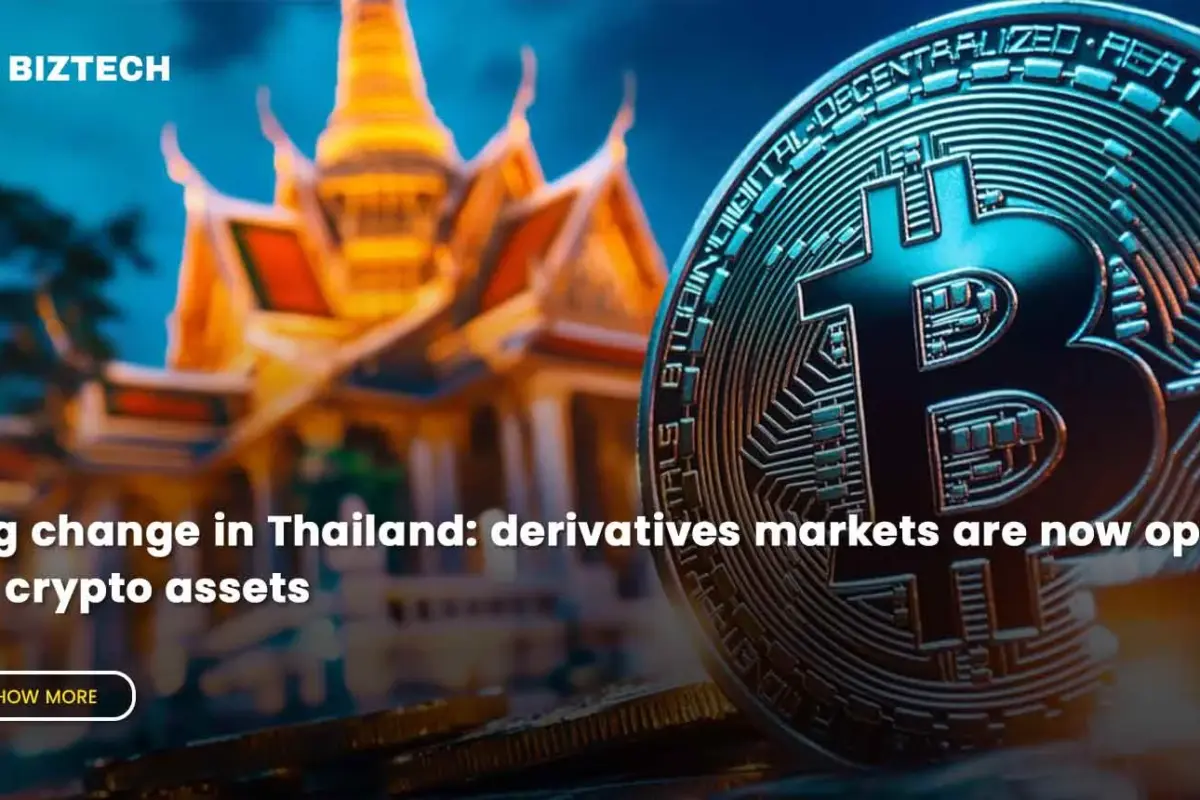
By formally accepting cryptocurrencies and other tokenised products as underlying assets in the country’s derivatives and capital markets, Thailand has made a big step toward making digital assets more widely used. The announcement on February 4, 2026, signals a big change in how the Kingdom regulates cryptocurrencies. Instead of just overseeing retail trading, they will now be part of the official financial system.
The Finance Ministry’s plan got the green light, which means that the Securities and Exchange Commission (SEC) can revise the Derivatives Act. Once the adjustments are made, regulated derivatives products including futures, options, and structured instruments will be able to use cryptocurrencies like Bitcoin (BTC) and even tokenised carbon credits as references. The goal of the move is to bring Thailand’s capital markets up to date, make them more in line with international norms, and better safeguard investors. At the same time, it will make Thailand a regional hub for institutional digital asset activities.
Read Also: The Central Bank of Malaysia has started a Pilot program for stablecoins and tokenization
Nirun Fuwattananukul, the CEO of Binance Thailand, called the change a “watershed moment” for the country’s financial sector. He said, “The decision to officially recognise digital assets, such as cryptocurrencies and digital tokens, shows that people are starting to realise that they are not just speculative tools anymore.” “This sends a strong message that Thailand wants to be a leader in Southeast Asia’s digital economy that looks ahead.”
Focus on institutions and modernisation of the market
The regulatory change is aimed at institutional and advanced investors, not individual trading. The retail crypto sector in Thailand is still doing strong. Bitkub, the biggest local exchange, sees daily volumes of about $65 million. However, regulators have always kept a close eye on how consumers can utilise crypto. The Bank of Thailand does not allow crypto payments, and there are strong rules against using stablecoins for consumer purchases. The approval of derivatives does not modify these retail limits. Instead, it opens up new ways to diversify portfolios, hedge risks, and manage risks within regulated frameworks.
The Secretary-General of the SEC, Pornanong Budsaratragoon, said that the reform will “strengthen the recognition of crypto as an asset class, promote market inclusiveness, enhance portfolio diversification, and improve risk management for investors.” The Stock Exchange of Thailand has already said that it will offer Bitcoin futures and other exchange-traded products in 2026, using this legislative framework as a starting point.
Adding carbon credits as viable underlying assets also shows that Thailand is interested in tokenised real-world assets (RWAs). Regulators are showing their support for blockchain-based solutions in sustainability and climate finance by allowing derivatives on tokenised environmental assets. Thailand has been trying to become a leader in these areas in the region.
Finding a balance between new ideas and old rules
The derivatives ruling is a significant step forward, but prudence is also needed in other areas. The central bank is still enforcing its ban on using cryptocurrency for payments, saying that it is worried about monetary sovereignty and financial stability. A short-term tourist crypto-to-fiat conversion app was released in August 2025. It has tight KYC requirements and can only be used at designated establishments. This shows that the government prefers constrained experimentation to unrestrained retail adoption.
The fight against “grey money” in Thailand in January 2026 is another example of this balanced strategy. Regulators are keeping a closer eye on crypto flows that they think might be helping with undocumented or illegal transfers, even as they open up institutional channels for legal activity.
In the context of the region and the world
Thailand’s action is in line with a trend in the region toward controlled integration of digital assets. Singapore has had a progressive licensing system for crypto companies for a long time. Hong Kong, on the other hand, started spot crypto ETFs in 2024 and is now working on stablecoin licensing. The Digital Asset Basic Act in South Korea, which is slated to be finished in early 2026, will also allow regulated investment products linked to major cryptocurrencies.
The success of U.S. spot Bitcoin ETFs, which currently manage over $115 billion in assets, shows that there is a lot of institutional demand if the rules are clear. Thailand’s derivatives regime seems to be set up to catch comparable flows while keeping greater protections for investors and requirements for settling in the local currency.
What this means for Thailand’s crypto ecosystem
The permission opens up new options for institutional investors, asset managers, and derivatives traders that want to trade crypto prices in a controlled way. It also gives Thailand a better chance to compete with other regional hubs for institutional finance and fintech innovation. In the next several months, licensed exchanges and trading platforms will probably start offering crypto-linked futures and options products. This might make the market more mature and liquid.
For people who shop, the effect is indirect. Even if direct crypto payments are still not allowed, more involvement from institutions could lead to better infrastructure, tighter spreads, and more reliable on-ramps over time. The policy supports Thailand’s plan for controlled, institutional-led growth instead of speculation driven by consumers.
Final Thoughts
Thailand’s move to allow digital assets to be used as underlying securities in derivatives markets shows that the country is mature and looking to the future. The country is going beyond just overseeing retail trading by integrating cryptocurrencies into regulated capital market infrastructure. This will allow for more complex financial products while keeping rigorous regulations on how they can be used by consumers.
Binance Thailand’s CEO’s “watershed moment” is a sign of a bigger trend: digital assets are moving from being speculative tools to real parts of modern financial systems. As the shift happens in 2026, Thailand’s experience will be helpful for other emerging markets who are going through the same thing. For now, the choice makes Thailand look like a smart and forward-thinking player in Asia’s changing digital banking scene.