Stay connected with BizTech Community—follow us on Instagram and Facebook for the latest news and reviews delivered straight to you.
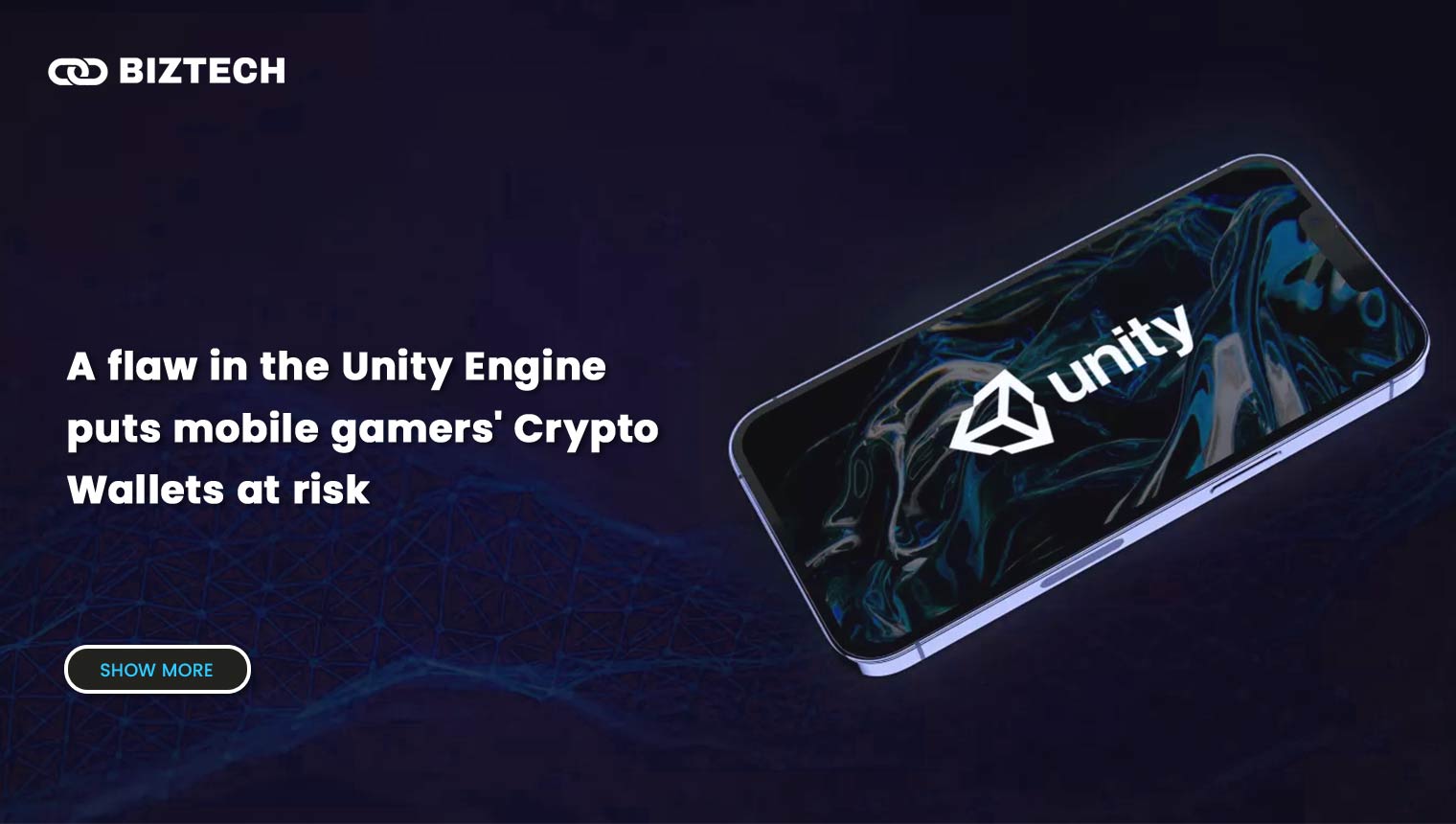
Two anonymous sources told Cointelegraph on October 3, 2025, that a serious security hole in the Unity game engine might let bad code get into mobile games and steal customers’ cryptocurrency wallets. This could affect Android apps made as far back as 2017. Unity Technologies, a San Francisco-based company that makes one of the most popular game creation platforms in the world, is covertly sending updates to a small number of partners.
Public guidance is anticipated to be out early next week. This “in-process code injection” bug mostly affects Android, but it also affects Windows, macOS, and Linux to a lesser extent. It might allow attackers to overlay screens, record inputs, or steal data like seed phrases from hot wallets.
This hack is a hidden threat to millions of people, especially since Unity powers over 70% of the top 1,000 mobile games. In a time when mobile gaming and crypto are coming together—think in-game NFT purchases or wallet-integrated play-to-earn titles—this breach is a sneaky menace.
There are no documented exploits yet, but the dangers could rise to the point where devices are compromised in some situations. Gamers and crypto holders need to act quickly. This event shows how weak the security of consumer tech ecosystems is, since a single weakness in an engine might cost billions of dollars in digital assets if it isn’t fixed.
How Unity’s Flaw Makes It Possible for Crypto Theft
Unity’s ecosystem includes billions of devices, which lets developers make experiences that work on many platforms using technologies like its real-time 3D engine and content store. The hidden vulnerability, which was found by GMO Flatt Security’s RyotaK on June 4, 2025, and given the CVE-2025-59489 number, is due to unsafe file loading and local file inclusion. This lets injected code run at the app’s privilege level. Some sources call it a “in-process code injection,” which means that third-party files or plugins—common in Unity’s collaborative workflow—could have malware that runs quietly in the game environment.
Android is the main vector because sideloaded or changed APKs from sources other than the Play Store don’t go through Google’s screening process. Attackers might share hacked copies of popular games like Genshin Impact or PUBG Mobile, adding code to show phony login prompts or steal wallet seed phrases from the clipboard.
Even if they don’t take over the whole device, tactics like screen scraping or input capture could steal credentials from apps like MetaMask or Trust Wallet, which work with games to make crypto transactions easy. Desktop builds put Windows, macOS, and Linux at similar but less serious dangers. This could harm PC gamers who use hardware wallets like Ledger.
No widespread exploitation has been reported—Unity affirms zero repercussions to date—but the flaw’s endurance (since 2017) compounds worries. A Google spokeswoman said on October 3, “Unity is giving app developers a patch to fix this problem, and developers should update their apps right away.”
Google Play will help developers get patched versions out as rapidly as possible. Based on what we’ve uncovered so far, there are no malicious apps on Play that take use of this flaw.
Unity’s response has been both proactive and quiet: Patches and a standalone tool have been released privately since October 2. Full disclosure will be made by Security Advisory CVE-2025-59489 on October 6-7.
There is a lot of talk about X. On October 3, pointed out the problem and called for updates because “there is a lot of concern among crypto users.” Also echoed Cointelegraph’s warning about possible Ethereum wallet dangers.
As gaming revenue around the world reaches $184 billion in 2025 (Newzoo) and crypto-gaming TVL approaches $5 billion, this weakness might damage confidence at the crossroads of two rapidly growing industries.
Why Gamers Are the Best Targets for Crypto
This weakness might be a goldmine for bad actors because Unity is so common; more than half of new mobile games utilize it. Mobile gamers, who often have their wallets open for in-game economies (like Axie Infinity’s peak of $1 billion), are especially at risk.
The injection might take advantage of “certain conditions” that make things worse, including accessibility services giving authorization to view the screen, to steal seed phrases or approve transfers that shouldn’t happen.
The mobile-first tendency in crypto makes things much more dangerous: Chainalysis says that 60% of wallet interactions happen on Android, where sideloaded APKs, which are typical for region-locked games, can get by Play Protect inspections.
There are several examples from history that are similar: The 2022 Ronin attack stole $625 million by putting code into a gaming blockchain. The 2024 Android malware campaigns, on the other hand, targeted 1.2 million devices to steal cryptocurrency.
Here, the threat is less obvious; there is no remote takeover, but there are sneaky overlays that seem like wallet prompts, which might make millions for each game that is hacked.
According to Google’s findings, there have been no proven wallet draining linked to this flaw yet, although the risk is real: In 2025, hackers stole $2.1 billion from crypto exchanges (CertiK), thus gamers are easy targets. Developers have to use Unity’s tool to fix builds that are vulnerable. This is great for older games from 2017 and after.
Things Gamers and Crypto Holders Can Do
While you wait for Unity’s public notice, you can take steps to protect your assets. Experts and sources say that layered defenses are important because the bug takes advantage of app-level access instead of OS roots.
- Right away, update: Make patching Unity-based games through app stores your top priority. Google Play will speed up developer releases. Sideloaded apps won’t update automatically, so you’ll need to delete and reload the official versions. After October 6, look at the game changelogs for “security fixes.”
- Don’t use Sideloads or APKs: Avoid downloading from sites like APKPure that aren’t official. Malware typically hides in modded games. Check for the verified mark on Google Play and scan with Play Protect (Settings > Security > Google Play Protect).
- Turn off risky permissions: Look over app overlays and accessibility services (Settings > Apps > Special Access). Take away gaming apps’ ability to read screens, since this lets scraping happen. App Ops (for rooted smartphones) and other tools provide you fine-grained control.
- Separate Wallets: Store your crypto on a different device or in cold storage, like a Ledger Nano. When playing games, use read-only viewers to check your balances, and turn on 2FA/biometrics for hot wallets. For crypto in games (like Immutable X titles), use sub-accounts to keep your money safe.
- Watch and Teach: Use wallet apps with anti-phishing features like Exodus or MetaMask’s hardware integration, and use antivirus software like Malwarebytes for Android. Teach people about warning signs: Updates to games or wallet pop-ups that you didn’t ask for.
According to Cointelegraph sources, these techniques reduce risk even if injected code is present. In the long run, push for audits at the engine level. Unity’s Bug Bounty program pays up to $10,000 for these kinds of reports.
Unity’s Power and Safety Close look
Unity’s size—over 3 billion installs, powering bestsellers like Pokémon GO and Genshin Impact—makes this vulnerability a systemic concern, like the MOVEit hack in 2023 that affected 60 million users.
As crypto-gaming grows (Axie’s economy is worth $4 billion), engine weaknesses could lead to large thefts, which would make people less likely to trust hybrid apps. Unity’s responsible disclosure is in line with best practices, but the seven-year delay raises worries about proactive scanning in its Asset Store, where 1.5 million packages are available.
This is a wake-up call for the crypto market, Chainalysis says that mobile wallets contain 40% of $2 trillion in assets, and there is a lot of overlap between mobile wallets and gaming’s 3 billion consumers.
A breach might lead to a lot of insurance claims and slow down adoption, but quick patching—Unity’s tool is already live—lessens the damage. The FTC and other regulators may want developers to make certain information public, while developers may look into other options like Unreal Engine for stronger builds.
Conclusion
Unity’s Android vulnerability, which has allowed code injection since 2017, is a hidden threat to mobile gamers’ crypto wallets through overlays and scraping. This means that wallets need to be updated right away, sideloading should be avoided, and wallets should be kept separate. The threat is manageable for now, but it shows how weak Unity’s grip on 70% of mobile games is. This is a strong reminder that security is not optional as crypto and gaming become more similar. Developers, fix it quickly; users, keep your assets separate. In a $184 billion gaming sector that uses blockchain, the best way to power up is to be alert. This defect should be used to make ecosystems stronger.