Stay connected with BizTech Community—follow us on Instagram and Facebook for the latest news and reviews delivered straight to you.
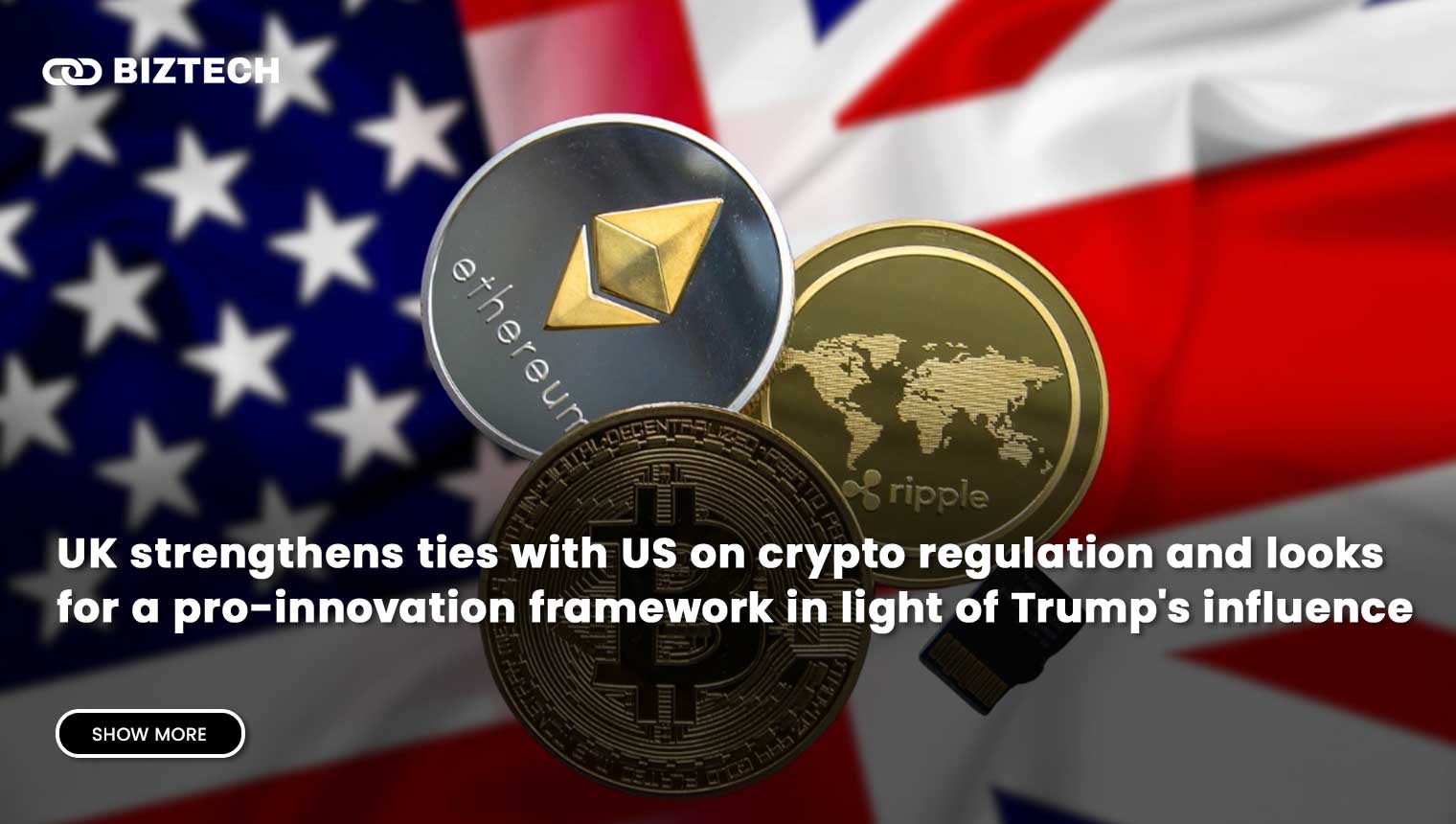
The UK is getting ready to work more closely with the US on regulating cryptocurrencies. They want to achieve this by following the Trump administration’s crypto-friendly policies to encourage innovation and speed up the use of cryptocurrencies in the business. The Financial Times reported on September 16, 2025, that UK Chancellor Rachel Reeves and US Treasury Secretary Scott Bessent met in London with executives from major crypto companies like Coinbase, Circle, and Ripple, as well as global banks like Bank of America, Barclays, and Citi. This abrupt accord comes after UK crypto groups pushed for a more open position, saying that the country’s conservative policy was getting in the way of innovation. The agreement could bring together legal frameworks, improve access across borders, and make both countries leaders in digital assets. Stablecoins would be the main focus, which is similar to what the US wanted under President Donald Trump. The global crypto market valuation is now over $4 trillion. This transatlantic agreement marks a strategic move toward standards that are more consistent and protect consumers while still allowing for growth. This might bring in billions of dollars in institutional investment.
The High-Level Talks and Deal
On September 16, officials and industry leaders met at Downing Street to talk about how to better coordinate digital asset policies. Chancellor Reeves and Secretary Bessent talked a lot about making rules more consistent, especially for stablecoins and tokenized securities. They both wanted to encourage innovation while lowering concerns like money laundering and market instability. People from Coinbase, Circle, and Ripple spoke out in favor of simpler frameworks to make cross-border operations easier. People from banks, on the other hand, stressed the importance of connecting with traditional finance.
This change comes from earlier signs. In April 2025, during a fintech symposium, Reeves met with Bessent to talk about trade deals and working together on crypto, which showed that she wanted to strengthen US-UK ties. Sources called the September talks “mendadak,” which means “sudden.” They were pushed by UK advocacy groups like the Crypto Council for Innovation, which said that Britain’s overly conservative laws have caused it to fall behind the US and EU in fintech leadership. People on X were happy by the news, and @CryptoPietXRP said that Ripple’s inclusion was a sign that cross-border dialogue was become more mature. Cassie Craddock from Ripple said that this might “set a template for international cooperation.”
Even though there hasn’t been an official agreement yet, officials say an announcement is coming soon. This might include shared testing environments for digital securities and stablecoin standards that are in line with each other. This expands on the UK’s draft guidelines from May 2025, which treat crypto exchanges and dealers like regular banks and other financial institutions, putting a lot of emphasis on consumer protection and openness.
Focus on Stablecoins and Getting People to Use Them
Stablecoins became a key part of the talks, showing what the US wanted under Trump. His family’s ties to projects like World Liberty Financial have brought further attention to the sector. The US GENIUS Act of July 2025 set up a federal system for payment stablecoins. It focused on licensing, reserves, and redemptions without limits on individual ownership. The UK seems to want to copy this model.
Stablecoins have come under fire in the UK. The Bank of England (BoE) suggested that people should only be able to possess £10,000 to £20,000 ($13,600 to $27,200) in “systemic” stablecoins, which are the ones that are used a lot for payments. Businesses should only be able to own £10 million ($13.6 million) in these coins. This is to keep money from leaving banks and to keep the economy stable. Some crypto groups, including Coinbase, have called them “unworkable” since they would need expensive monitoring systems like digital IDs and might push innovation to other countries. This is especially true since the US and EU’s MiCA framework doesn’t have these kinds of caps. Tom Duff Gordon, Coinbase’s VP of international strategy, said that the curbs are “bad for UK savers, the City, and sterling.”
The adoption data shows how important it is. A recent Aviva survey of 2,000 UK adults found that 27% would be open to adding crypto in their pension accounts. More than 40% said they would do it for higher returns, and 23% said they would even take money out of their current pensions to invest directly. About 11.6 million adults in the UK have had crypto, which is one in five. Two-thirds of them still own it, but 40% say they have trouble with banks, such as transaction blockages because of volatility and fears of scams. Younger investors (ages 25 to 34) are the most engaged; 20% of them currently use pension savings to buy crypto. Concerns remain: 41% say security threats, 37% say lack of regulation, and 30% say volatility.
New Rules in the UK
The UK has sped up its crypto framework. recommendations for May 2025 would add exchanges, dealers, and agents to the Financial Services and Markets Act, which will need stringent compliance for transparency and consumer protection. These recommendations will be approved by the end of the year. Chancellor Reeves thinks that aligning the UK with the US will help UK businesses get into American markets and bring in US capital. This is especially true since companies listed on the London Stock Exchange are looking to list in the US for greater values.
The digital securities sandbox is an important project that might be made with the US to allow tokenized assets like stocks and bonds. It is a place to test blockchain-based financial services. This comes after Reeves and Bessent talked about cross-border innovation in April 2025, which included SEC Commissioner Hester Peirce’s idea for a transatlantic sandbox. @BullMarketx100 on X spoke about the FCA’s consultation on exemptions from TradFi criteria to find a balance between innovation and honesty.
These actions respond to complaints about the UK’s “lamban” (slow) pace and make it more competitive with the EU’s MiCA and Asia’s new centers.
What this means for the crypto market
This agreement between the UK and the US might change global standards by making laws for stablecoins and tokenized assets the same in both countries. This could lower compliance costs and increase cross-border flows, possibly bringing billions into UK fintech. For stablecoins, loosening the Bank of England’s limits with US help might make it easier for pensions to be integrated, which would direct Aviva-surveyed interest into regulated products and stabilize the £3.8 trillion ($5.1 trillion) UK pensions market. Ripple and other industry leaders see it as a “template” for working together, which is good for tokens like XRP that are used for payments.
But there are still problems with the BoE. If the caps stay in place, they could make people less likely to adopt them, which would push businesses to the US. Broader effects include more trust in institutions, as 12% of people in the UK possess cryptocurrencies, which is up from 12% before Trump’s pro-crypto executive actions. On X, @CryptoPrachit stressed that UK companies should focus on stablecoins to get into the US.
Conclusion
The discussion between Reeves and Bessent on September 16 was a big step toward the UK and US working together on cryptocurrency. This is a big step toward having rules that protect markets while encouraging innovation. By focusing on stablecoins and sandboxes, it gets around adoption problems—like Aviva’s 27% pension interest and 11.6 million holders—possibly offsetting the Bank of England’s restrictive measures. As the UK removes its cautious image to mimic Trump’s supporting approach, this accord might raise London’s status as a fintech hub, draw US investment, and set worldwide examples. It’s good for cross-border expansion in the business, but we’ll have to wait for the formal announcement to see if it really crosses regulatory gaps or just shows intent.