Stay connected with BizTech Community—follow us on Instagram and Facebook for the latest news and reviews delivered straight to you.
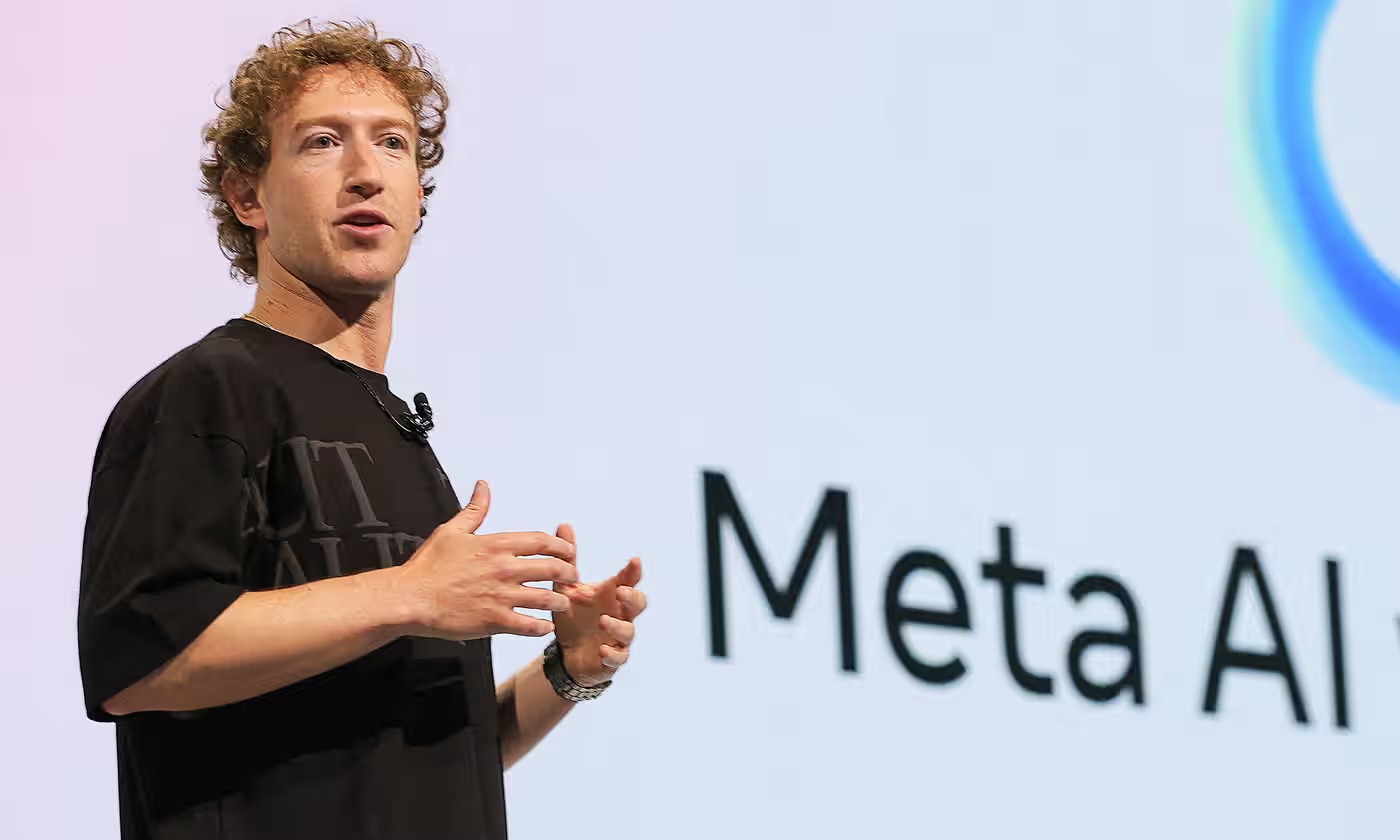
Meta is preparing to spend hundreds of billions of dollars building some of the world’s largest AI superclusters — an audacious move that could reshape the competitive landscape in artificial intelligence.
CEO Mark Zuckerberg announced that Meta will construct several multi-gigawatt data centers across the U.S., including a massive facility dubbed Prometheus in New Albany, Ohio, set to go live in 2026. Another, named Hyperion, will rise in Louisiana and could scale to five gigawatts over the next few years. To put it in perspective, just one of these facilities will span nearly the footprint of Manhattan (59 square kilometers).
“We’re building multiple more titan clusters as well,” Zuckerberg posted on Threads. “Just one of these covers a significant part of the footprint of Manhattan.”
Why It Matters
Meta’s bold move isn’t just about scale — it’s about AI dominance. The company recently restructured its AI division under the name Superintelligence Labs, and is now positioning itself to leapfrog rivals like Google and OpenAI by building first-to-market infrastructure capable of supporting advanced AI models at unprecedented capacity.
These “titan clusters” will power Meta’s evolving portfolio of AI products, from the Meta AI assistant and smart glasses to video-generating ad tools and a potential successor to its open-source LLaMA models. Insiders say Meta may pivot away from its open-source approach and pursue a closed, proprietary model more aligned with its long-term revenue goals.
“Spend Your Way to the Top”
Karl Freund of Cambrian AI Research summed it up plainly:
“Zuckerberg intends to spend his way to the top of the AI heap.”
The company has the capital to try. In 2024, Meta pulled in nearly $165 billion in revenue, most of it from its highly profitable advertising business — a business already benefiting from AI-driven improvements in targeting and pricing.
Meta recently bumped its 2025 capital expenditures forecast to as much as $72 billion, underscoring just how serious it is about building the infrastructure backbone for superintelligence.
High Stakes, High Demand
Analysts caution that while the investment is long-term, the scale is staggering. AI-driven data centers are among the most resource-intensive facilities on Earth, consuming vast amounts of energy and water. A single AI query — like asking a chatbot a question — can use as much water as a small bottle. A recent study estimated AI data centers could consume 1.7 trillion gallons of water globally by 2027.

Environmental impact aside, the AI arms race is also a talent war. Zuckerberg has been personally leading a talent acquisition spree, bringing in former Scale AI CEO Alexandr Wang and GitHub veteran Nat Friedman to lead the Superintelligence Labs. Meta recently invested $14.3 billion in Scale AI to further cement that relationship.
Investor Reaction: Cautious Optimism
Meta’s stock edged up 1% on the news and is up over 20% year-to-date. While the market reacted mildly, analysts remain split.
“At this scale, the investment is more oriented to the long-term competition to have the leading AI model, which could take time to materialize,” said Gil Luria, analyst at D.A. Davidson.
Still, Meta’s gamble is clear: dominate infrastructure, talent, and AI model development — and secure a front-row seat in the next wave of computing.