Stay connected with BizTech Community—follow us on Instagram and Facebook for the latest news and reviews delivered straight to you.
In the ever-evolving world of cryptocurrency, concepts such as “burning” often emerge as a smart strategy to maintain ecosystem balance. The term first appeared around 2017, when early projects began experimenting with ways to reduce their token supply.
Now, in 2025, burning has become a standard tool for many protocols, with the value of “lost” tokens reaching tens of millions of dollars. Just imagine: over $52 million in digital assets have been sent to the Ethereum blockchain’s “black hole” alone.
Let’s break down what crypto burning actually is, how the process works, the reasons behind it, and its impact on prices and the market as a whole. I will try to be clear and thorough, with the latest data from reliable sources.
Understanding Crypto Burning: Why Are Tokens “Burned”?
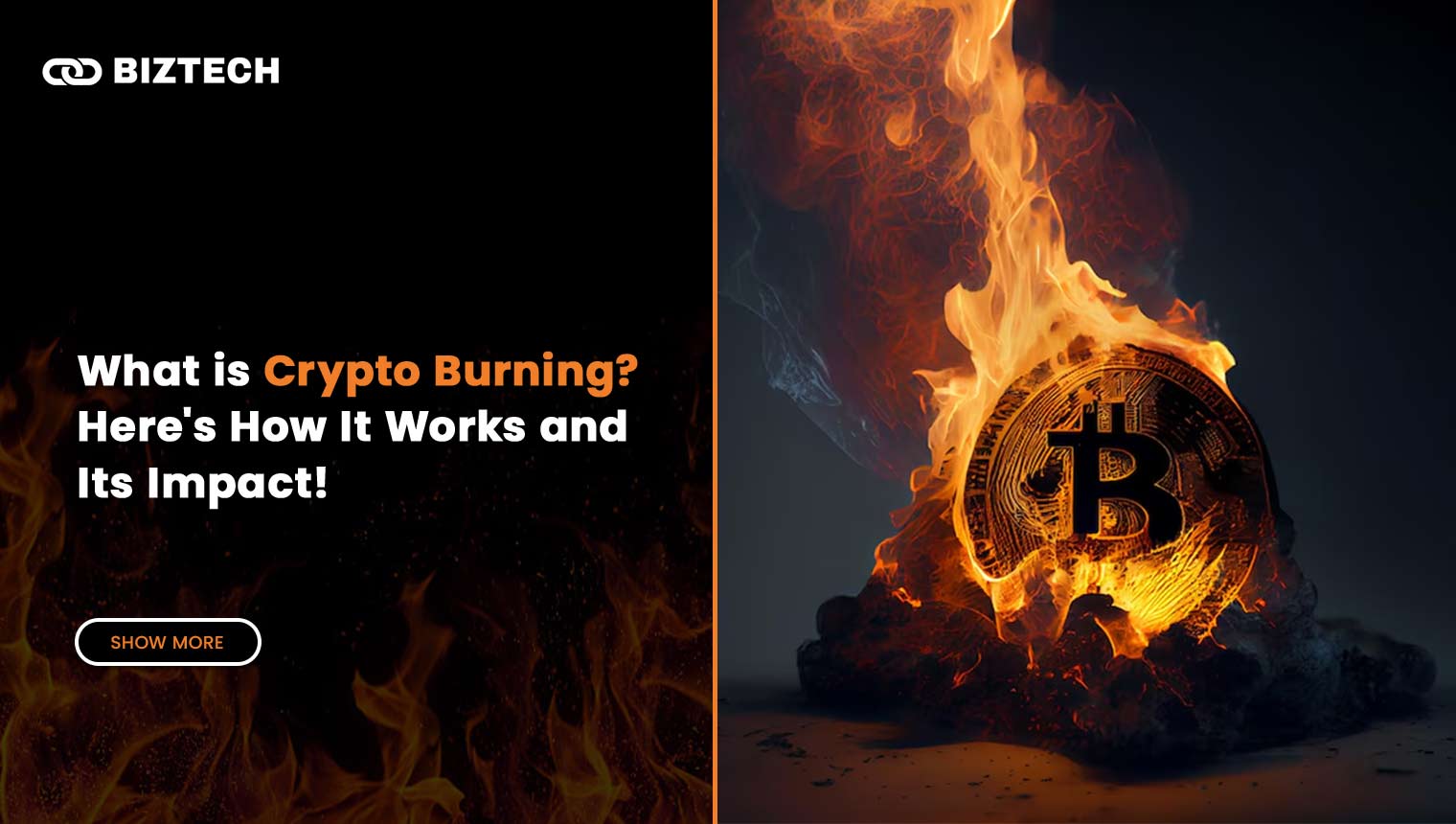
Essentially, crypto burning is the process of permanently removing digital tokens from circulation to reduce the total available supply. It is not physical burning like paper money, but more like sending assets to a wallet address that no one can access. These addresses are often referred to as “burn addresses” or “null addresses,” such as 0x0000000000000000000000000000000000000000 on the Ethereum network, which have no private key—meaning no one can retrieve the tokens from there.
According to Investopedia, burning is similar to a company buying back its own shares to increase value for remaining shareholders. The goal? To create scarcity, which can stabilize or even boost the value of the token.
This process is transparent because it is recorded on the blockchain, so anyone can verify it—for example, through an explorer like Etherscan. Burning is typically carried out by the development team, the community, or automated mechanisms like buy-back and burn, where a portion of transaction fees is used to buy and burn tokens. From my experience covering the market, burning isn’t just a gimmick. It’s a response to a common issue in crypto: excess supply that can lead to inflation.
For example, projects like Binance Coin (BNB) regularly burn tokens to keep their ecosystem healthy. And recent data shows the impact: on Ethereum’s dead address, there are 14,123 ETH that have been burned, worth approximately $52.6 million at the current ETH price of $3,726. This includes various ERC-20 tokens sent there, indicating massive burning activity.
How Token Burning Works: Step by Step
The burning process sounds simple, but it involves complex blockchain mechanisms. Essentially, tokens are sent to a special address designed to be inaccessible, so they are considered “lost” forever. This can be manual (announced by the team) or automatic (like in proof-of-burn consensus, where miners “burn” coins for validation rights).
Here are the main steps, based on common practices I’ve observed across various projects:
- Strategic Decision: The project team or community decides how many tokens to burn. This is often announced via a white paper or social media to build transparency. For example, dotmoovs recently announced a 20% burn of their supply on X, as part of a smart contract migration.
- Transfer to Burn Address: Tokens are transferred to a null address. On Ethereum, this is usually the zero address. This transaction requires a gas fee, so there is a real cost. Once transferred, the tokens cannot be moved again.
- Verification on the Blockchain: Everything is recorded immutably. You can check this on an explorer—for example, the latest transactions on Ethereum’s dead address include a transfer of 0 ETH but with a fee, indicating that burning activity continues.
- Supply Update: The system automatically reduces the total supply. Some projects like Injective use this for a deflationary model, where the burn rate is increased by 400% via the INJ 3.0 upgrade in January 2025.
In practice, burning can take the form of proof-of-burn (PoB), where coins are burned for mining rights, like in Slimcoin. Or, like in the $PENGU memecoin, rumors of a burn alone were enough to pump the price by 37% weekly.
Main Reasons Why Tokens Are Burned
Burning isn’t done arbitrarily—there are business and economic reasons behind it. From my analysis, it is often a way for projects to show long-term commitment. Here are the key reasons, with recent examples:
- Increase Value through Scarcity: Reduce supply, demand remains the same, price goes up. Similar to a stock buyback. Example: Injective has burned 6 million INJ by April 2025, helping predict a price of $50 by the end of the year.
- Controlling Inflation: Projects with high maximum supply are vulnerable to hyperinflation. Burning limits this, like $CL8Y, which uses burns for deflationary mechanics.
- Removing Unused Tokens: Remnants from ICOs or presales are burned to prevent dumping. Tatum.io calls this a standard post-TGE practice.
- Building Trust: A positive signal to the community. Like Johnbubu on Solana, who burns fees for the NFT ecosystem.
- Additional Utility: Some, like World Mobile, discuss burning for scarcity via daily utility.
The Impact of Burning on Token Prices and Markets
In theory, burning is positive: reducing supply can increase prices if demand remains stable. However, reality is more complex. Euphoria is often temporary and influenced by market sentiment. A classic example: INJ’s June 2024 burn caused a 18% price increase, but in 2025, the 3.0 upgrade triggered a 400% deflation, with an average price prediction of $27.43.
Negative impacts? If overdone, it can signal issues (like initial excess supply). OneSafe.io calls burning a “double-edged sword”—it boosts value but carries real risks if not supported by utility. In the 2025 market, with BTC rebounding, burning could amplify a bull run, but be cautious of FOMO.