
Stay connected with BizTech Community—follow us on Instagram and Facebook for the latest news and reviews delivered straight to you.
President Donald Trump signed an executive order that could reshape the retirement savings landscape for millions of Americans, unlocking access to cryptocurrencies, private equity, and real estate within 401(k) plans.
This landmark directive, confirmed by the White House Press Office, targets the $12.5 trillion 401(k) market, signaling a seismic shift toward mainstream adoption of digital assets. As Indonesia watches global crypto trends closely—evidenced by recent discussions about Bitcoin as a national reserve asset—this move underscores the growing legitimacy of cryptocurrencies, even as it raises questions about risk and regulation.
A Bold Step for Crypto Adoption
The executive order directs the U.S. Labor Department to reevaluate restrictions on alternative assets in defined-contribution plans, including cryptocurrencies like Bitcoin and Ethereum, alongside private equity and real estate.
A senior White House official emphasized that the order instructs Labor Secretary Lori Chavez-DeRemer to clarify fiduciary responsibilities and provide guidance for plan sponsors, ensuring a smoother path for integrating these assets into retirement portfolios.
The directive also calls for coordination with the Treasury Department and the Securities and Exchange Commission (SEC) to explore regulatory adjustments, potentially dismantling barriers that have long restricted retail investors from crypto exposure.
This move builds on earlier actions by the Trump administration. In May 2025, the Labor Department rescinded Biden-era guidance from 2022 that urged “extreme caution” for crypto in 401(k) plans, citing risks of fraud, theft, and volatility.
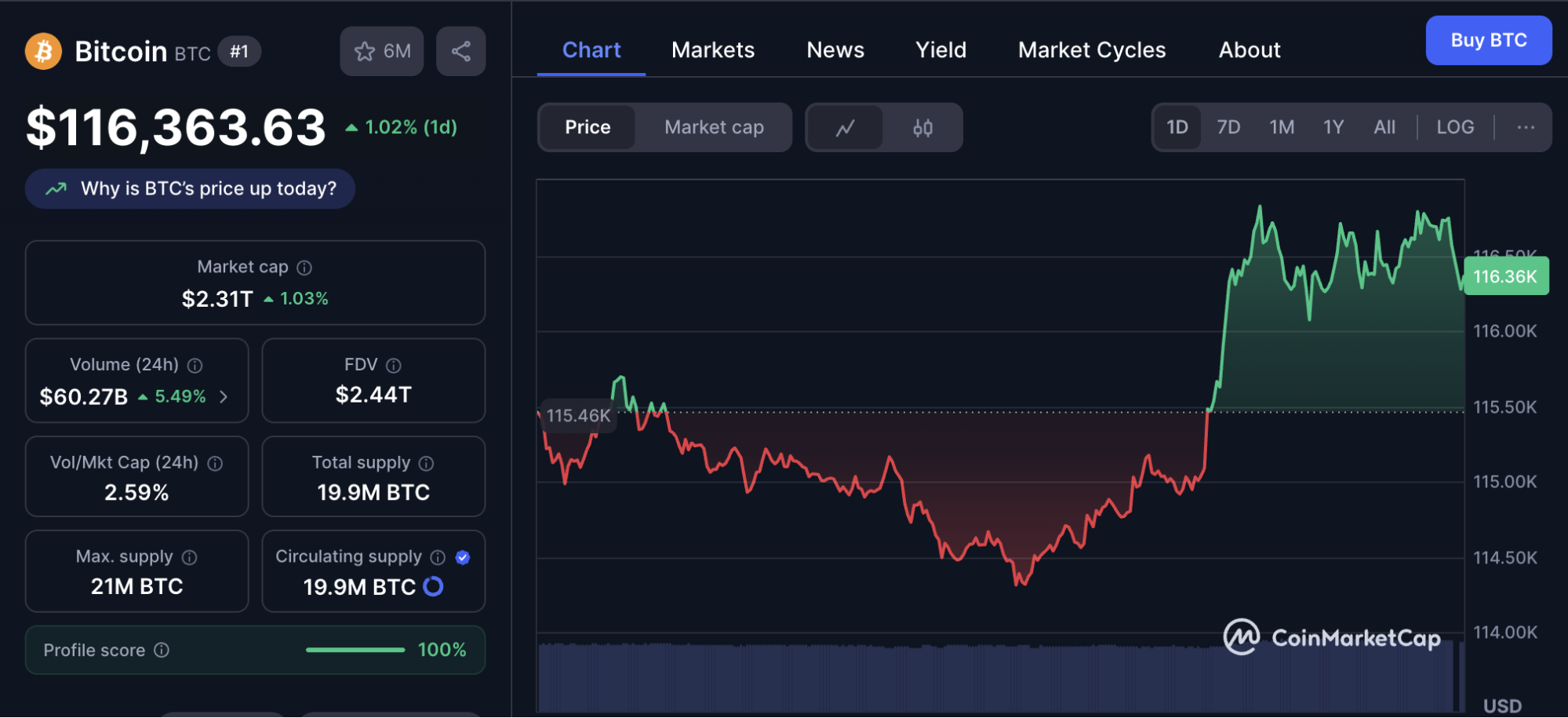
The reversal, described by the Trump administration as correcting regulatory “overreach,” paved the way for today’s order, which could channel billions into crypto markets over time. Some posts on X, reflect market enthusiasm, noting Bitcoin’s 1% climb to $116,000 and Ether’s 5% surge on the news, alongside gains in crypto-related stocks like Coinbase (3%) and Galaxy Digital (6%).
Opportunities for Investors and the Crypto Industry
The 401(k) market, holding $12.5 trillion in assets across over 715,000 plans as of September 2024, represents a coveted opportunity for crypto firms seeking broader retail exposure. Historically, 401(k) investments have been limited to stocks, bonds, and mutual funds due to fiduciary concerns and regulatory uncertainty.
Trump’s order could democratize access to digital assets, allowing everyday Americans to allocate retirement savings to Bitcoin ETFs, Ethereum funds, or other crypto products. Industry leaders like Galaxy Digital CEO Mike Novogratz predict “tons of money” will flow into crypto markets, with firms like BlackRock already planning 401(k) target-date funds with 5–20% private asset allocations by 2026.
For investors, the move offers diversification beyond traditional assets. Proponents, like PGIM DC Solutions’ Josh Cohen, argue that alternative assets could extend retirement income by four years or more, particularly for pre-retirees seeking inflation protection.
Michael Ryan, founder of MichaelRyanMoney.com, called the order “revolutionary” for financially literate investors, noting that private markets have historically delivered 15–20% annual returns for high-net-worth individuals, compared to 7% for typical 401(k) portfolios.
Risks and Regulatory Hurdles
Despite the bullish sentiment, the inclusion of crypto in 401(k) plans raises significant concerns. Bitcoin’s volatility, evident in its recent drop to $115,000 amid whale profit-taking, poses risks for retirement savers accustomed to stable returns. The FBI’s 2024 Internet Crime Report noted $3.9 billion in crypto scam losses, with pig butchering schemes—targeted by Meta’s recent WhatsApp crackdown—highlighting vulnerabilities for less-savvy investors. Senator Elizabeth Warren has criticized the move, questioning the lack of transparency and high fees in private markets, which could erode retirement savings.
Liquidity is another issue. Unlike stocks, crypto and private equity often involve longer lockup periods, complicating withdrawals for retirees. Certified financial planner Philip Chao warned that employers could face lawsuits if crypto investments sour, as ERISA mandates prioritizing investors’ best interests. BlackRock CEO Larry Fink acknowledged “litigation risk,” emphasizing the need for robust analytics and investor education. SEC Chair Paul Atkins stressed disclosure, urging clear communication of crypto’s risks.
Regulatory clarity remains a work in progress. While the order directs inter-agency coordination, the Labor Department and SEC must navigate ERISA’s fiduciary standards and address custody, valuation, and volatility concerns. Plan sponsors, wary of legal risks, may hesitate without Congressional action to bolster protections, as noted by industry executives. In Indonesia, similar regulatory caution prevails, with Bank Indonesia’s crypto payment ban and OJK’s focus on risk management limiting rapid adoption.
Market and Global Implications
The executive order has sparked immediate market reactions. Bitcoin reclaimed $116,000, and crypto stocks rallied, with Bitmine Immersion up nearly 8%. The move aligns with Trump’s broader crypto agenda, including the GENIUS Act for stablecoin regulation and a proposed Bitcoin reserve. Asset managers like Apollo, Blackstone, and BlackRock, already partnering with Vanguard and Empower, stand to benefit as they tap into the 401(k) market.
Globally, the order could set a precedent. States like North Carolina and Wisconsin have already allocated up to 5% of retirement funds to Bitcoin and Ethereum ETFs, while Michigan holds $16.6 million in crypto assets. Indonesia, exploring Bitcoin mining and reserves, may draw inspiration, though its $900 billion sovereign wealth fund faces stricter oversight. X posts, like @bensimpsonau’s, highlight bullish sentiment, noting that consistent 401(k) inflows could drive sustained buying pressure for Bitcoin.
A New Era for Retirement Savings?
Trump’s executive order marks a turning point for crypto’s integration into mainstream finance, potentially reshaping how 401(k) savers approach retirement. For Indonesia’s crypto community, it’s a signal of global momentum, though local adoption hinges on regulatory evolution.
While the promise of diversification and higher returns is enticing, the risks—volatility, scams, and litigation—demand caution. As Jason Fichtner of the Retirement Income Institute told Newsweek, “Expanding opportunities for broader portfolios will allow for greater risk-adjusted returns,” but only for those who understand the stakes.
As the Labor Department and SEC work to implement Trump’s directive, the crypto industry celebrates a long-sought victory. Yet, for everyday Americans—and Indonesians watching from afar—the challenge lies in balancing innovation with financial security. With proper education and regulatory safeguards, this could mark the dawn of a new era for retirement investing. Without them, it risks becoming a high-stakes gamble for millions.