Stay connected with BizTech Community—follow us on Instagram and Facebook for the latest news and reviews delivered straight to you.
On Tuesday, August 26, 2025, US President Donald Trump officially fired Lisa Cook from her job as a member of the Federal Reserve Board of Governors.
The move has already come under a lot of criticism since it raises serious doubts about the independence of the US central bank and what it could mean for the value of the US dollar. Could this political move make the dollar weaker? Let’s take a deeper look at what this means.
A Dismissal That Doesn’t Make Sense
A Reuters story says that President Trump used his executive power to fire Cook because she broke the law by handling mortgage documents in 2021.
Specifically, Cook was accused of saying that two houses were her main residence, which is a very serious crime that the government says is enough reason to kick her off the Federal Reserve board.
The Department of Justice has been asked to look into the case further, and officials are looking into what the legal consequences might be.
But a lot of people who watch the market and write about politics say that the official reason may not be the whole picture.
The move seems very political, especially since Cook was only recently appointed and Trump is still putting pressure on the Federal Reserve’s monetary policies.
This action can be regarded as a show of executive power, but it also shows a larger effort to change the Federal Reserve’s course, which has raised questions about the bank’s independence, which is a key part of its legitimacy.
What the market did and what the Fed did
When Cook was fired, it had an immediate effect on financial markets around the world. The US dollar lost value against a number of other currencies, while US short-term Treasury yields fell during Asian trade hours.
People in the market rapidly started to guess who may take Cook’s position and what that might signal for the Federal Reserve’s future actions.
It seems that everyone agrees that Trump would probably choose someone who is more dovish, which could lead to more interest rate reduction. This is something that has previously been spoken about in US economic policy.
Even while the markets didn’t react too strongly at first, economists say that the longer Trump puts pressure on the Fed, the more likely it is that things will become unstable.
People are worried that if Trump keeps getting more power over the central bank, the dollar could stay weak for a long time and the yield curve could get steeper.
Some analysts in the bond market have said that this kind of political involvement could cause long-term uncertainty, which would hurt investors’ trust in US assets.
“This kind of political intervention can make the market more uncertain, which can lead to more volatility and changes in how investors act,” said one unnamed bond market analyst.
Trump’s Push for Lower Rates and the Political Situation
This firing is part of a larger story that has been going on for the past few months. Trump has been asking the Federal Reserve to cut interest rates in order to boost economic development. Trump is getting more and more angry with the Fed’s careful approach to monetary policy, and he is speaking out more and more about how he wants the government to do more to help the economy.
This most recent move—firing a Federal Reserve board member who was thought to be in line with the central bank’s more neutral stance—could be interpreted as a sign that the White House will try even harder to steer monetary policy in a certain way. Trump’s plan to boost the economy, which depends on lower interest rates, is becoming more and more at odds with the Federal Reserve, which has been more focused on inflationary pressures and the economy’s long-term health.
In this situation, removing Lisa Cook might be a hint to the Fed that Trump wants to take a more active role in monetary policy, which would put even more pressure on the bank to take a more dovish position. If this tendency keeps up, it might make people rethink how much political power should be allowed to affect the decisions of the central bank.
The Dollar’s Future: Will It Stay the Same?
The political effects of Cook’s firing are big, but the bigger question is: What does this mean for the US currency in the long run?
Several banks, including JPMorgan, have chimed in on the matter. They say that the dollar may lose value in the short future, but it will still be the world’s major reserve currency.
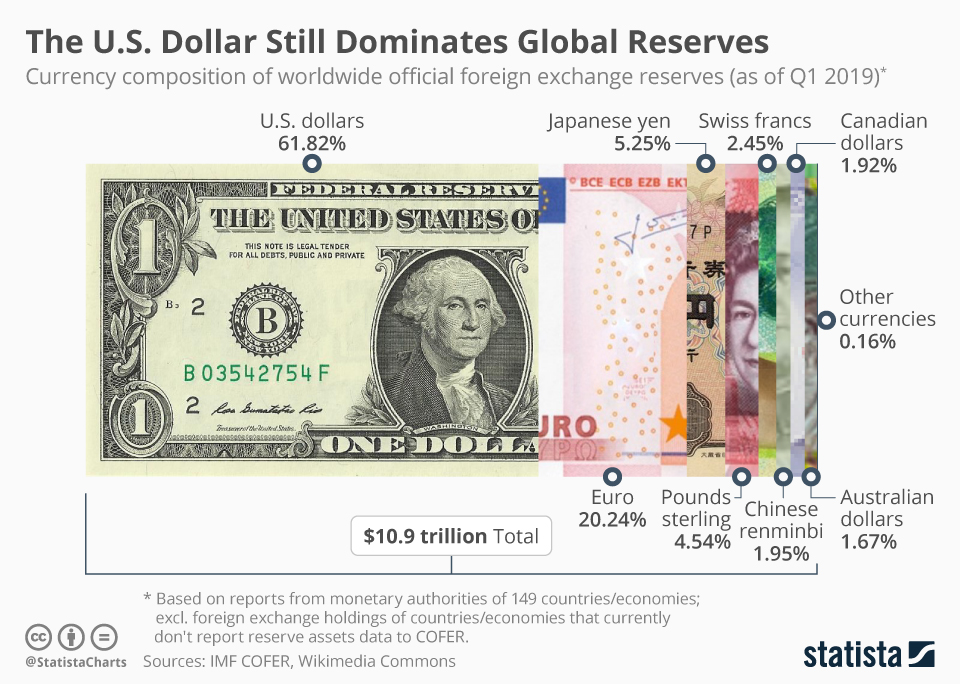
The dollar still makes up about 58% of the world’s foreign exchange reserves as of currently. Even if some foreign central banks have started to invest in other assets, like gold, the dollar is still the most important currency for trade and banking around the world.
JPMorgan experts said that the US dollar is not expected to be replaced by another currency anytime soon. However, it might go through a long period of decline, like it did from 2002 to 2008. The dollar is worth a lot right now, so if people start to lose faith in the market, it might go down.
In reality, even if the world is changing politically and people are trying to get rid of the dollar, its function is still mostly unquestioned. That being said, there is a chance that the economy may stay sluggish for a long time, especially if Trump or any future president continues to undercut the idea that US monetary policy is stable and independent.
The US dollar is changing
As the news of Lisa Cook’s firing spreads, it’s still unclear what it means for the US dollar’s future. In the short to medium future, it looks like the dollar will stay the world’s most important reserve currency. On the other hand, political pressure on the Federal Reserve might cause the currency markets to be unstable and volatile for a long time, especially if people think that Trump’s actions are making the Fed less credible.
In the end, this circumstance makes a very important point: the strength of the dollar depends not only on how well the US economy is doing, but also on how stable people think the US financial system is around the world. If people lose faith in the institutions that support the dollar, like the Federal Reserve, it could have big effects on the global economy and the dollar itself.
In the next few months, investors will be very interested in who Cook’s replacement is and how this choice fits into the bigger picture of politics and the economy. One thing is certain for now: the way US politics and monetary policy affect each other will probably have big effects on the future of the dollar and the stability of the world’s finances.