Stay connected with BizTech Community—follow us on Instagram and Facebook for the latest news and reviews delivered straight to you.
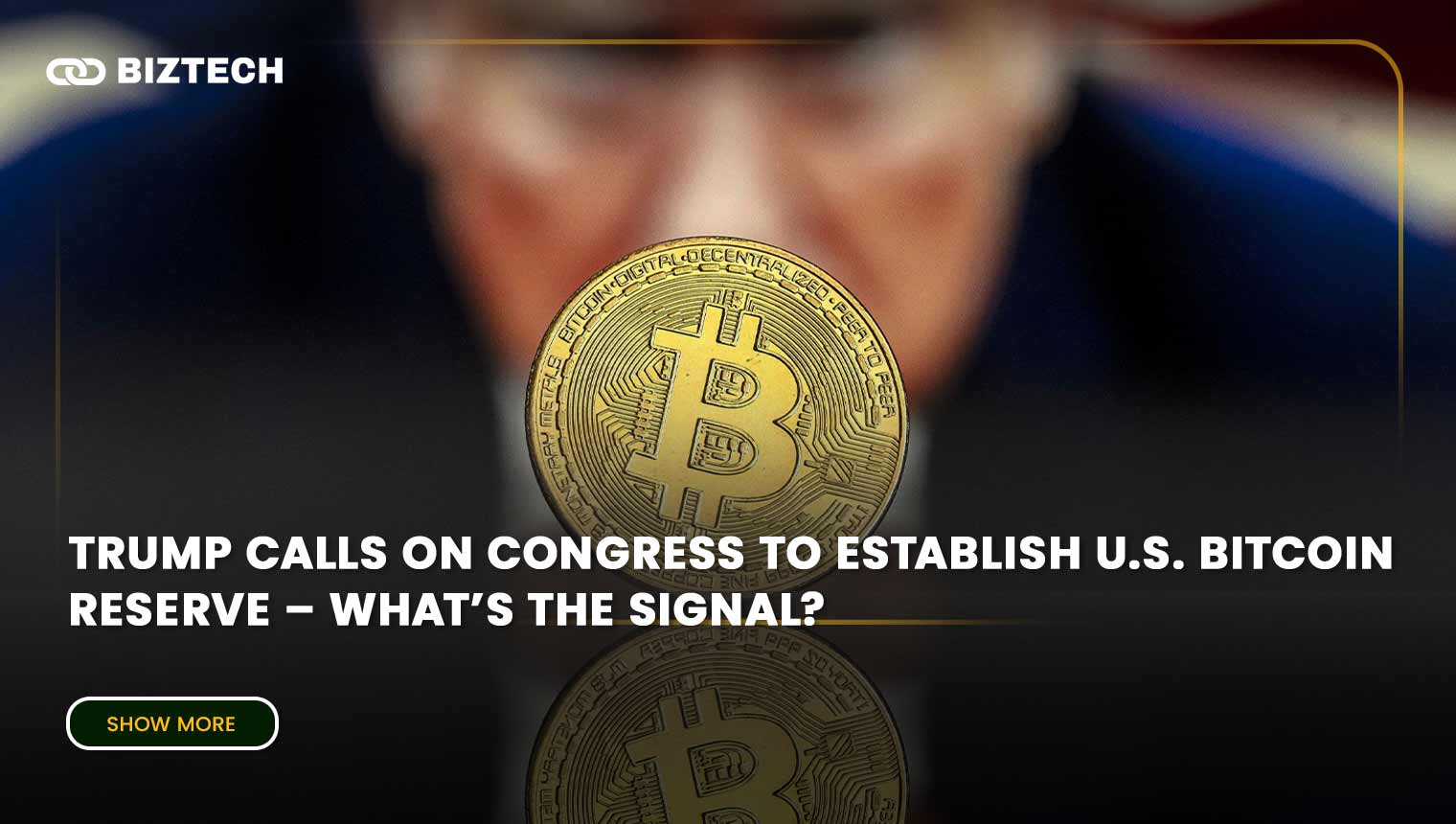
Bo Hines, who used to be the Executive Director of the White House Crypto Council, said that former President Donald Trump requested Congress to set up a strategic U.S. Bitcoin reserve.
This action has made people in both the cryptocurrency and financial sectors raise their eyebrows. It looks like the government is changing its mind about Bitcoin and other digital assets.
Hines’ statements came out at a time when there was a lot of talk about what would happen to cryptocurrencies in the U.S., especially Bitcoin. The former head of the White House’s digital asset policy team said that the order was part of a bigger strategic push. Hines says that the policy orientation is meant to be both politically important and financially smart, with the goal of not putting too much strain on the U.S. national budget.
What Does It Mean That There Has Been No Legislative Action?
The White House’s order has been verified, but Congress has not yet formally introduced a bill to create a Bitcoin reserve. The fact that there is no formal bill makes people wonder if the idea is possible and when it will happen.
Many people, meanwhile, saw Hines’ statement as a clear evidence that the Trump administration is trying to get Bitcoin more accepted in politics.
The U.S. government is starting to realize that Bitcoin and other digital currencies are getting too big to ignore. If the suggestion is accepted, it might lead to more talks about making laws concerning cryptocurrencies, which could make it easier for institutions to use them. There hasn’t been an official measure submitted yet, but the idea of a Bitcoin reserve shows that the government is interested in finding out how digital assets may help with national economic objectives.
There is a lot of talk about what Bitcoin’s future function will be, especially among Republican lawmakers. There have been reports of ongoing talks between the White House and some members of Congress about the matter, which is being looked into more as part of larger plans for the economy.
Effects on the crypto market and the world’s finances
If the U.S. government goes ahead with making a Bitcoin reserve, it might have a big effect on the cryptocurrency market. The announcement shows that Bitcoin is becoming more accepted, which could lead to more institutional investors accepting digital assets.
Some of the biggest Bitcoin holders are already in the U.S., and well-known people and businesses like MicroStrategy and Tesla are amassing substantial Bitcoin portfolios. If the government owns a lot of Bitcoin, it might change how Bitcoin’s price moves, how widely it is used, and what role it plays in the global financial system.
People who study the crypto market have already started to respond to the news, with some saying that it will have a good effect on the price of Bitcoin.
People are speculating that the U.S. government’s intervention may stabilize the price and make it less volatile, which would boost investor confidence.
Some analysts say that the U.S. getting involved might make Bitcoin more stable in the long run, which would show that the digital currency is here to stay.
Also, if the U.S. made a Bitcoin reserve, other countries would think about doing the same thing, which would speed up the use of cryptocurrencies around the world. El Salvador and other countries have already made Bitcoin legal tender. Other countries are watching intently to see how the U.S. handles the situation. If the U.S. makes Bitcoin a big part of its national economic policy, other countries might do the same, which could cause a ripple effect in markets throughout the world.
In the medium run, the development of a U.S. Bitcoin reserve might change how supply and demand work in the market, especially if the government starts buying a lot of Bitcoin. This would lower the quantity of Bitcoin that is available on the open market, which might make it more scarce and raise prices.
Digital finance is changing in a world where politics are changing.
The U.S. might make a Bitcoin reserve, which would have effects on both the economy and the way digital money works around the world. Because Bitcoin is decentralized, it might become a worldwide reserve asset, giving countries an alternative to established currencies like the U.S. dollar. The U.S. government might change the balance of power in the global financial system if it becomes one of the biggest investors of Bitcoin.
Bitcoin’s position in international politics is relatively new, but as more people use it, it might threaten the power of existing currencies. The idea of a Bitcoin reserve might be a first step toward bigger changes in how the world’s financial system works. This could lead to a world where digital currencies are very important in commerce and banking around the world.
In conclusion, is there a shift toward digital assets?
The U.S. Bitcoin reserve idea is still in its early stages, but the Trump administration’s actions show that the U.S. is becoming more open to digital assets. There could be a lot of effects on both the U.S. economy and the worldwide cryptocurrency market if a Bitcoin reserve were to be created.
It’s clearer than ever that Bitcoin could become an important part of the U.S. financial system, and this action could lead other countries to do the same. If this approach works, it might make Bitcoin a major factor in the future of global finance.
Bitcoin’s price is still unstable, and its position as a speculative asset is still up in the air. The creation of a U.S. Bitcoin reserve might provide it the credibility it needs to stabilize its place in the larger financial system. As things change, the world will be looking to see how the U.S. government manages its expanding collection of digital assets and whether other countries will do the same.