Stay connected with BizTech Community—follow us on Instagram and Facebook for the latest news and reviews delivered straight to you.
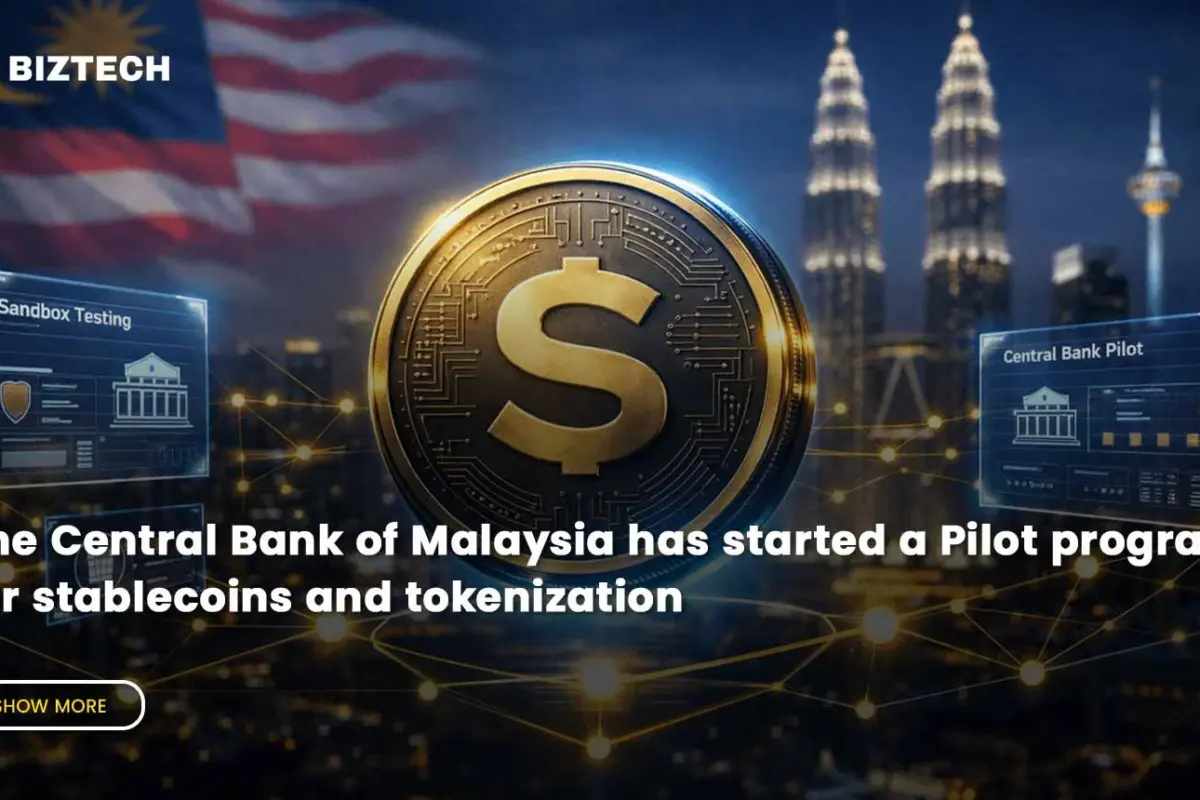
Bank Negara Malaysia (BNM), Malaysia’s central bank, has made a big move toward bringing blockchain-based financial innovation into its regulated ecosystem. BNM said on January 15, 2026, that it would start three pilot activities as part of its Digital Asset Innovation Hub (DAIH). These projects will look into using ringgit-pegged stablecoins for wholesale settlement, turning real-world assets (RWAs) into tokens, and making bank deposits into tokens. The pilots are meant to help make decisions about future policies and potentially lead to a wholesale central bank digital currency (CBDC) in the next several years.
The announcement is part of Malaysia’s larger goal to make itself the leading digital finance center in Southeast Asia. BNM wants to see how new technologies affect efficiency, financial inclusion, and the stability of the domestic payment system by testing them in a controlled regulatory sandbox. They also want to properly manage the risks that come with digital assets.
Read Also: Stablecoins vs Bitcoin Salaries: Why One Is Getting Ahead of the Other Because of Regulation
Three main pilot programs
The first pilot is all about using ringgit-pegged stablecoins for cross-border wholesale settlement. This means utilizing stablecoins guaranteed by Malaysian ringgit reserves to make it easier and cheaper for banks to send money to each other. This avoids some of the delays and costs that come with traditional correspondent banking networks. The second program is about tokenized real-world assets. It looks at how physical or financial assets, such bonds, commodities, or receivables, might be turned into digital tokens on a blockchain. In capital markets and trade finance, this might make things easier to buy and sell, allow for partial ownership, and speed up settlement processes.
The third attempt is tokenized bank deposits, which use a distributed ledger to digitize the debts of commercial banks. This could make it possible to make payments that can be programmed, settle instantly, and maybe even earn interest on digital ringgit balances, all while staying within the banking system. There will be stringent control of all three pilots, and the institutions that take part must follow all current rules about anti-money laundering (AML), know-your-customer (KYC), and financial stability.
For these tests, BNM has teamed up with some big names, including as Standard Chartered Bank, CIMB Group Holdings, Maybank, and Capital A, an investment holding company. The addition of these well-known institutions shows that there is a conscious plan to combine blockchain technology with Malaysia’s traditional financial system instead of letting it grow on its own.
Focus on Shariah-Compliant Factors
Malaysia’s approach is unique since it puts a lot of emphasis on following Shariah law. The central bank has made it clear that the pilots would look at Shariah-related issues, which shows that the country is a leader in Islamic finance.
Stablecoins and tokenized assets must comply with rules that prohibit riba (interest), gharar (excessive uncertainty), and maysir (gambling-like speculation). This requirement could make Malaysia the best place in the region for Shariah-compliant digital financial innovation.
The pilots are based on earlier statements, including as the release of a three-year strategy for asset tokenization in November 2025. The roadmap said that supply chain management, Shariah-compliant products, access to credit, programmable financing, and 24/7 cross-border settlement were the most important use cases. The current sandbox programs are a way to put that strategic goal into action.
The Race Around the World and in the Region
Malaysia’s efforts come at a time when countries and regions are racing to build regulated digital finance infrastructure. Hong Kong has already begun offering crypto ETFs and is preparing to issue stablecoin licenses. Japan gave the green light to its first yen-pegged stablecoin (JPYC) in October 2025.
It hopes to secure ETF certifications by 2028. The Digital Asset Basic Act is moving forward in South Korea. This could lead to the creation of won-pegged stablecoins and other financial products.
Asian financial centers all agree that regulated digital assets and blockchain-based settlement may make operations run more smoothly, reduce costs, and increase the importance of regional currencies in global trade.
Malaysia’s focus on Shariah law adds a distinct dimension that could attract capital from Islamic finance markets in the Middle East and Southeast Asia.
The pilots also happen in the context of bigger changes around the world. The U.S. GENIUS Act and the EU’s MiCA framework have clarified the rules for stablecoins and tokenized assets, leading more institutions to adopt them. Standard Chartered says that tokenized real-world assets will reach $2 trillion by 2028. This will be thanks to tokenized money market funds, public shares, and private loans.
Finding a balance between new ideas and stability
BNM’s sandbox method is deliberately very careful. The central bank wants to evaluate the technology’s benefits while keeping risks to financial stability low by allowing only a few well-known firms to use it and ensuring they follow the rules. The focus on wholesale settlement and institutional use cases, rather than retail payments, suggests people would rather have regulated, high-value applications than ones available to everyone.
This plan aligns with what central banks around the world think about CBDCs and tokenized assets. Many regulators see wholesale CBDCs and tokenized deposits as ways to update settlement systems without hurting retail banking. The fact that Malaysia’s trials include tokenized bank deposits indicates interest in hybrid models that combine the programmability of blockchain with the safety and oversight of the traditional banking system.
Conclusion
Bank Negara Malaysia’s launch of three sandbox programs to examine ringgit-pegged stablecoins, tokenized real-world assets, and tokenized bank deposits is a small but important step toward regulated digital finance. By working with big banks and investment companies and stressing Shariah compliance, BNM is getting Malaysia ready to join the global tokenization trend without changing its strict regulatory posture.
The pilots will give us useful information about how blockchain-based financial infrastructure works, the laws that apply to it, and the money it costs. The results of these projects will probably have an impact on the country’s overall digital finance policy, including possible future steps toward a wholesale CBDC. Malaysia’s careful approach to regulated digital assets—combining innovation with stability—could be a model for other emerging nations going through the same change as Asia’s financial capitals compete to be the leader.