
Stay connected with BizTech Community—follow us on Instagram and Facebook for the latest news and reviews delivered straight to you.
The numbers announced on Monday are large enough to require a moment of deliberate pause. Amazon has committed up to $25 billion in fresh investment to Anthropic, the AI safety company behind the Claude family of models, bringing its total potential stake to $33 billion. In return, Anthropic has pledged to spend more than $100 billion over the next decade on Amazon Web Services technologies — from Trainium chips to Graviton processors — and to lock in up to 5 gigawatts of AWS compute capacity for training and deploying its models. For context, 5 gigawatts is roughly the sustained output of five large nuclear power plants.
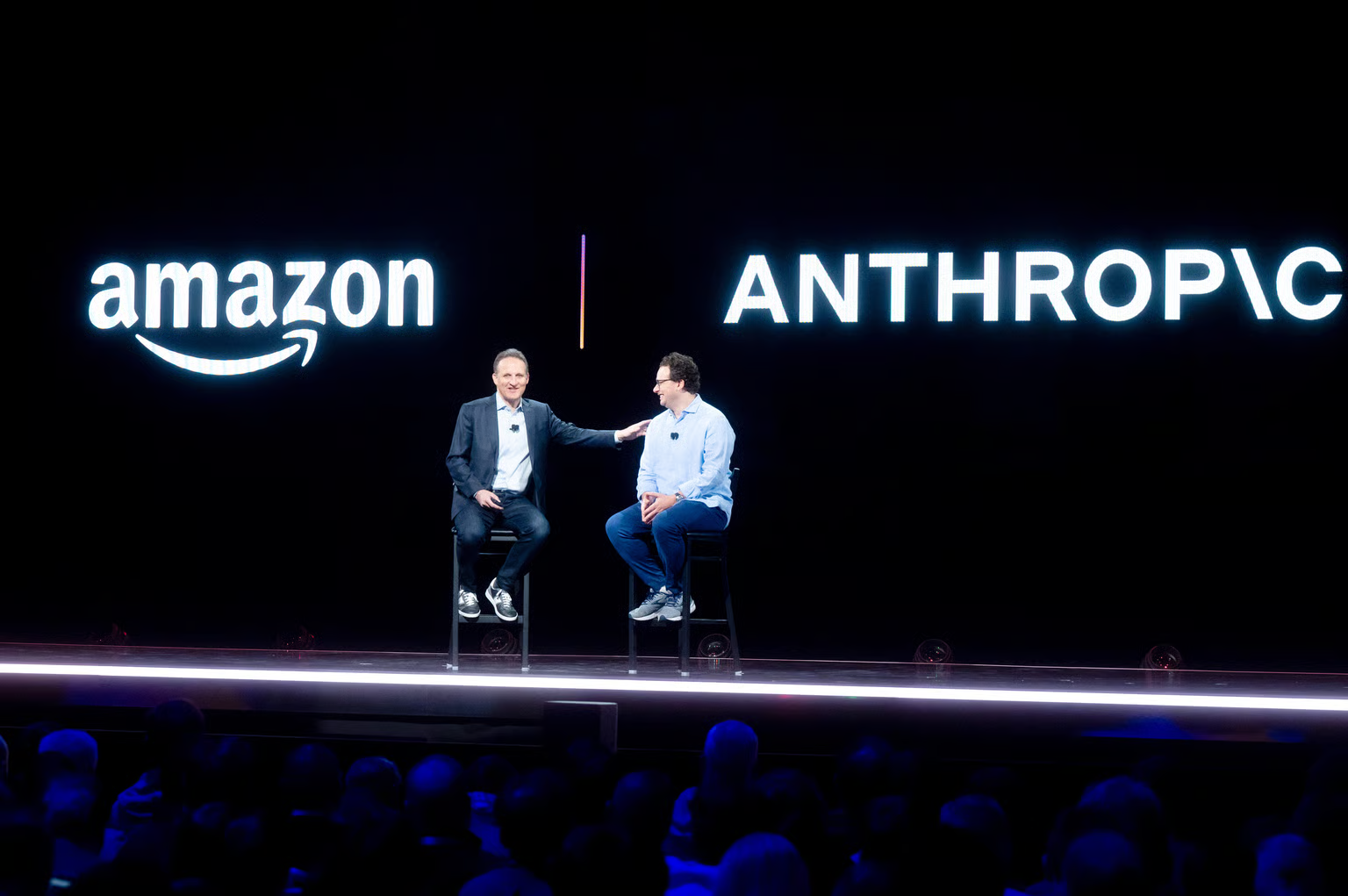
This is not, at its core, a story about artificial intelligence. It is a story about infrastructure, dependency, and the quietly decisive contest between the world’s largest cloud providers to become the indispensable backbone of the AI economy.
Why Both Sides Needed This Deal
For Anthropic, the agreement is partly a necessity dressed up as a strategic triumph. The company’s run-rate revenue has surged from approximately $9 billion at the end of 2025 to more than $30 billion today — an acceleration that has visibly strained its systems. The number of enterprise clients spending at least $1 million annually has more than doubled since February, crossing 1,000 customers. Over 100,000 organisations currently run Claude models through AWS. Anthropic’s CEO Dario Amodei acknowledged last week that this growth had created what he described as “inevitable strain” on reliability and performance, particularly at peak times.
The new compute capacity — with meaningful Trainium2 resources arriving as early as the second quarter and nearly 1 gigawatt of combined Trainium capacity projected by the end of 2026 — is designed to close that gap before it widens into a competitive liability. Anthropic’s aspiration to serve as critical enterprise infrastructure requires, above all else, that it remain dependable. Infrastructure that strains visibly under demand is infrastructure that large enterprises will quietly begin to route around.
For Amazon, the strategic logic is equally transparent. AWS is in a three-way arms race against Microsoft Azure and Google Cloud for dominance in the market that will define cloud computing for the next decade. In February 2026, Amazon and OpenAI had already announced a separate partnership under which Amazon committed up to $50 billion, with OpenAI agreeing to use 2 gigawatts of Trainium capacity. Now it has secured Anthropic as well. The message to enterprise customers considering which cloud platform to adopt for their AI workloads is unmistakable: whatever model you choose to build on, there is a strong probability that it runs on Amazon’s silicon.
The Architecture of Dependency
The structure of the deal deserves scrutiny. Anthropic’s commitment to spend $100 billion on AWS over ten years — covering current and future generations of Trainium chips through to Trainium4, a product not yet released — is a form of infrastructure lock-in that goes well beyond typical vendor relationships. The company is, in practical terms, staking its technical roadmap on Amazon’s chip development timeline. If Amazon’s custom silicon falls behind Nvidia’s dominance in training performance, Anthropic bears the risk. If AWS’s global data centre expansion lags behind the geographic demands of Anthropic’s growing user base in Asia and Europe, Anthropic bears that risk too.
These are not theoretical concerns. Anthropic CEO Dario Amodei has previously warned that blindly buying more and more compute carries risks: if his estimates for compute spend and revenue growth are even slightly off, Anthropic could face serious financial strain. The deal’s performance-linked structure — with up to $20 billion of the new investment contingent on hitting commercial milestones — suggests Amazon has structured the arrangement to minimise its own exposure while maximising its upside should Anthropic’s growth continue.
What This Means for the Industry
The Amazon-Anthropic deal is the third landmark AI infrastructure commitment announced in as many months, following Amazon’s OpenAI agreement in February and Microsoft’s $5 billion stake in Anthropic in November. Together, these arrangements are drawing visible lines around the emerging architecture of the AI industry: a small number of frontier model developers, each tied by mutual financial interest and long-term compute commitments to one of the major cloud platforms.
The implications for competition deserve more attention than they are currently receiving. When the same cloud provider simultaneously supplies critical infrastructure to multiple competing AI companies — and holds financial stakes in several of them — the independence of those companies becomes structurally compromised in ways that conventional antitrust frameworks were not designed to assess. Whether regulators in Washington, Brussels, or Singapore are thinking carefully about this question is not entirely clear. The pace at which these arrangements are being struck suggests that clarity, if it comes, will arrive late.
For enterprises and developers building on AI platforms, the practical message is more immediate: the provider you choose is now inseparable from the infrastructure politics it is embedded in. That is a new kind of risk, and it has not yet found its way into most procurement conversations.
Read Also: OpenAI Unveils GPT-5.4 Mini and Nano to Power Faster, Cheaper AI Applications