Stay connected with BizTech Community—follow us on Instagram and Facebook for the latest news and reviews delivered straight to you.
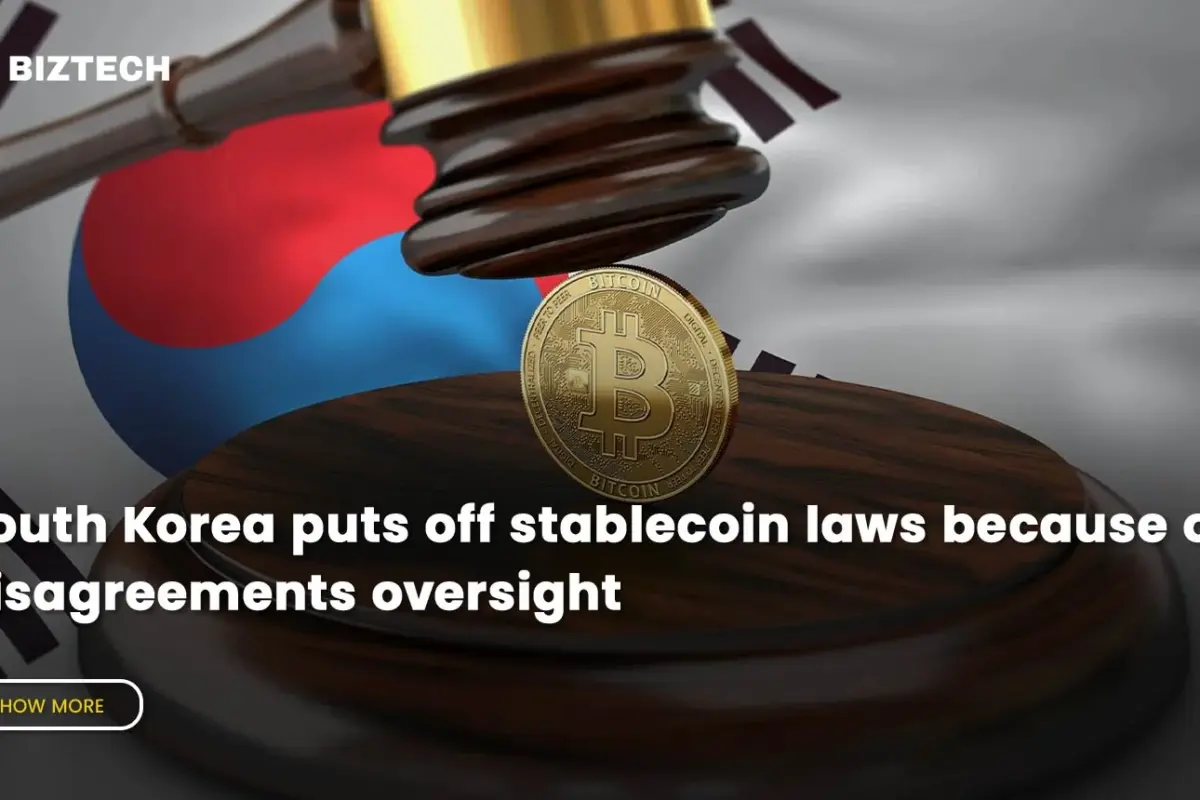
According to a report from Yonhap News on December 30, 2025, South Korea’s ambitious ambition to set up rules for issuing stablecoins in the country has been pushed back to 2026. President Lee Jae-myung’s pro-crypto platform was built on the Digital Asset Basic Act. It was supposed to make things clearer for won-pegged stablecoins, but now it is delayed because key parties can’t agree on how to move forward.
The proposed law would have let licensed businesses produce stablecoins backed by the Korean won. These stablecoins would have to be fully backed and held by approved financial institutions, mostly banks. Supporters said that the framework would make South Korea’s position in the global digital asset market stronger, make it less dependent on stablecoins like USDT and USDC that are tied to the dollar, and make cross-border payments faster in a country where a lot of people own cryptocurrency.
Read also: After a $7 million hack of its Chrome extension, Trust Wallet starts a process to pay people back
But talks between the Financial Services Commission (FSC), the Ministry of Economy and Finance, and private-sector representatives have stopped on a number of important points:
– The creation of a separate supervisory body whose main job is to oversee stablecoin issuers before they are approved
– What banks and IT businesses should do when it comes to custody and issuance
– The amount of reserve requirements and transparency criteria that are needed to keep systemic risks from happening
The FSC has apparently preferred a cautious approach that would limit non-bank participation. On the other hand, technology companies and industry associations have pushed for more freedom to stimulate innovation and more people to get involved in the market.
The Political and Economic Situation
President Lee Jae-myung, who takes office in June 2025, ran on a platform that largely focused on changing the way digital money works. His proposal included not only issuing stablecoins but also letting the national pension fund invest some of its money in digital assets and encouraging the formation of spot Bitcoin ETFs.
The delay is a setback for his plans, but experts in the field say that the extra time may lead to a stronger and more globally competitive framework.
South Korea has been making its rules about cryptocurrencies stricter in order to get more institutions involved. Some of the recent steps taken to stop illegal flows are stronger laws for virtual asset service providers (VASPs), better controls against money laundering, and more real-name account standards. People thought the stablecoin law was the next natural step in this process.
The delay is interesting because South Korea is still one of the most active bitcoin markets in the world. Upbit and Bithumb are two of the most popular domestic exchanges in Asia, and South Korea has one of the highest rates of per-capita crypto ownership in the world. A stablecoin tied to the Korean won might make cross-border transactions and local DeFi apps less reliant on dollar-based stablecoins. This could also make the Korean won more important on the world stage.
What this means for the domestic crypto ecosystem
The delay puts South Korea’s stablecoin market in a regulatory limbo. Right now, there isn’t much domestic issuance, and most stablecoin activity happens with suppliers outside the US. This has caused problems for local DeFi projects and institutional investors that want won-denominated assets for compliance and managing currency risk.
People in the industry have had different reactions. Some others think the delay is a good idea because it gives them time to look into international rules like the EU’s MiCA regulation and the US’s GENIUS Act. Some others are worried that too much uncertainty could drive innovation to other countries and make it harder for South Korea to participate in the burgeoning global stablecoin market.
The delay also happens as Terraform Labs co-founder Do Kwon is still in court. Kwon was given a 15-year prison sentence in the United States for his part in the collapse of the Terra ecosystem. He may be able to serve part of his sentence in South Korea, as he is a citizen. His lawyers say that under South Korean legislation, he might also face up to 40 years in prison.
These well-known incidents continue to shape the opinions of regulators, who are trying to find a balance between encouraging innovation and keeping the economy stable and protecting individual investors.
In other places, the rules are stricter, but South Korea is being careful. The MiCA framework from the European Union, which will be fully in place by 2024, has already led to a lot of activity in euro-pegged stablecoins. The GENIUS Act, which passed in July 2025, has made things clearer for dollar-backed stablecoins in the United States, which has led to more institutions getting involved.
Japan has started JPYC, the world’s first regulated yen-pegged stablecoin, and Singapore is still moving forward with Project Guardian. South Korea’s delay may provide officials time to learn from these places while also dealing with concerns at home about systemic risk and consumer protection.
Both domestic and international market participants had been keeping a close eye on the proposed bill. A stablecoin tied to the Korean won could make it less necessary to use dollar-based stablecoins for cross-border transactions and local DeFi apps. This would also make the Korean won more important on the world stage.
Conclusion
The delay shows how hard it is for South Korean politicians to strike a balance between encouraging innovation in digital assets and keeping the economy stable and protecting consumers. The legislative deadline has been pushed back to 2026, giving the country more time to improve the framework and address stakeholder concerns.
The conclusion of the legislative procedure will probably determine how South Korea will act in the next stage of the growth of digital money around the world. The government might become a regional leader in regulated digital assets if it creates a stablecoin framework that works well. However, extended delays could drive innovation and capital to other countries.
For now, South Korea’s crypto business will keep working under the current rules for virtual assets. Stablecoin issuance will still only be possible through overseas suppliers. The next year will be very important in figuring out if the country can turn its high levels of retail penetration and technological competence into a clear set of rules for digital finance.