Stay connected with BizTech Community—follow us on Instagram and Facebook for the latest news and reviews delivered straight to you.
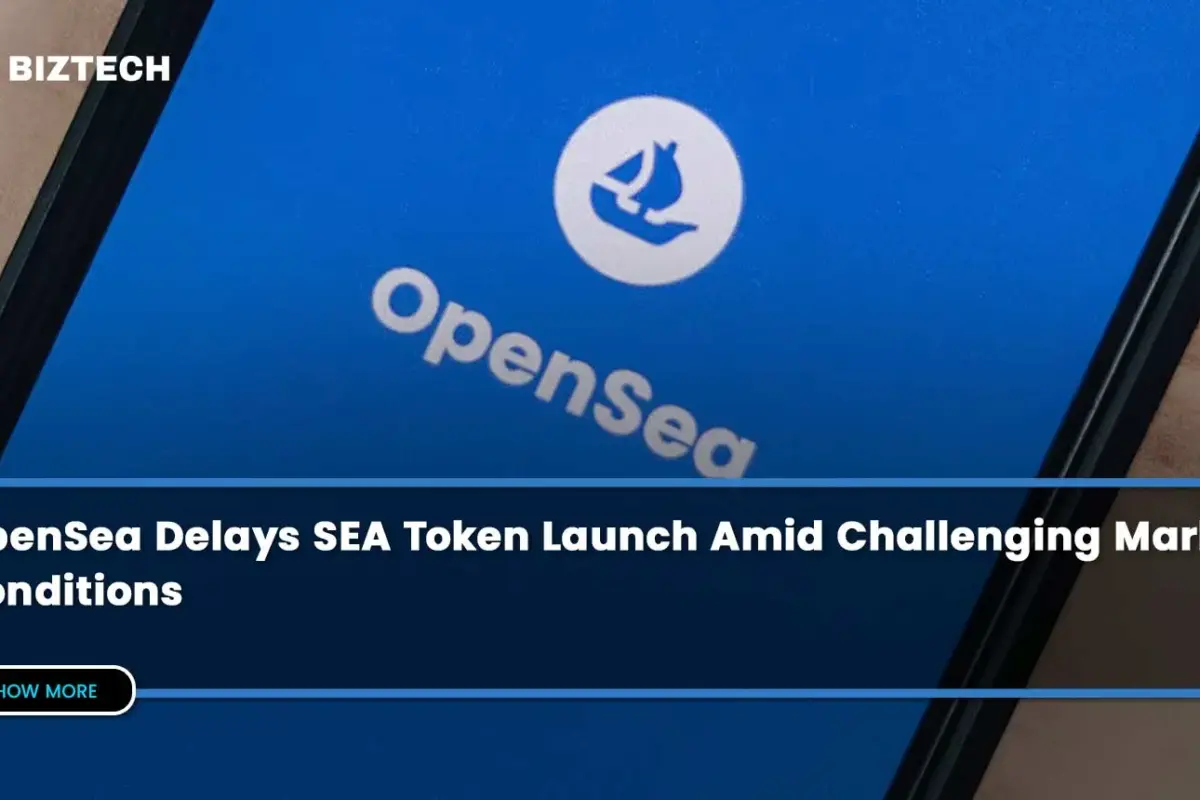
OpenSea has pushed back the long-awaited debut of its own cryptocurrency, SEA, once again. On March 16, 2026, CEO Devin Finzer made a frank revelation on X that the OpenSea Foundation had originally planned to hold an initial rollout event on March 30, but the team has decided to move the date back. There is still no new date, so the community is left waiting once more for additional information on when, or even if, SEA will be available.
A lot of people are unhappy with the decision, but it shows that large crypto projects are being more cautious in the present situation. Finzer was very clear in what he said:
“The team has been making products quite quickly, and the OpenSea Foundation had expected to take the first step at the March 30 event. We have chosen to push back that schedule. I’m not going to try to spin it any other way; a delay is still a delay. I get how the community feels about this choice.
He went on to say that SEA will only launch once, and the team would rather take their time and do it well than hurry into a bad window.
“SEA is only going to start once. We could have made sure that the launch date stayed on schedule, or we could have made sure that everything was set so that this moment would be special for our community.
Market Conditions Are Still the Most Important Factor
Finzer made it clear that the delay was due to the “difficult market conditions” that have been going on since early 2026. Bitcoin is still down about 45–50% from its cycle high of about $126,000 in October 2025. Altcoin sentiment is negative, and NFT trading volumes are still significantly below their 2021–2022 highs. OpenSea’s own marketplace stats show that this is happening on a larger scale: the monthly volume of NFT sales has stabilised at levels much lower than the euphoric highs of past bull runs.
Putting a governance and utility token into an environment like this is quite risky. If you distribute a token at the wrong moment, people who get it through an airdrop might sell it right away, the community might lose interest, and the price of the token could drop below what you expected. OpenSea is hoping that by waiting, they can launch at a time when market sentiment is improving, protocol fundamentals are getting stronger, and regulatory tailwinds are becoming clearer. This is especially true in the United States, where the GENIUS Act and ongoing discussions about the CLARITY Act are changing the legal landscape for tokens that have utility and revenue-sharing features.
The delay also keeps OpenSea from getting distracted at a time when it is actively growing beyond its typical NFT marketplace base. The platform has been adding features like multi-chain trading, perpetual futures protocols, and cross-chain bridging to try to get a bigger piece of the overall crypto trading activity. Introducing SEA too soon could have made people inside the company lose sight of these product priorities.
Original Tokenomics Plan: Big Community Share
When OpenSea first talked about the SEA Token Generation Event (TGE) in October 2025, they said that the community will get most of the tokens. About half of the overall supply was set aside for long-time users (also known as “OG” collectors), active merchants, and people who are already in rewards programmes. The rest of the amount was meant for developing the ecosystem, the team, advisers, and strategic reserves.
The promise that 50% of OpenSea marketplace fees would be used to purchase back SEA tokens after the launch was an important economic tool. It kept demand high and linked protocol revenue directly to token value. Users might also stake SEA to vote on and support governance proposals that have to do with certain NFT collections or elements of the marketplace.
Finzer said again that the current incentives programme, which has been giving out points that can be turned into SEA in the future, will be the last one before any tokens are released. When SEA goes online, the rewards programme will likely change into staking and involvement in government.
OpenSea is going through a strategic change
You should think about the recurrent delays in the perspective of how OpenSea is changing as a whole. The platform that used to control the NFT economy with almost all Ethereum-based trading has spent the last two years changing its focus to become a multi-chain marketplace and a full-service crypto trading venue. Some of the most recent product initiatives are:
- Trading that combines Ethereum, Solana, Polygon, Bitcoin Ordinals, and more chains
- Futures markets that last forever for big cryptocurrencies
- Wallet connections and bridging between chains
- Enhanced creator tools and royalty enforcement mechanisms
These initiatives are meant to get more volume than just the NFT niche and compete directly with centralised exchanges like Binance, Coinbase, and Bybit, as well as new decentralised aggregators like Jupiter on Solana.
If SEA was introduced too soon or in a bad market, it could have taken attention away from these main product goals. A token launch is a big deal that takes a lot of time and money from engineers, lawyers, marketers, and the community. OpenSea is saving bandwidth by waiting so that it can keep creating the underlying marketplace infrastructure that will eventually make SEA useful and in demand.
What the community thinks and what’s next
Many people in the OpenSea community liked how open Finzer was, even though the delay was annoying. Long-time users are used to changing timelines—SEA has been talked about in public since at least mid-2025—and most people know that putting a token on the market too quickly usually doesn’t work out well.
Still, the extended delay has made things unclear. Some people in the community are worried that repeated delays could make people less excited and make it harder to keep the momentum going for incentive programmes and governance anticipation. Some people see the prudence as competent management in a volatile macro context.
In the next few months, we’ll know more. OpenSea hasn’t given an approximate new schedule yet, but the team has promised to keep the community updated if plans change. For now, the focus is still on product execution, which includes expanding to many chains, rolling out perpetuals, and improving creator tools.
OpenSea may find a better place for SEA later in 2026 if the market improves, especially if Bitcoin can get back to $80,000 or more and the volume of NFTs in general goes up. The platform is happy to keep building quietly until the larger crypto cycle finishes its present consolidation phase.
SEA is still one of the most anticipated and longest delayed token releases in the NFT and marketplace space. When it finally comes out, whether it succeeds or fails will depend less on the tokenomics and more on the health of the marketplace itself, which OpenSea is working hard to improve behind the scenes.
Read Also: Bitcoin Drops to $63K as U.S.-Israel Strikes on Iran Shake Risk Markets