Stay connected with BizTech Community—follow us on Instagram and Facebook for the latest news and reviews delivered straight to you.
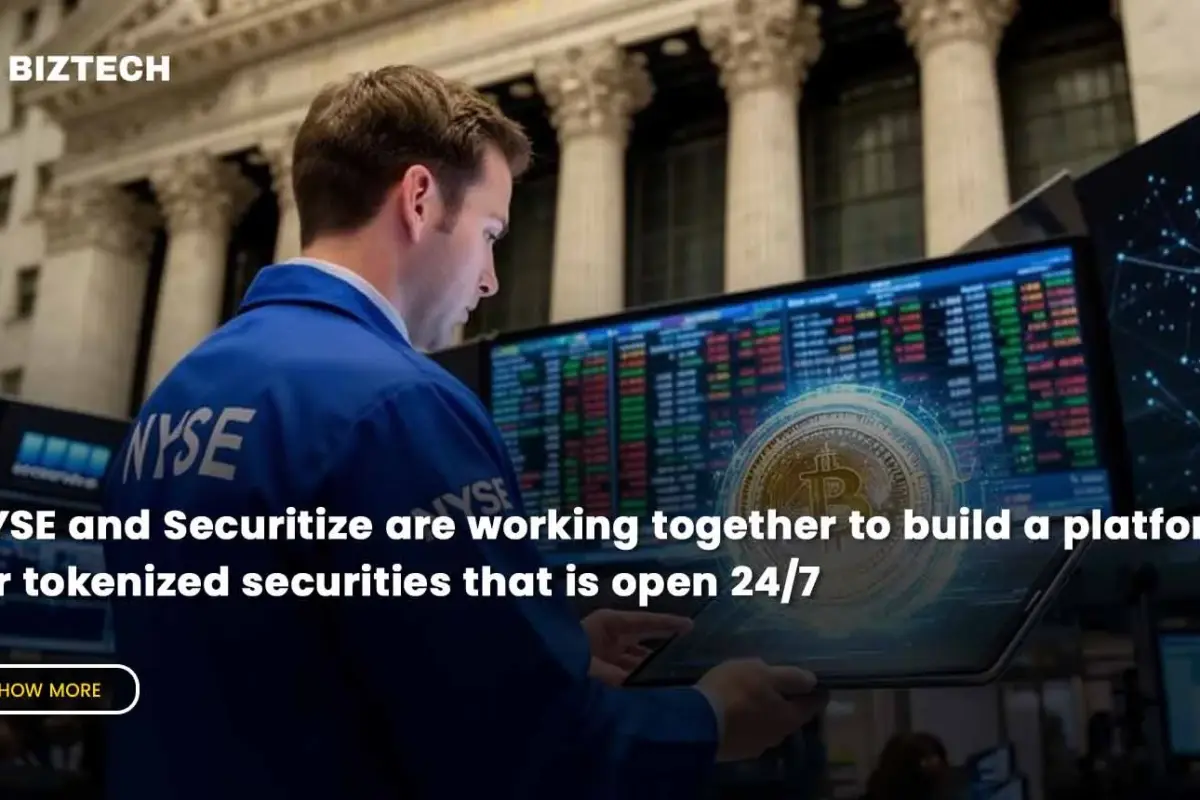
The New York Stock Exchange (NYSE) has made a big move toward making tokenized securities a part of the mainstream capital markets by signing a memorandum of understanding (MoU) with Securitize, a top tokenization platform. Under the terms of the deal, Securitize will be the NYSE’s first digital transfer agent. It will be in charge of making blockchain-based shares of stocks and exchange-traded funds (ETFs) on the exchange’s planned Digital Trading Platform.
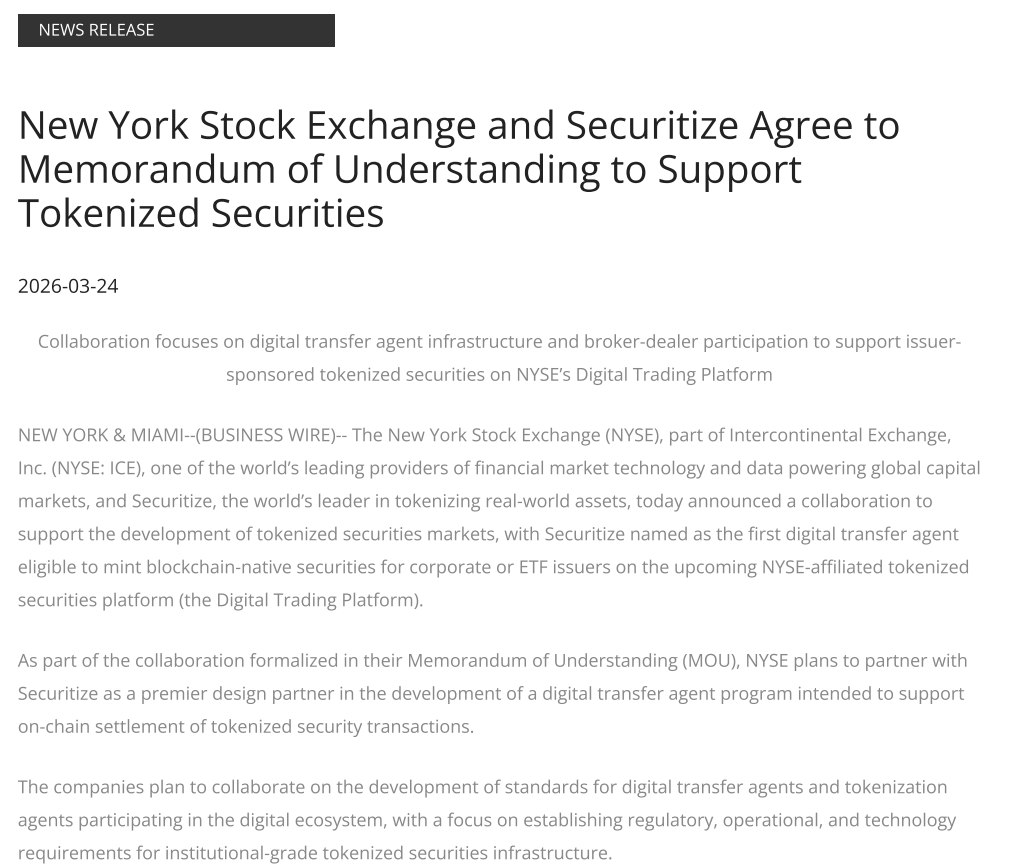
The announcement, which was announced on March 18, 2026, is a direct result of ICE’s plan for a 24/7 tokenized securities venue that was released on January 19. The platform is meant to work with both tokenized versions of traditional assets and securities that are only digital. It also keeps all the rights of traditional shareholders, such voting and getting dividends. Settlement will happen almost right away, funding will be available in stablecoins, and trading will happen all the time. This is a big change from the existing T+1 or T+2 settlement periods in traditional equity exchanges.
Lynn Martin, president of NYSE Group, stressed how important it is to establish infrastructure that keeps investors’ trust:
“As we look into how tokenization can improve capital markets, it’s important that new infrastructure is built in a way that keeps investors’ trust, openness, and protections.”
What Tokenized Stocks Really Mean
Tokenized equities are digital versions of regular corporate shares that are stored on a blockchain. They may have a number of benefits over regular shares:
- Trading all day, every day, and settling right away;
- Fractional ownership makes it easier for smaller investors to get in;
- On-chain records make things more clear;
- Programmability for automatic company acts and paying out dividends.
According to RWA.xyz data, the total value of tokenized stocks went over $1 billion on March 10, 2026. In the last 30 days, the number of tokenized stockholders grew by 16% to 193,140. The monthly transfer volume also grew by 45% to $2.5 billion. Tokenized stocks are still just the sixth-largest part of the $26 billion tokenized real-world asset (RWA) market, behind tokenized Treasury debt ($11.8 billion) and tokenized commodities ($5+ billion). However, this sector is rising quickly.
Why This Partnership Is Important
There are a number of reasons why the NYSE and Securitize working together is important. First, it introduces a well-known and reputable traditional exchange into the tokenization area with a trustworthy partner. Securitize is a leader in compliance token issuance since it has worked with big institutions and already has the appropriate regulatory permissions in several places.
Second, the move shows that big players in the market are no longer seeing tokenization as a test project. The NYSE is assisting to create the rules and infrastructure needed for institutional-scale adoption by naming Securitize as the first digital transfer agent and promising to create industry standards for tokenized securities.
Third, the time fits with the expanding global momentum. The SEC just gave Nasdaq the go-ahead to start a pilot program to trade tokenized versions of stocks with a lot of volume. Hong Kong has already started crypto ETFs in Asia, while Japan plans to establish its first crypto ETFs by 2028. The fact that these efforts are coming together shows that tokenized equities are becoming a reality faster than most people thought they would.
The competitive landscape and bigger trends
Crypto exchanges are also working hard to give tokenized stock exposure. Coinbase is offering 24/7 stock perpetual futures for people outside of the U.S. traders on March 14, giving them cash-settled exposure to big U.S. companies and indexes like Apple and Nvidia. Binance and Kraken have both launched comparable tokenized everlasting products for consumers around the world. Many offshore platforms are now adding more products to their portfolios.
The difference is essential. Crypto exchanges offer synthetic or derivative exposure to equities, but the NYSE-Securitize effort is all about real tokenized shares that have the same legal and economic rights as regular stocks. This regulated, on-chain version of stocks could one day connect traditional capital markets with blockchain technology.
The overall rise of tokenized real-world assets is speeding up. There was $26 billion worth of RWAs locked up, with tokenized Treasuries at the top of the list. As rules become clearer, especially in the U.S. after the GENIUS Act and ongoing talks about the CLARITY Act, interest from institutions is likely to grow even more.
Problems and Things That Still Need to Be Done
Even though things are getting better, there are still some problems that need to be fixed before tokenized securities can become mainstream:
– Regulatory harmonization: The U.S. has made progress, but rules for tokenized securities are still not well coordinated around the world.
– Interoperability: To easily move tokenized shares across different blockchains and traditional settlement systems, strong standards are needed.
– Custody and security: Institutional-grade custody solutions that meet both SEC and traditional banking standards are currently being developed.
– Investor education: Many traditional investors still don’t know how blockchain works or what the risks are of tokenized assets.
While making the digital transfer agent program and the rules that go with it, the NYSE and Securitize will need to be very vigilant about these problems. The fact that both sides are focused on regulatory compliance, operational robustness, and technical requirements shows that they both know how important it is to get the basics right.
Conclusion
The NYSE and Securitize working together is a big step forward in the process of tokenizing traditional securities. The NYSE is setting the stage for 24/7 trading, rapid settlement, and wider institutional access to blockchain-based equities by naming Securitize as its first digital transfer agent and promising to create guidelines for compliant tokenized stock issuance.
This change is part of a bigger trend around the world. Major exchanges are working hard to establish the infrastructure needed to introduce tokenized assets into regulated capital markets. For example, Hong Kong has crypto ETFs, Japan plans to launch them in 2028, and Nasdaq has approved a pilot program. The NYSE’s engagement makes these efforts far more credible and important.
For investors, the long-term idea is exciting: tokenized stocks that combine the ease of access and liquidity of traditional stocks with the efficiency, openness, and programmability of blockchain technology. It will take time and careful planning to reach that goal, but the path is now apparent.
The partnership between one of the world’s oldest stock exchanges and a top tokenization platform shows that the merging of traditional finance and blockchain is no longer a distant future. The entire value of tokenized real-world assets is already more than $26 billion. People are working on it right now.
Read Also: OpenSea Delays SEA Token Launch Amid Challenging Market Conditions