Stay connected with BizTech Community—follow us on Instagram and Facebook for the latest news and reviews delivered straight to you.
The first week of January has brought a sudden turn of events. Trump launched an attack on the Venezuelan capital and arrested President Maduro, known as a “dictator.” From the perspective of some Venezuelans, Americans seem like heroes who have personally arrived to resolve the problems in Venezuela. But is that really true? Of course not; everything has had a different purpose from the start. For the first time, we noted that the tensions between the two countries were never related to drugs or cartels, or at least not the primary reason.
The main reason is that oil, even from the very beginning, was actually for the sake of this black oil; drug cartels only used it as a sweetener to facilitate the process of achieving their main goals.
To understand this more clearly, let’s first review the origins of the US’s need for oil to maintain Pax Americana through the PetroDollar.
The Origins of the Petrodollar, the Black Gold that Defeated “Gold”
The petrodollar system arose from the monetary crisis of the early 1970s. On August 15, 1971, US President Richard Nixon unilaterally ended the dollar’s convertibility to gold, known as the “Nixon Shock.” This ended the post-World War II Bretton Woods System, in which the dollar was backed by gold reserves. As a result, the dollar’s value plummeted, and the US faced high inflation and a critical trade deficit.
To save the dollar, the US turned to oil. In 1973-1974, during the Oil Crisis caused by the OPEC embargo, oil prices quadrupled. The US then struck a secret deal with Saudi Arabia, the leader of OPEC.
Under the deal, Saudi Arabia agreed to sell its oil only in US dollars, while the US provided military protection and technological support. This agreement was extended to other OPEC countries, creating “petrodollar recycling”: Surplus dollars from oil sales were reinvested in US bonds, US banks, or other US assets. As a result, global demand for dollars increased dramatically, as every country buying oil had to have US dollars.
This system provides a big advantage for the US, namely they can mprinting dollars without limits to finance deficits, wars, and consumption, while other countries have to “buy” dollars through exports or debtHowever, this also makes the US dependent on global oil dominance. Countries that challenge this system, such as by selling oil in other currencies, often face diplomatic or military pressure.
The petrodollar is not just an economic tool, but also a geopolitical one. The US has used this system to maintain its influence, often by interfering in oil-rich countries. A classic example is Iraq in 2000, when Saddam Hussein announced oil sales in euros—three years later, the US invasion occurred, and Iraqi oil reverted to USD. Similarly, Libya in 2009, where Muammar Gaddafi proposed a gold-based currency for African oil trade; NATO intervention followed, and the gold assets were lost.
This pattern shows that the petrodollar is”invisible tax”For the world, the US exports inflation, while other countries rely on the dollar for energy, so it’s fair to call this a form of modern colonialism. Although US supporters argue that this system stabilizes the global economy and prevents monetary chaos.
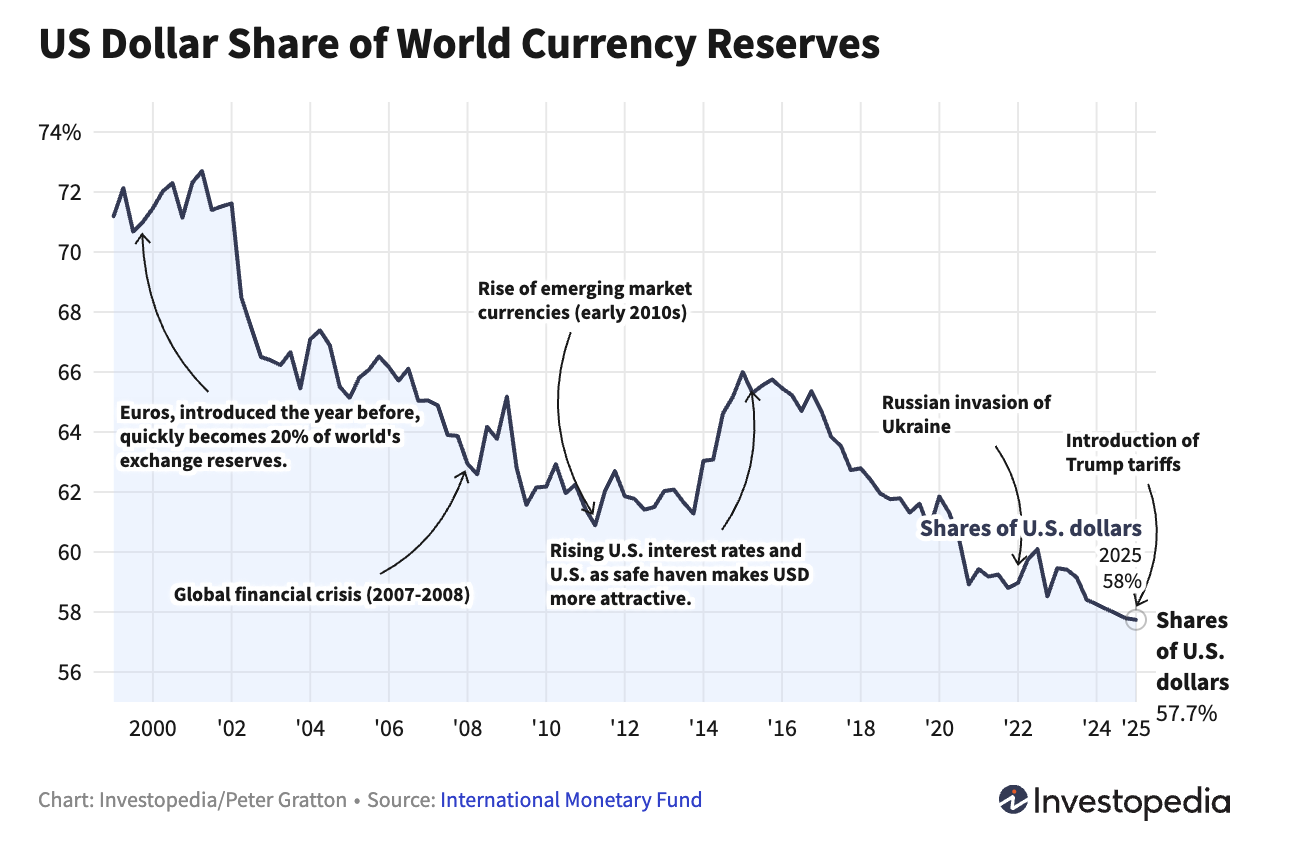
The question is, will this petrodollar last forever? We certainly don’t think so, especially given the resistance from major powers like Russia, China with its BRICS, and many other countries that have been reducing their dependence on the dollar since the early 2000s. However, the dollar’s dominance won’t collapse anytime soon. Just look at the US dollar’s market share as of 2025, as a reserve currency for many countries, it’s still at 10,000.58%.
And of course, the US will continue to maintain this position by continuously increasing its oil production and selling it to the global market. Let’s examine further how this country is currently both the largest producer and consumer of oil.
Read also: What is Petrodollar and Why is It So Powerful
How the United States Became the World’s Largest Oil Producing Country
The US, once a nation anxious about running out of fuel, became the largest oil producer in history in less than 20 years. The story begins from 1970 to 2008. For nearly 40 years, US oil production has been steadily declining. Easily accessible oil reserves have been depleted, and domestic production costs are high, making it cheaper to import from other countries like Canada, Venezuela, Mexico, Saudi Arabia, and Iraq.
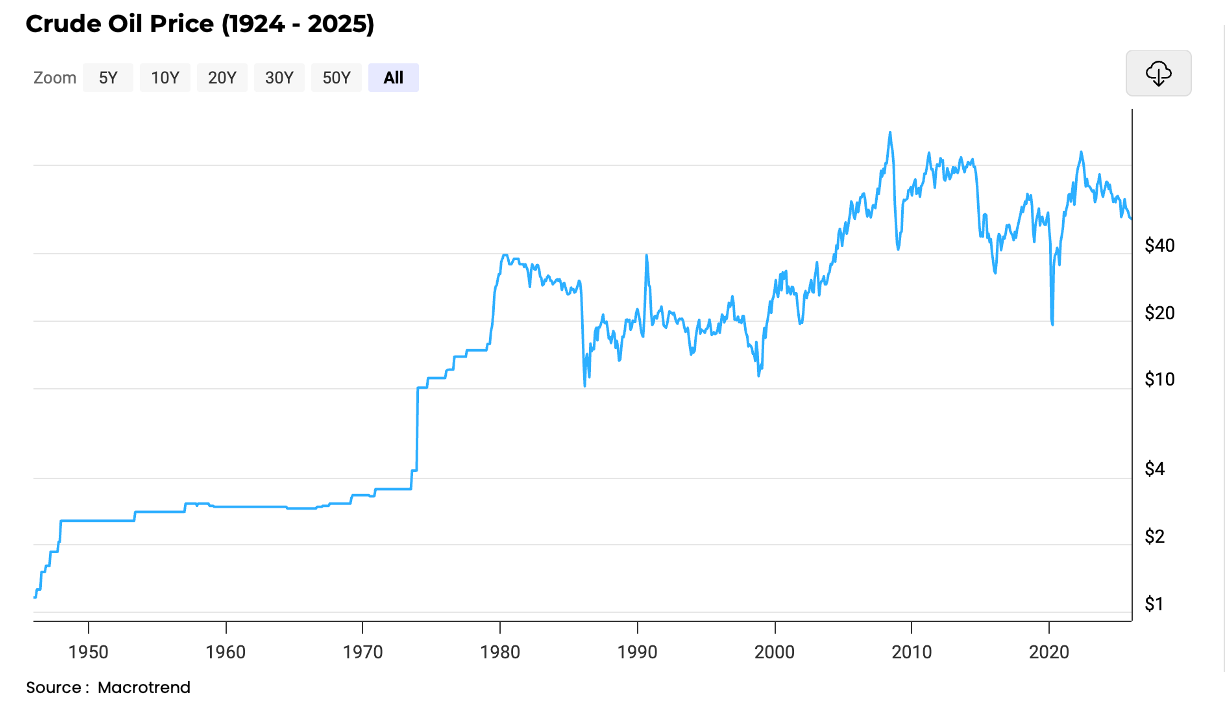
But this dependence carries significant risks. In 1973, during the Yom Kippur War, the Arab nations of OPEC imposed an embargo on the US for supporting Israel. Oil prices quadrupled, fueling long lines at gas stations, and the government even limited highway speeds to 55 mph (about 90 km/h). Six years later, the Iranian Revolution struck, and oil prices rose again. The US was well aware that its dependence on Middle Eastern oil was its greatest weakness at the time.
For decades, US oil companies could only envy the vast oil reserves trapped in their own underground shale. Technology at the time simply couldn’t extract it cheaply and in large quantities.
Fracking and Horizontal Drilling Are Turning Points for the US Oil Industry
A turning point came in the early 21st century. Energy entrepreneur George Mitchell and his team in the Barnett Shale formation in Texas discovered a revolutionary new method: hydraulic fracturing, or fracking as it’s popularly known.
What is fracking? Simply put, hard, dense shale rock is “fractured” by injecting a mixture of high-pressure water, sand, and a small amount of chemicals. The resulting tiny cracks release the trapped oil and gas. When combined with horizontal drilling (wells drilled sideways, rather than straight down), a single well can cover a much larger area and produce many times more oil.
This technology spread like wildfire. Small, independent companies, backed by venture capital and private equity, rushed to lease land and implement it. The result? A remarkable explosion in production.
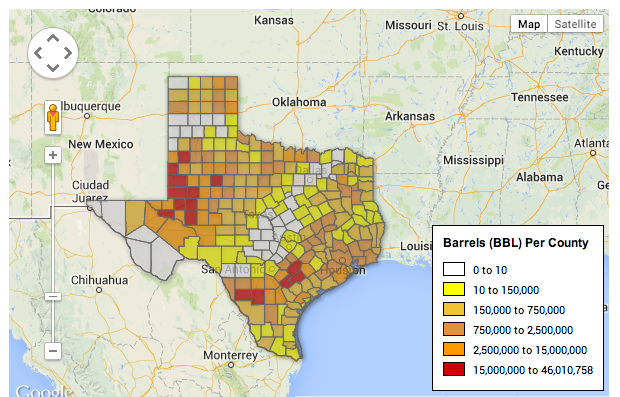
In Texas, the Permian Basin has become the world’s most productive oil field. Currently, Texas alone accounts for 43% of total US oil production, and production has increased fivefold since 2010. In North Dakota, the Bakken Formation is experiencing a “modern gold rush.” Small towns like Williston and Watford City are suddenly bustling, young workers are arriving, wages are high, unemployment is near zero, and the state is even running a large budget surplus from oil taxes alone.
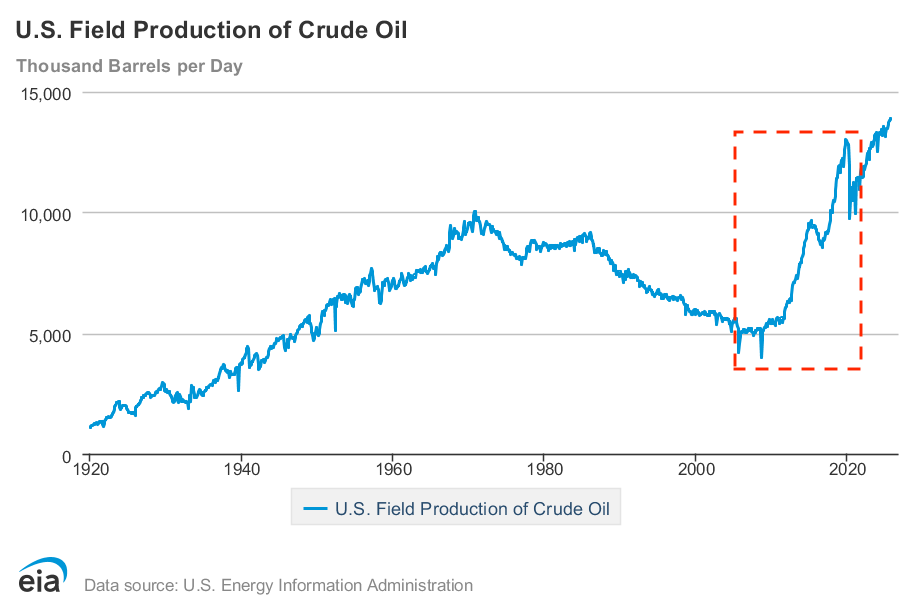
In 2018, the US officially surpassed Saudi Arabia and Russia to become the world’s largest oil producer. The following year, 2019, production reached an all-time high of 12.3 million barrels per day—a figure experts had previously considered impossible. Even when the COVID-19 pandemic sent oil prices into negative territory in 2020, US production rebounded and continued to grow. Remarkably, the number of active drilling rigs actually declined, as technology became more efficient: longer horizontal wells produced more oil per rig.
Currently, 2 out of 3 barrels of US oil are produced through fracking.
Why Is Fracking So Successful in America?
Many other countries also have shale deposits, but none can compete with the US.
The reason?
- The US has vast shale reserves (Permian, Bakken, Eagle Ford, etc.)
- The US is the inventor of this technology, so it has a head start.
- The infrastructure is ready with pipelines, roads, and skilled labor.
- A land ownership system that allows landowners to quickly lease out their mineral rights.
- A relatively supportive regulatory environment and a large number of venture investors willing to invest large sums of capital.
This combination of factors has enabled the US to develop very rapidly. As a result, the US, from a major importer, has become a net oil exporter for the first time since the 1940s. This means it produces more oil than it consumes. This provides a sense of energy security, makes the US stronger in trade negotiations, and makes it less susceptible to OPEC control.
But Why Do We Still Import So Much Oil?
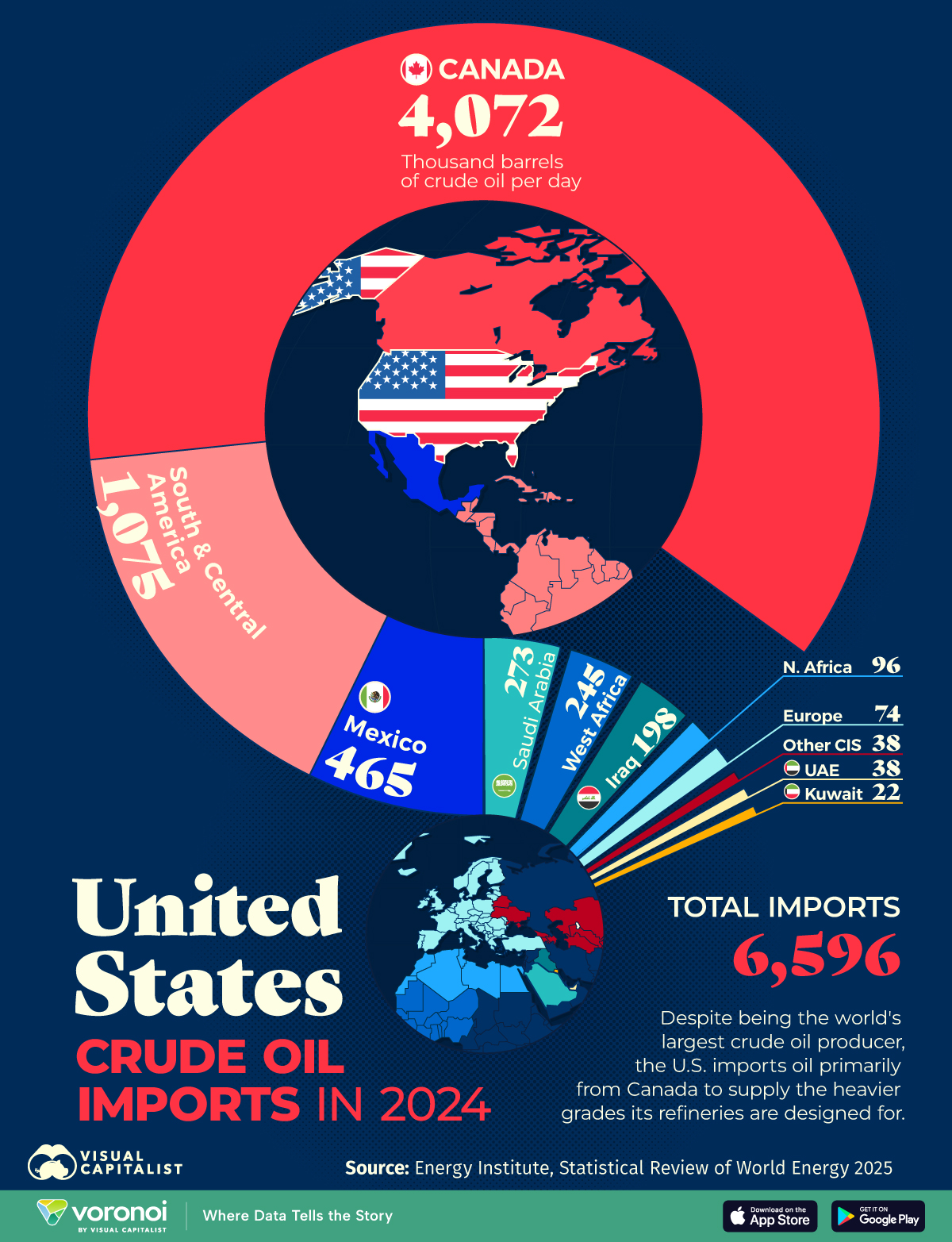
Now, this is the part that often confuses people. Despite producing more than enough to meet its own needs, the US remains the world’s second-largest oil importer (after China). Approximately 41% of the oil processed in US refineries still comes from imports.
Why is that?
The answer lies in the type of oil. Not all oils are created equal. Some are light and “sweet” (light sweet crude: low in sulfur, easy to process), while others are heavy and “sour” (heavy sour crude: dense, high in sulfur, requiring more complex processing).
For decades, US refineries (especially in the Gulf of Mexico) were built to process heavy sour oil imported from Venezuela, Saudi Arabia, and Mexico.
Meanwhile, the oil from fracking is mostly a light, sweet variety.
Many US refineries can’t efficiently process light oil without major, expensive, and multi-year modifications. Rather than incur the significant expense of building or converting refineries (and risking the uncertain future of fracking due to the transition to renewable energy), their formula is simple:
- Exporting sweet light oil (which is more expensive)
- Importing heavy acid oil (the cheaper one)
With this way, they can make bigger profits, maintaining jobs in the processing sector, and even helping allies such as European countries after sanctions on Russian oil. Giant companies like ExxonMobil and Chevron have recorded record profits in recent years thanks to this strategy.
Venezuela Is The Key
As we stated before, the US invasion of Venezuela was never about drug cartels or anything like that. It was merely a cover-up to mask their true objective: Venezuela’s oil reserves, currently the largest in the world.
These reserves are crucial for the US, supporting the long-term sustainability of the petrodollar. With US oil reserves at 55 billion barrels and current total production of 22 million barrels per day, reserves are estimated to be depleted in approximately 10 years. This is a relatively short timeframe, and one that is causing considerable anxiety among the US oligarchs.
With Trump in office, the US oligarchy, particularly the oil businessmen, has political access to carry out military aggression and access Venezuelan oil. America, which has the technology to refine Venezuela’s heavy crude oil and now owns Venezuela’s reserves, can finally…calm down again in printing new money, and that is indeed the ultimate goal.Where in the end it is we (countries outside the US) who will bear the inflation resulting from the continuous printing of dollars.
Outlook Oil
Many say oil prices will likely fall in the future, given that the US has abundant reserves, which would mean falling oil prices due to the flooding of supply. We believe such a scenario is possible, but we see the other side of the coin: the US will have greater power to control oil prices going forward. So, they could very well raise prices at some point, and even if OPEC resists, it will still be difficult, given that the US already controls the largest supply.