Stay connected with BizTech Community—follow us on Instagram and Facebook for the latest news and reviews delivered straight to you.
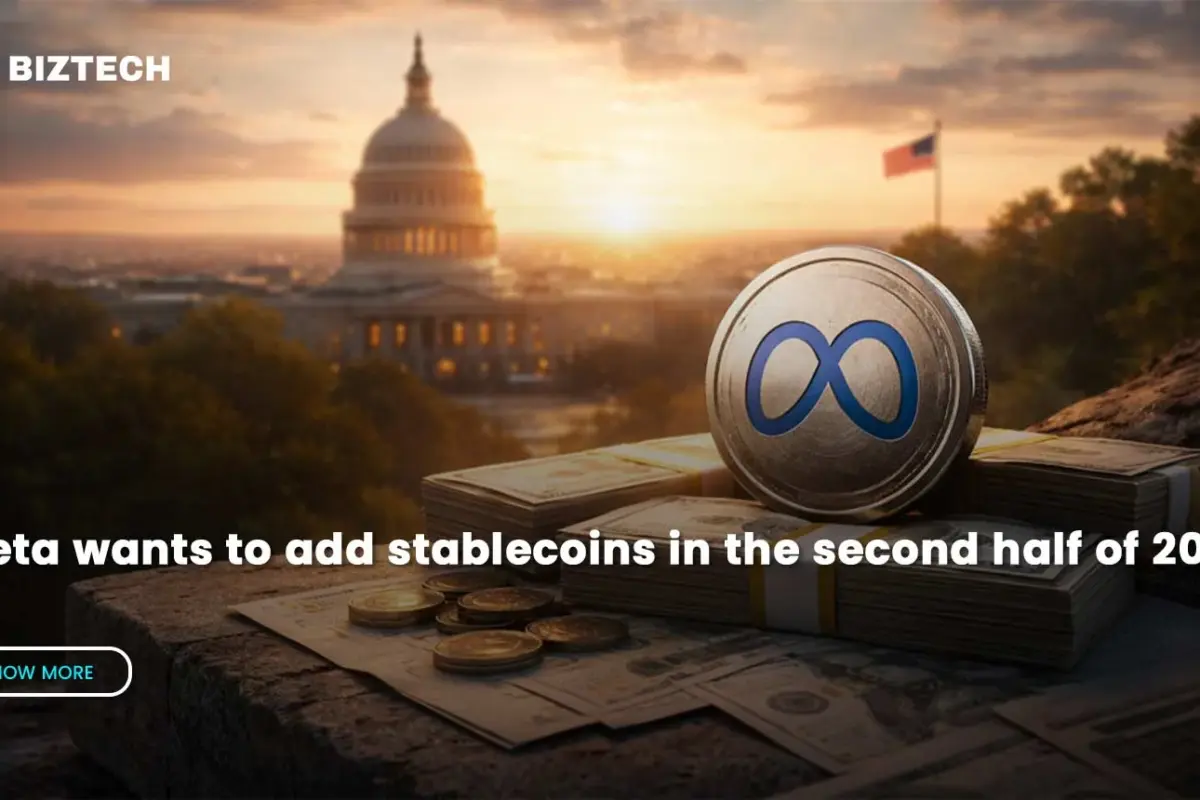
Meta is getting ready to get back into the stablecoin market in a more careful and legal way. A CoinDesk post from February 24, 2026, says that the business, which is run by Mark Zuckerberg, plans to start adding third-party stablecoins to its ecosystem in the second half of the year.
Instead of establishing its own currency, Meta wants to let people pay with stablecoins that are already pegged to the dollar. It will achieve this by working with outside suppliers and adding new wallet features to Facebook, Instagram, and WhatsApp.
The goal of the project is to lower transaction costs, especially for payments to Instagram artists, while also building up the company’s own payment infrastructure. One insider said that Meta has already sent out requests for proposals (RFPs) to possible partners, and Stripe is a strong candidate for the first trial. Stripe’s purchase of Bridge, a company that specializes on stablecoins, in 2025 and its long-standing relationship with Meta make it a good fit. Patrick Collison, the CEO of Stripe, became a member of Meta’s board of directors in April 2025. This made the tie even stronger.
Vice President of Communications at Meta Andy Stone quickly made the company’s position clear: “Nothing has changed; there is still no Meta stablecoin.” This is about letting people and companies pay for things on our platforms with the payment methods they want. The statement makes it clear that there is a planned transition away from the ambitious (and ultimately failed) Libra/Diem project and toward a more practical position as an integrator instead than an issuer.
What we can learn from the Libra/Diem mess
Meta’s first excursion into digital currency is nevertheless a warning. The project started as Libra in 2019 and was later renamed Diem in 2020. Its goal was to make a worldwide digital currency backed by a basket of fiat reserves. It rapidly came under a lot of regulatory attention, especially in the US, where politicians were worried that it may weaken monetary sovereignty and make it easier for criminals to get money. The Cambridge Analytica affair just made them more worried about Meta’s capacity to handle sensitive financial information.
The Libra Association changed its mind about making a single global coin and instead made several stablecoins for different currencies, although the initiative never made any money. In early 2022, Diem’s assets were finally sold. This was one of the most well-known failures in crypto history.
Since then, the rules and regulations have changed a lot. The U.S. GENIUS Act, which became law in July 2025, set explicit rules for stablecoin issuers about how much money they need to have in reserve, how to audit their accounts, and how to get a license. This architecture has made it easier for big tech businesses to join the stablecoin market instead of issuing their own currencies directly. It has also made it easier for conventional banks to get involved. Meta’s current plan is to work with regulated issuers instead of creating its own coin. This seems to be a way to avoid the regulatory and reputational problems that caused Libra to fail.
What Could Happen to Meta’s 3 Billion+ Users
If it works, the integration might change the way Meta’s huge user base—over 3 billion active users on Facebook, Instagram, and WhatsApp every month—makes payments. Stablecoins might make cross-border transactions a lot cheaper than standard banking lines, especially for sending money home, paying creators, and making in-app purchases. Lower fees and almost quick settlement would make Meta stronger in social commerce and could even challenge new super-app competitors like X (previously Twitter) and Telegram.
The timing fits with larger developments in the business. By the end of 2025, the market cap of stablecoins had grown to over $300 billion, thanks to their use in cross-border payments, DeFi collateral, and by institutions. The GENIUS Act in the U.S. and the MiCA in Europe have made traditional financial actors more confident, which makes it easier for big digital businesses to operate together.
Strategic and Competitive Setting
Meta’s choice to focus on integration instead of issuance is based on what they learned from Libra. The company avoids the regulatory problems that destroyed its last initiative by using already-compliant stablecoins. This lets it still take use of the efficiency benefits of blockchain-based payments. The fact that Stripe is a possible partner is quite telling. Stripe already accepts USDC payments and has a lot of experience with processing payments around the world.
In terms of competition, Meta would join a growing range of technology platforms that already have stablecoin features. Telegram has included TON-based payments, X is looking into wallet and payment tools as part of Elon Musk’s “everything app” ambition, and other social media sites are still trying out in-app economies. Meta’s size, on the other hand, provides it a unique reach. Even a small number of users using it might lead to a lot of volume going through regulated stablecoin rails.
Rules and Risks
Meta’s plan will depend a lot on how well they can deal with changing rules. The GENIUS Act has made things clearer for dollar-backed stablecoins in the U.S., but cooperation throughout the world is still not perfect. Stablecoins used for cross-border payments must still follow AML/KYC rules, sanctions screening, and data privacy legislation in every country where Meta does business.
There are also problems with the technology and the user experience. It will take a lot of engineering work to add stablecoin payments to all of Meta’s products without compromising security, usability, or compliance. Teaching consumers will be very important because many of Meta’s billions of users don’t know much about bitcoin wallets or blockchain transactions.
Conclusion
Meta’s proposal to add third-party stablecoins in the second half of 2026 is a realistic step forward from the lofty Libra/Diem experiment. The company wants to lower transaction costs, improve payouts to creators, and reinforce its position in social commerce by working with regulated issuers instead of creating its own token. This will also help it escape the regulatory firestorm that ended its last venture.
If done right, the move may bring stablecoin payments to hundreds of millions of people and speed up the use of digital dollars by the general public. It would also put Meta in direct rivalry with new super-apps that want to do the same thing with payments. The company’s conservative, partnership-driven approach seems to work well in today’s more mature and regulated crypto ecosystem.
In the second half of 2026, we’ll see if Meta can successfully connect traditional social media with payments made through blockchain. If it works, it would be a big step toward bringing together social media, digital money, and regulated stablecoins.
Read Also: Binance had HALF of CEX stablecoin liquidity as outflows slow to $2 billion