Stay connected with BizTech Community—follow us on Instagram and Facebook for the latest news and reviews delivered straight to you.
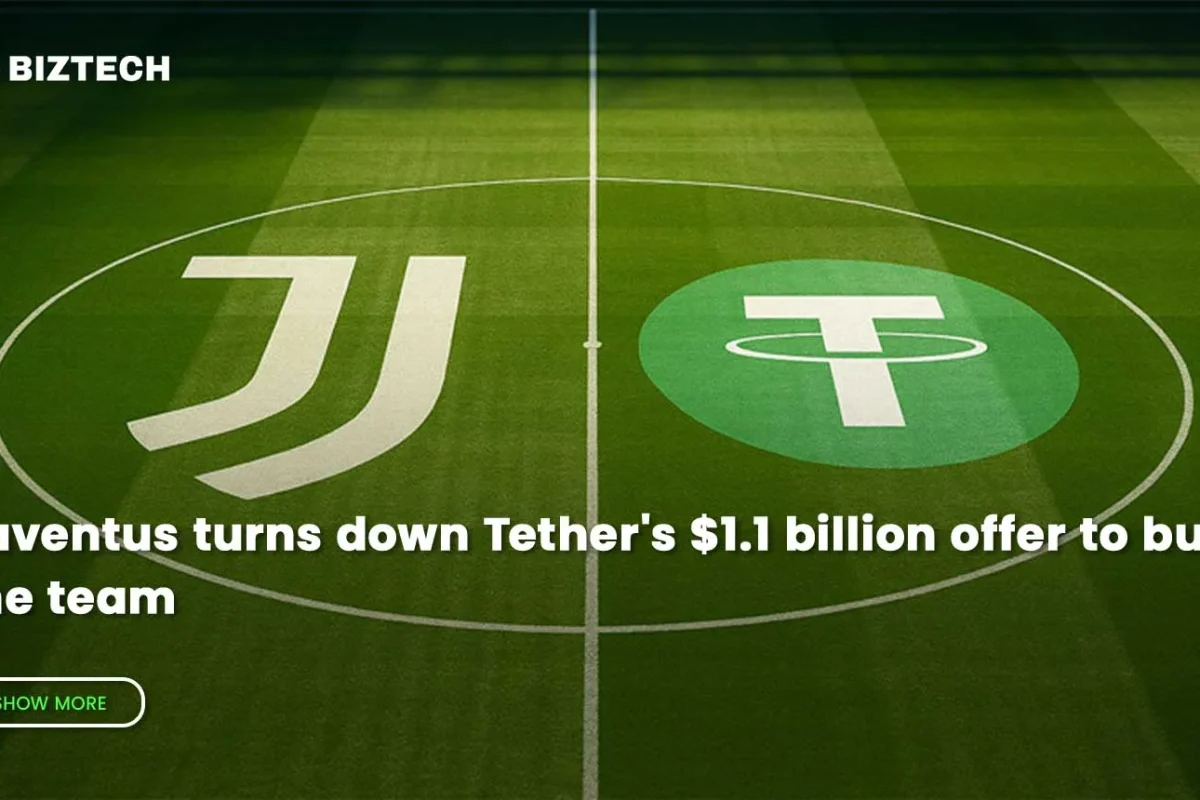
The Agnelli family, through their holding company Exor, has firmly turned down a $1.1 billion unsolicited offer from Tether Investments to buy their controlling stake in Juventus Football Club.
This news has shocked both the cryptocurrency and sports worlds. The announcement on December 13, 2025, shows that the Italian giants are committed to protecting their storied history despite financial difficulties. It also shows how Tether is boldly pushing into popular assets. This denial not only keeps things the same for one of Europe’s most famous clubs, but it also raises interesting concerns about how digital money and traditional businesses may work together, where crypto’s ability to disrupt meets long-standing traditions.
Tether, the company that creates the world’s largest stablecoin, USDT, wanted to buy Exor’s 65.4% interest for €2.66 per share, which is 21% more than Juventus’ closing price of €2.19. This would have made the club worth over €1.1 billion. The offer included an extra €1 billion in funding to help the company develop. This showed that Tether wanted to use Juventus’ global name to get more people to use cryptocurrency. However, the board of Exor unanimously turned down the offer. CEO John Elkann said, “Juventus, our history, and our values are not for sale.” The Agnelli family has been connected to the club for a century, since 1923, and they see Juventus as more than just a corporate asset; it’s a cultural institution with 43 million followers around the world.
Tether’s Goals for Football Strategy
Tether’s interest in Juventus isn’t a random thing. Italian CEO Paolo Ardoino, a lifelong Juventus fan, leads the company. It already owns 10–11.53% of the team, making it the second-largest shareholder after Exor. Ardoino has said nice things about the club in public, and this bid fits with Tether’s larger plan to move beyond stablecoins and into real assets. Tether has huge reserves, mostly in U.S. Treasuries and gold (116 tons, the largest non-sovereign holding), and it is expected to make $15 billion in profits in 2025. USDT’s $186 billion market cap makes up more than half of the entire stablecoin market. Like Binance’s sponsorships or Crypto.com’s naming rights for arenas, branching out into sports might make Tether more legitimate in the eyes of regulators.
The plan focused on synergies: Tether could add USDT payments for tickets, merchandising, and fan experiences, and it could also tokenize things like matchday NFTs or loyalty programs on its platforms. Juventus, which has a global reach, might help people learn about and use cryptocurrencies, bringing millions of people to stablecoins for remittances or small payments. Ardoino’s concept, which he has hinted at in previous interviews, sees sports as a way to connect with mainstream finance. He says, “Stablecoins aren’t just for trading—they’re for everyday use.” But the refusal gives Tether the chance to look at other options, including smaller teams or sponsorships, as it develops on partnerships like its $300 million mining investments.
Juventus’ Money Problems and the Appeal of the Offer
Juventus says no, even though their money problems are getting worse. The club has lost more than €1 billion over the past seven years, and COVID-19 income cuts, stadium debts, and Serie A scandals like the 2023 fraudulent accounting probe that resulted to a 10-point deduction have made things worse. Annual statistics show that the company lost €200 million in 2024 alone. Exor has put in €700 million since 2022 to keep the business going. Share prices have stayed at €2.19, which is 60% lower than their top in 2019. This shows that investors are not sure about the future of Europe’s competitive landscape, which is controlled by oil-rich owners like Manchester City and PSG.
Tether’s €1.1 billion bid, together with €1 billion in expansion capital, was a lifeline that might have paid for stadium enhancements, player acquisitions, or digital projects. The 21% premium was good for shareholders right now, and Tether’s knowledge of cryptocurrencies might help modernize fan involvement through blockchain ticketing or experiences in the metaverse. The Agnellis, on the other hand, put legacy ahead of liquidity, even if they have a $20 billion fortune from Fiat and Ferrari. Elkann’s comment mirrors family values: Juventus is a symbol of Italian quality, not just a crypto toy.
Market reactions were quick: Juventus’ fan token JUV rose 32% to $0.91 before falling 6% to $0.76, according to CoinMarketCap. This was because speculators were betting on more buzz. Tether’s USDT stayed at $1, but the bid made people wonder about its reserves—$186 billion, including 116 tons of gold—that were used for strategic purchases.
What This Means for Crypto and Sports
This episode shows how crypto is becoming more interested in real-world assets, such Tether’s gold horde and Binance’s football sponsorships. Stablecoins want to be seen as real by having real-world connections. Sports, like Juventus’ 43 million supporters, offer a huge audience for onboarding. But rejections like this show that there are problems. For example, the EU’s MiCA is looking at stablecoin issuers, while traditional owners are hesitant to use crypto because of its volatility.
The decision keeps Juventus independent, but it also makes things harder financially. The team is losing €200 million a year, so they need to find a way to fix things, maybe by using tokenized fan bonds or NFT partnerships. In Europe, where PSG and Manchester City thrive on government money, Juventus could slip behind if it doesn’t get more money.
Crypto-sports synergies are changing all over the world. For example, Manchester United’s Tezos partnership or Socios’ fan tokens highlight the way forward. Tether’s bid, which was turned down, shows that they want to compete with Serie A teams or U.S. MLS teams during the crypto boom in the U.S. under Trump’s policies.
Conclusion
Juventus turned down Tether’s €1.1 billion offer and €1 billion investment, which protects the Agnelli legacy but leaves the club with losses of more than €1 billion. For Tether, this is a setback in making USDT more popular through sports, but it shows how big crypto’s $186B goal is. As the markets evaluate JUV’s $0.76 volatility, the battle shows how innovation and tradition may be at odds with each other. For fans, it’s business as usual. For investors, it’s a reminder that crypto’s push into the real world has its problems, but it will pay off in the end. Keep an eye on Tether’s next move; buying sports teams could change how fans interact with them.