Stay connected with BizTech Community—follow us on Instagram and Facebook for the latest news and reviews delivered straight to you.
The United States has spent decades and hundreds of billions of dollars constructing what it believed was an impenetrable layered defence architecture across the Middle East. Iran just spent considerably less to expose its most dangerous vulnerabilities.
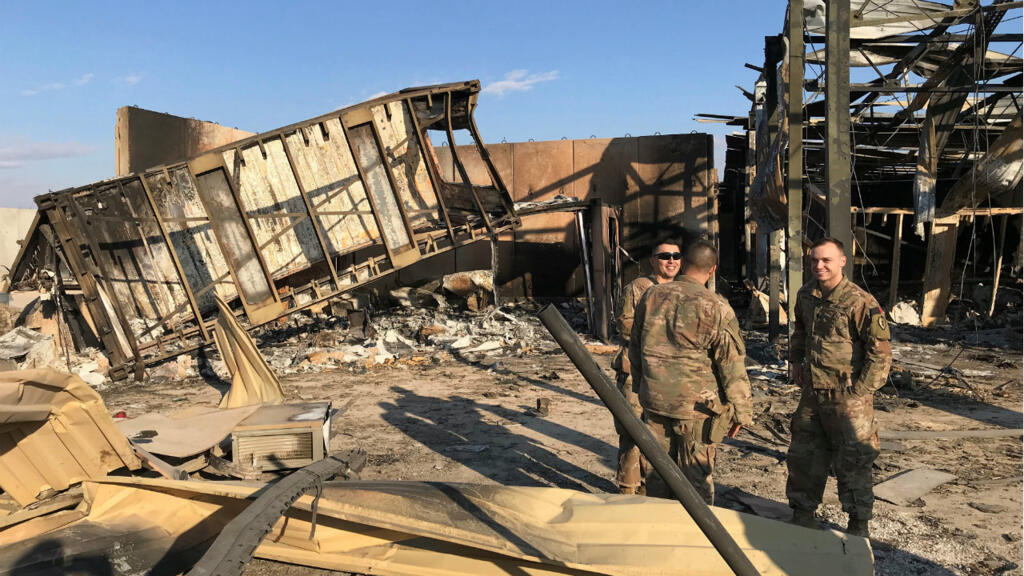
A sustained, coordinated wave of Iranian ballistic missile and drone strikes has inflicted confirmed damage on American military installations spanning Kuwait, Bahrain, the United Arab Emirates, Qatar, Jordan, and Saudi Arabia — a geographic sweep that military analysts describe as unprecedented in both scale and precision. Facilities remain operational, but the strikes have destroyed irreplaceable radar systems, severed critical communication links, killed American soldiers, and demonstrated with uncomfortable clarity that the United States’ forward-deployed posture in the Persian Gulf is more exposed than Washington has publicly acknowledged.
The Damage: Base By Base
In Kuwait, Ali Al Salem Air Base — a critical hub for U.S. air operations in the northern Gulf — sustained infrastructure damage from strikes beginning February 28. Satellite imagery confirms hits on more than a dozen structures, including aircraft shelters and runway-adjacent areas. The base has not been rendered inoperable, but the pattern of targeting suggests Iranian planners were aiming at the logistical sinew of the facility rather than simply generating explosions.
At Camp Arifjan, also in Kuwait, the damage was more precisely targeted and strategically consequential. At least six satellite communication radomes — the domed antenna housings that carry encrypted links to U.S. Central Command — were destroyed. Radomes are not easily or quickly replaced. They represent the nerve endings of American command-and-control architecture in the theatre, and their destruction degrades Washington’s ability to coordinate operations across the region in real time. Nearby Camp Buehring, a key logistics hub, was also struck.
In Bahrain, a missile attack on the U.S. Fifth Fleet headquarters heavily damaged radomes, warehouses, and communication terminals at the fleet’s service centre in Manama’s Juffair district. The Fifth Fleet commands American naval operations across the Persian Gulf, Red Sea, Arabian Sea, and parts of the Indian Ocean — a geographic remit that encompasses every maritime chokepoint currently in crisis. Degrading its communication infrastructure does not sink ships, but it imposes friction on every operational decision the fleet makes.
The United Arab Emirates registered strikes south of Abu Dhabi at Al Dhafra Air Base, where significant damage was confirmed to a military compound, satellite systems, and radar equipment. Al Dhafra hosts the largest concentration of advanced U.S. air assets in the Gulf region, including F-35 and F-22 aircraft. At Jebel Ali Port — a crucial naval hub that has long served as a preferred port of call for U.S. warships requiring resupply and maintenance — Iran struck on March 1. The full extent of American losses at Jebel Ali remains classified, but the targeting of a commercial-military dual-use port facility carries significant implications for the sustainability of U.S. naval operations in the region.
Al Udeid: The Crown Jewel Under Fire
No single installation concentrates more American military power in the Middle East than Al Udeid Air Base in Qatar. The facility serves as the headquarters of U.S. Air Forces Central Command, hosts the Combined Air Operations Centre that directs air campaigns across the entire CENTCOM area of responsibility, and has been the nerve centre of virtually every major American air operation since 2001. It is, in the bluntest possible terms, the most important piece of American real estate in the region.
Despite Qatari air defences — among the most sophisticated in the Gulf — at least one impact caused confirmed explosions on the base. More significantly, reports indicate that an AN/FPS-132 long-range ballistic missile detection radar — a system that cost approximately $1.1 billion to procure and install — has sustained damage. The AN/FPS-132 is not merely an expensive asset; it is a foundational component of the U.S. ballistic missile early warning architecture in the theatre. Its degradation reduces the warning time available to American commanders when Iran launches ballistic missiles — a capability Tehran has now demonstrated it is willing to use at scale.
Jordan: The Most Consequential Strike
If a single strike in this campaign carries the most profound long-term strategic consequences, analysts point without hesitation to Jordan. At Muwaffaq Salti Air Base, Iranian missiles and drones obliterated an AN/TPY-2 radar — the targeting and fire-control brain of a U.S. Terminal High Altitude Area Defense, or THAAD, battery. The radar, valued at approximately $300 million, is not a redundant system. It is the irreplaceable sensor that allows THAAD to detect, track, and engage incoming ballistic missiles.
Without the AN/TPY-2, the THAAD battery it served is operationally blind. The interceptor missiles remain, but they cannot be effectively employed. Jordanian authorities, in an unusual public admission, confirmed that 11 Iranian missiles and drones evaded interception entirely — a figure that illustrates both the volume of the salvo and the degree to which Iranian planners appear to have studied and mapped the gaps in Jordanian and American air defence coverage.
Munitions experts describe the loss of the AN/TPY-2 in stark terms. Replacing it is not a matter of ordering a spare from inventory. The radar must be redeployed from another location — almost certainly drawing it away from a theatre where it is already needed — or sourced through a procurement process that operates on timelines measured in years, not weeks.
Saudi Arabia: The Partial Interception
At Prince Sultan Air Base in Saudi Arabia — a facility that serves as a key hub for U.S. air operations and hosts Patriot missile defence systems — Saudi forces intercepted the majority of incoming threats. The partial success, however, obscures a confirmed failure: a nearby radar site sustained confirmed damage, with a radar shelter badly charred and debris scattered across the surrounding area. In air defence terms, the distinction between a near-miss and a direct hit can be measured in radar availability — and Saudi Arabia, like every other country in the region, now has less of it than it did before the campaign began.
The Strategic Revelation
Iran did not attempt to sink an aircraft carrier or destroy an entire air base. It targeted radomes, radar shelters, communication terminals, and command posts — the nervous system of American military power rather than its muscle. The approach reflects a sophisticated understanding of how modern military networks function and where their critical nodes lie. It also reflects a calculated judgment that destroying support infrastructure, while strategically meaningful, falls below the threshold of provocation that would trigger a massive American response.
The pattern of targeting carries a clear message to Washington: the United States’ forward-deployed posture in the Gulf, long assumed to be a position of strength, is also a position of exposure. Bases that project power can also absorb strikes. Communication nodes that enable coordination can also be severed. Air defences that protect installations can be saturated, deceived, or simply overwhelmed by volume.
What Iran has demonstrated, at a cost that is a fraction of what the United States has spent on the infrastructure it has damaged, is that the asymmetry of modern warfare does not necessarily favour the technologically superior power. It favours the side that most clearly understands where the other side is vulnerable — and is willing to act on that understanding.
Read Also: Revived US-China Trade Tensions Rattle Global Markets Amid Tariff Escalations