Stay connected with BizTech Community—follow us on Instagram and Facebook for the latest news and reviews delivered straight to you.
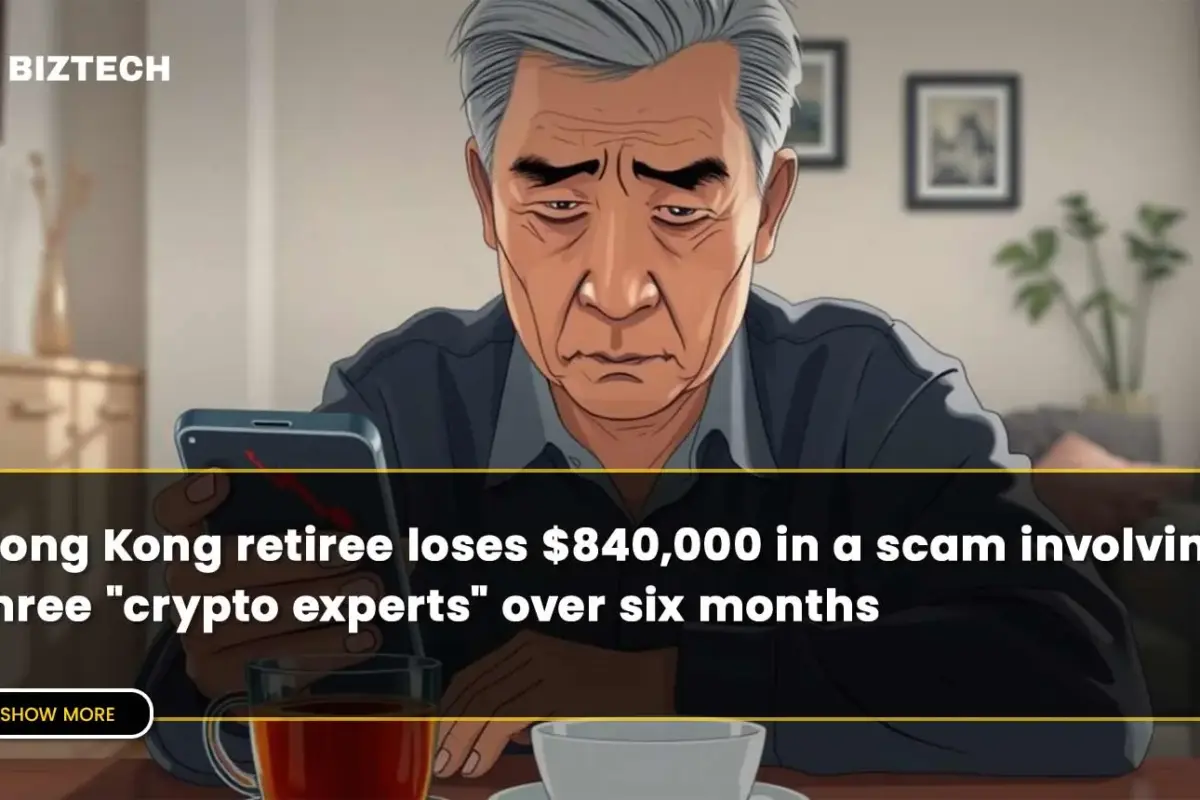
A 66-year-old retiree in Hong Kong is the latest high-profile victim of a complex, multi-stage cryptocurrency investment scam. They lost about HK$6.6 million (about US$840,000 or Rp13.9 trillion) in three separate but related schemes. The Hong Kong police’s CyberDefender unit wrote about the case on Facebook on March 20, 2026.
It shows a pattern that happens way too often: scammers steal money with promises of guaranteed profits, then keep going after the same victim by offering “recovery” services that require more payments.
The trouble started in September 2025 when the retiree got an unsolicited WhatsApp message from someone who said they were a “expert” in investing in virtual currencies.
Over the course of numerous discussions, the scammer gained the victim’s trust and was able to get them to send HK$1.4 million (approximately US$180,000) and put cryptocurrencies into a wallet that the scammer controlled.
The retiree called the police when the promised returns never came and the contact disappeared. This was the first of many costly mistakes that would follow.
Instead of accepting the loss, the victim started looking online for help getting the money back. That choice led to the second swindle. Another person who called himself a “crypto recovery expert” got in touch and said he could get the stolen items back, but he needed a HK$585,000 (approximately US$75,000) security deposit to cover “processing fees” and “legal expenses.” This second fraudster also went away after getting the money.
In January 2026, the same thing happened again. A third person who claimed to be an expert contacted the retiree through WhatsApp and said they would get back both of their earlier losses provided the victim first bought and sent HK$4.56 million (about US$585,000) worth of cryptocurrencies to a certain address. The third scammer also disappeared after the money was sent. The retiree lost all of his life savings over the course of around six months to the same scam: an initial investment scam followed by two “recovery” scams.
The Hong Kong police used the case to give a clear warning: “Life has no take two; but scams can have take three.” The CyberDefender team stressed that real financial specialists never reach out to people through random communications, never offer assured profits, and never ask for money up advance to “unlock” or get back funds. Some common warning signs in this case were words like “guaranteed returns,” “inside information,” “security deposit required,” and the scammer’s insistence on shifting money to wallets that they controlled.
Why These Scams Keep Working?
There is a reason behind the three-hit structure. Scammers go after people who have already lost money on purpose because they are emotionally weak, desperate to get their money back, and more likely to disregard warning indications. Scammers take use of people’s hope and the “sunk-cost” effect, which is the desire to stick with wrong choices in the hopes of setting them right. They accomplish this by calling each subsequent contact a “recovery specialist.”
Over the past two years, investment scams related to cryptocurrencies have been on the rise in Hong Kong. In 2025 alone, documented losses from virtual-currency fraud were more than HK$3.5 billion (US$450 million). Many of these incidents used the same WhatsApp cold-messaging methods. Once assets have left the victim’s possession, it’s very unlikely that they will be able to get them back because crypto transfers are anonymous, blockchain transactions can’t be reversed, and it’s hard to track monies across wallets.
The retiree’s case is especially bad because it happened so many times and on such a large scale. Most people would be devastated to lose $840,000. Losing it in three different but related frauds over six months shows a level of ongoing manipulation that is both cruel and frighteningly efficient.
More and more crypto fraud is happening around the world
This event is part of a bigger pattern of crypto-related investment fraud around the world. According to the security company Hacken, Web3 platforms lost over $3.95 billion in 2025. Investment and romance scams were still two of the most prevalent ways to lose money. People who work for the government, organised crime groups, and individual fraudsters have all gotten smarter. They typically use AI-generated content, deepfake movies, and professional-looking trading dashboards to make themselves look more credible.
The FBI has sent out several warnings in the US regarding phoney tokens that pretend to be police enforcement or official bodies. Meanwhile, India’s GainBitcoin probe is still uncovering huge Ponzi-style schemes. Recently, U.S. officials tried to take $3.4 million in Tether that was connected to an investment scheme that affected multiple states. These situations are similar to what happened to the Hong Kong retiree: they got contacted without asking, were promised huge profits or recovery, and were told to quickly send money to wallets controlled by the attacker.
The Hong Kong police used the case to remind people of basic safety tips:
- Don’t ever reply to unsolicited investment advise on WhatsApp, Telegram, or social media.
- Check the qualifications of any advisor through proper channels. Real professionals don’t send cold messages to people they don’t know.- Don’t tell anyone, not even family members, your seed phrases, private keys, or wallet access.
- Be very wary of anyone who promises to “recover” missing bitcoin for an upfront charge.
The CyberDefender team also told people that once bitcoin leaves a victim’s wallet, it’s almost impossible to get it back without help from other countries and a lot of investigative resources, which are not usually available for individual cases.
What this means for crypto users and platforms
Regulators are still putting pressure on bitcoin platforms because of high-profile incidents like this one. The Securities and Futures Commission (SFC) in Hong Kong has already made it harder for virtual asset service providers to get licenses. At the same time, global organisations like the FATF are pushing for greater travel-rule compliance and KYC enforcement.
For users, the event is a harsh reminder that self-custody, while empowering, demands strict personal security hygiene. The safety of hardware wallets depends on where they are utilised. When a lot of money is at stake, hidden cameras, hacked equipment, and even family members you trust can all be used to attack.
The case may also make people want improved education for investors and platform-level protections even more. A lot of exchanges now warn people about recovery scams, make people wait a certain amount of time before making significant withdrawals, and use AI to find unusual activity. But as long as crypto stays pseudonymous and can’t be reversed, scammers will keep taking advantage of people’s psyche, especially older people or people who aren’t very tech-savvy and are most likely to fall for “recovery” fraud after losing money.
A Painful but Familiar Tale
It’s sad that the Hong Kong retiree lost $840,000 in three scams in a row, but it’s not the only time this has happened. The pattern of starting with an investment scam and then running multiple “recovery” schemes takes advantage of hope, desperation, and trust in a manner that other financial scams don’t. When money is moved to wallets controlled by the attacker, the blockchain’s unchangeability becomes the victim’s worst enemy instead of a feature.
For the larger crypto community, cases like these are a wake-up call. The technology gives people more control over their money than ever before, but it also requires them to be responsible and watchful, which many users, especially those who are new to digital assets, are not yet ready to do. Education, more warnings on platforms, and maybe even rules that force people to be aware of scams could help stop these kinds of things from happening.
The advice from the Hong Kong police is still true: real specialists don’t message strangers on WhatsApp, and there is no real service that needs payment up advance to get back stolen cryptocurrency. When someone says they can help you get your money back for a charge, all they’re really doing is getting their next payment.
Read Also: Wife allegedly steals husband’s $172 million Bitcoin by secretly recording the seed phrase