Stay connected with BizTech Community—follow us on Instagram and Facebook for the latest news and reviews delivered straight to you.
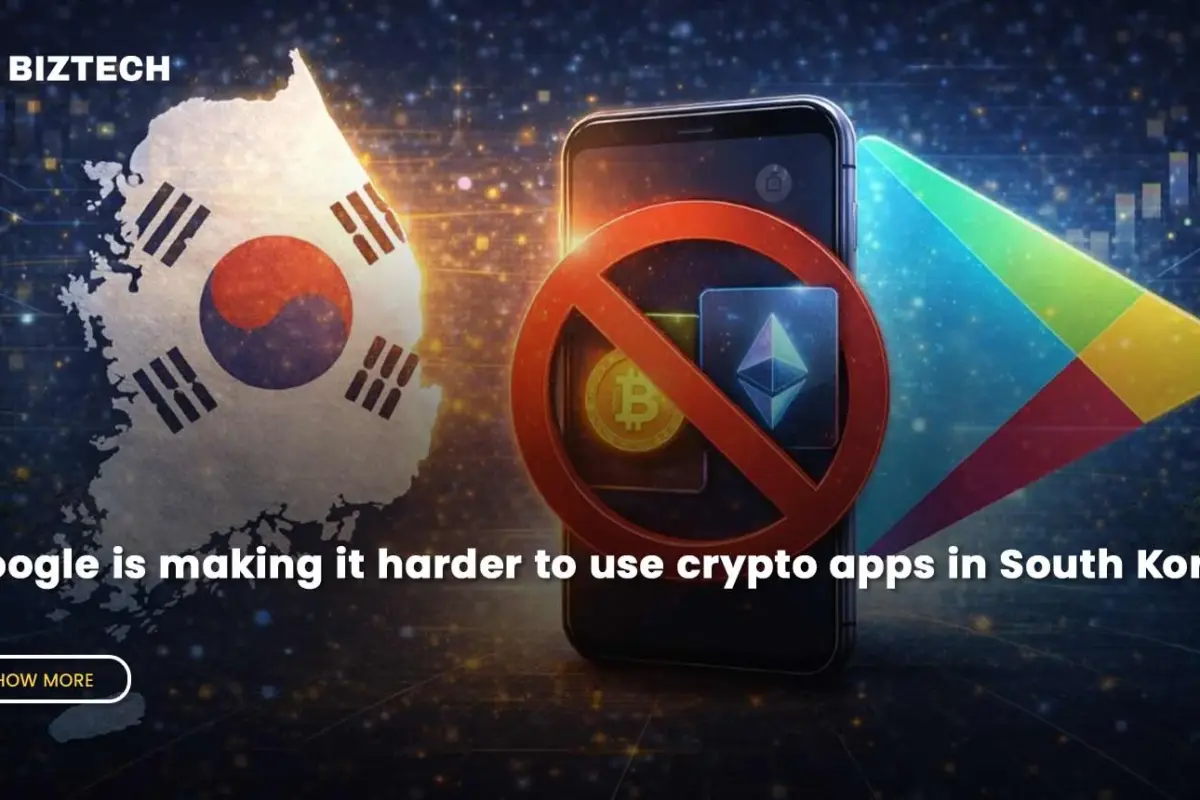
Google is making it harder for Bitcoin apps to be on its Play Store in South Korea. This might make it much harder for people in South Korea to use big offshore exchanges.
Starting on January 28, 2026, developers who want to sell crypto exchange or custodial wallet apps in the country must show confirmation that their Virtual Asset Service Provider (VASP) registration with the Financial Intelligence Unit (FIU) has been accepted.
If you don’t send in this paperwork, the program won’t be able to be downloaded in South Korea anymore, and support for current installations may end over time.
Read also: Google Chronicles 2025 AI Breakthroughs in Comprehensive Year-End Review
The policy change is in line with the changes to Google Play’s global cryptocurrency policy that were made in August 2025. That framework says that crypto apps must follow the financial rules in every place where they are sold. In South Korea, this entails showing full VASP registration, which includes setting up a local legal entity, putting in place strong anti-money laundering (AML) processes, passing on-site inspections, and getting Information Security Management System (ISMS) certification.
The requirement is a problem right away for international platforms that haven’t finished this registration. The News1 article said both Binance and OKX were expected to be affected. Binance still owns 10% of the local exchange Gopax, but it hasn’t set up a fully licensed business in South Korea yet. People have said that OKX has worked in the country without the right registration before.
A spokesman for Binance said they knew about the regulation and that it applies to all crypto apps, not just Binance: “This is not unique to Binance and affects other crypto apps as well.” The business says that it is in talks with Google to find a solution. It also told users that if they switch devices, do a factory reset, remove the app, or get a big OS upgrade that requires them to reinstall the app, they may not be able to use the Binance app on Google Play for a short time after the changes take effect.
What This Means for South Korean Users
One of the world’s most active crypto markets is in South Korea. Upbit and Bithumb are two of the country’s exchanges that frequently rank among the highest-volume platforms in Asia. But a lot of customers also choose international exchanges since they have more assets to choose from, lower costs, or more complex trading tools. It would be quite annoying for consumers who often swap devices or reinstall programs if these apps couldn’t be downloaded again.
Google Play’s policy usually means that unsupported apps will be removed from devices during big updates, even if they still work for a while. Users may have to sideload apps, which is against Google’s terms of service and comes with security risks, or move to platforms that are licensed in their area but have fewer options.
The timing is interesting. South Korea has been making its rules for cryptocurrencies stricter in general so that more institutions can get involved. New laws include stronger VASP standards, better anti-money laundering procedures, and more rules for real-name accounts. The modification to Google Play seems to be an enforcement of existing rules rather than a new order from Korean regulators. However, it fits in well with the country’s overall goal for controlled, domestic crypto activity.
A Wider Look at Google’s Crypto Policy
The new Cryptocurrency Exchanges and Software Wallets policy from Google, which came out in August 2025, says that developers must follow licensing and regulatory rules in some places. In the US, this entails signing up with FinCEN and other agencies. It needs to be a licensed crypto-asset service provider under MiCA in the European Union. The requirement for South Korea’s FIU to register falls into this worldwide compliance framework.
The policy shows that Google is trying to lower the risk of government regulation for its platform while still allowing access to crypto apps in places where it is legal. It also puts the duty for compliance squarely on developers instead of Google, which means Google doesn’t have to host apps that don’t follow the rules.
This is different from Apple’s stricter attitude on iOS, where crypto apps have to deal with extra problems, and Android’s environment, which has always been more open. By making sure that crypto apps on the Play Store meet local licensing criteria, Google is basically setting up a system where each country has to approve them.
What this means for users and the market
For those in South Korea who utilize cryptocurrencies, this development could imply that they slowly start to use services that are licensed in their own country. This might make regulations stronger and lessen the risk of trading on exchanges outside the US, but it could also make it harder to access particular trading pairs, lower-fee structures, or advanced features that are only available on international exchanges.
The policy may speed up the process of merging with local exchanges that have previously registered with the FIU. It also makes you wonder if Google will be consistent in how it enforces the rules. Will it look at all crypto-related apps, such wallets, DeFi interfaces, and NFT marketplaces, in the same way?
From a larger market point of view, the move shows that global tech platforms and local regulators are working together more and more. As more and more governments put stronger rules in place for cryptocurrencies, app stores are becoming the de facto gatekeepers, making sure that everyone follows the rules at the distribution level. This might make the mobile crypto experience different in different countries, even though blockchain networks are still open to everyone.
For multinational exchanges that still serve South Korean users, the policy makes it harder for them to either get local registration or make Android devices less accessible. It could also lead to the creation of progressive web apps or other ways to get apps that don’t go through Google Play.
Conclusion
Starting on January 28, 2026, Google Play will need confirmation of FIU registration in South Korea. This is a big step toward making it harder for people to use crypto apps in one of Asia’s most active markets. The change is being sold as a way to enforce current worldwide rules, but it will probably make more people use platforms that are regulated in their own country.
It could also make it harder for people to utilize offshore exchanges like Binance and OKX. The policy shows how app shops are becoming more and more important as regulatory choke points in the mobile crypto industry. For people in South Korea, the real effect will depend on how soon exchanges respond and if other ways of getting the coins become available. For the global crypto business, it serves as another warning that national rules are making it harder to access digital assets, even on platforms that are meant to be international.