Stay connected with BizTech Community—follow us on Instagram and Facebook for the latest news and reviews delivered straight to you.
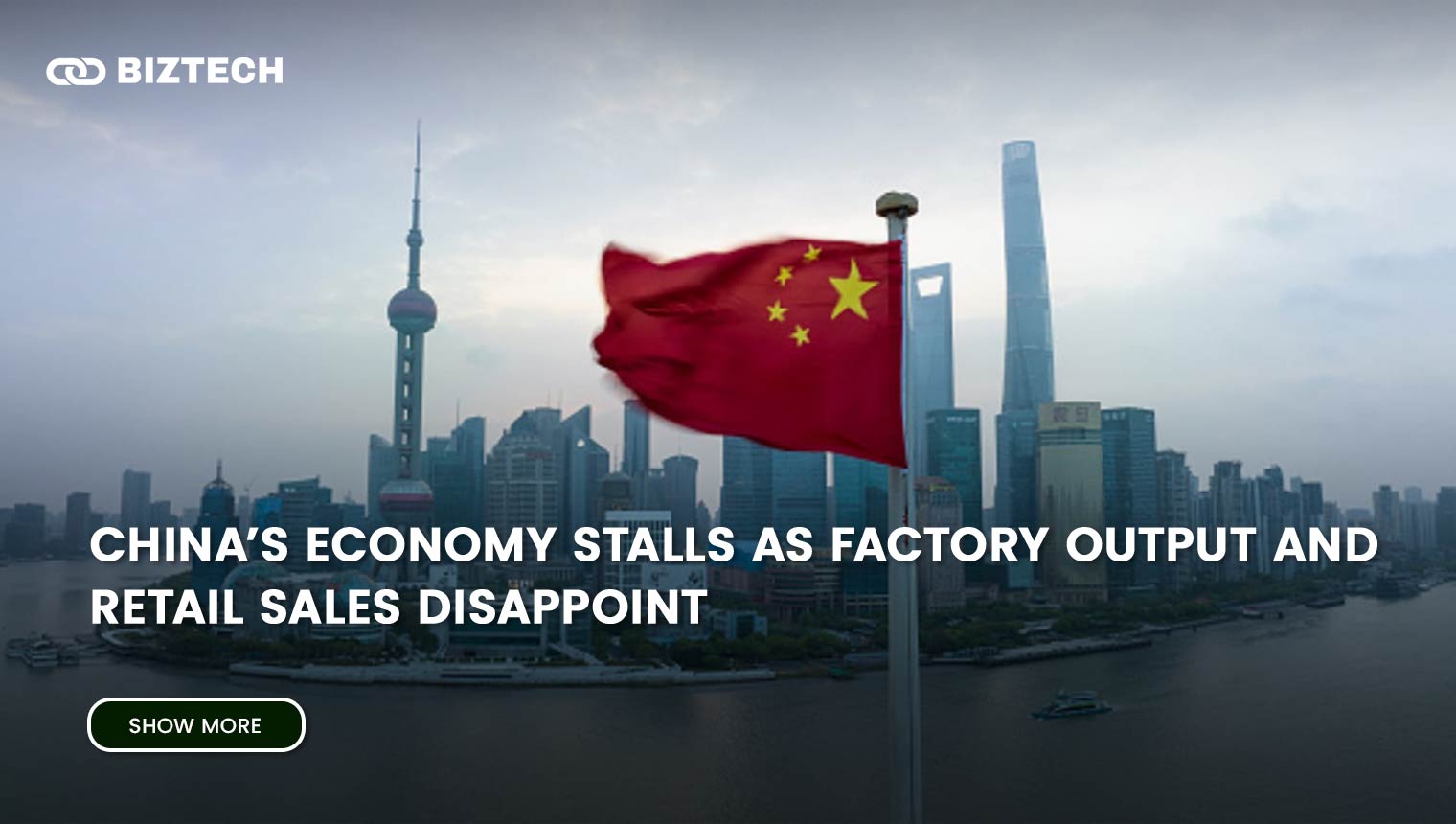
China’s economy slowed sharply in July, with disappointing numbers across factory activity, consumer spending and investment. Analysts say Beijing’s reluctance to unleash large-scale stimulus, combined with intensifying fallout from U.S. tariffs, is weighing heavily on the world’s second-largest economy.
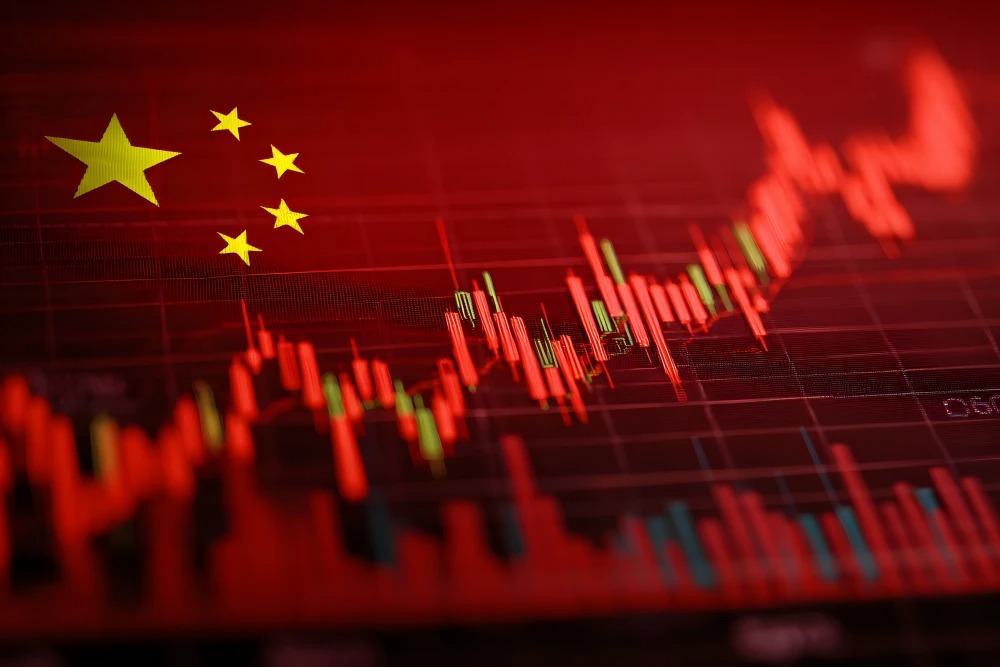
Industrial production rose 5.7% year-on-year in July, according to the National Bureau of Statistics—its weakest growth since last November and below June’s 6.8% gain. Economists say Donald Trump’s tariff regime, despite a temporary truce, is biting hard: the average U.S. tariff on Chinese goods now stands at 43.5%, according to Global Trade Alert.
That headwind comes on top of sluggish domestic demand and a still-struggling property market, where prices are falling and construction continues to contract.
Retail and Investment Slide
Retail sales were another disappointment, falling 3.7% from a year earlier, while fixed-asset investment dropped 5.3%, the sharpest contraction since the Covid outbreak in early 2020.
Private investment is running at its weakest pace since 2020, reflecting subdued confidence among households and businesses. Goldman Sachs economists noted net new loan growth has turned negative for the first time in two decades, underscoring the depth of the slowdown.
Beijing Opts for Incremental Measures
Unlike previous downturns, policymakers have resisted sweeping stimulus. Instead, Beijing has rolled out targeted incentives: a trade-in program for consumer goods, modest loan subsidies, and childcare support.
These measures, while supportive, have done little to shift momentum. Economists warn that without a larger fiscal or monetary push, growth risks undershooting the government’s 5% annual target.
Markets Bet on More Stimulus
Despite the weak data, Chinese equities have held up, buoyed by expectations of further policy support. Rory Green, head of China research at TS Lombard, told clients that “faith in the policy put is growing again,” with investors believing poor data will force Beijing to step in.
HSBC economists, however, warned that tariffs and Beijing’s crackdown on “involution”—the destructive price wars and excessive competition that have fueled deflationary pressure—pose ongoing risks for manufacturing.
Bright Spots Amid Weakness
Not all sectors are suffering. Tech giant Tencent reported a 16% jump in profits in its latest quarter, powered by growth in gaming, advertising, and early returns from AI investments. Analysts say companies able to expand in a weak environment by edging out rivals are likely to be the first rewarded when confidence returns.
For now, China’s economy looks stuck in a rut: growth spurts triggered by modest policy tweaks are proving unsustainable, while structural headwinds—debt burdens, weak consumer confidence, and global trade tensions—remain unresolved.
Economists expect the slowdown to persist into the second half of the year. The question for investors is whether Beijing will stick with incrementalism—or finally opt for a bigger rescue package.