Stay connected with BizTech Community—follow us on Instagram and Facebook for the latest news and reviews delivered straight to you.
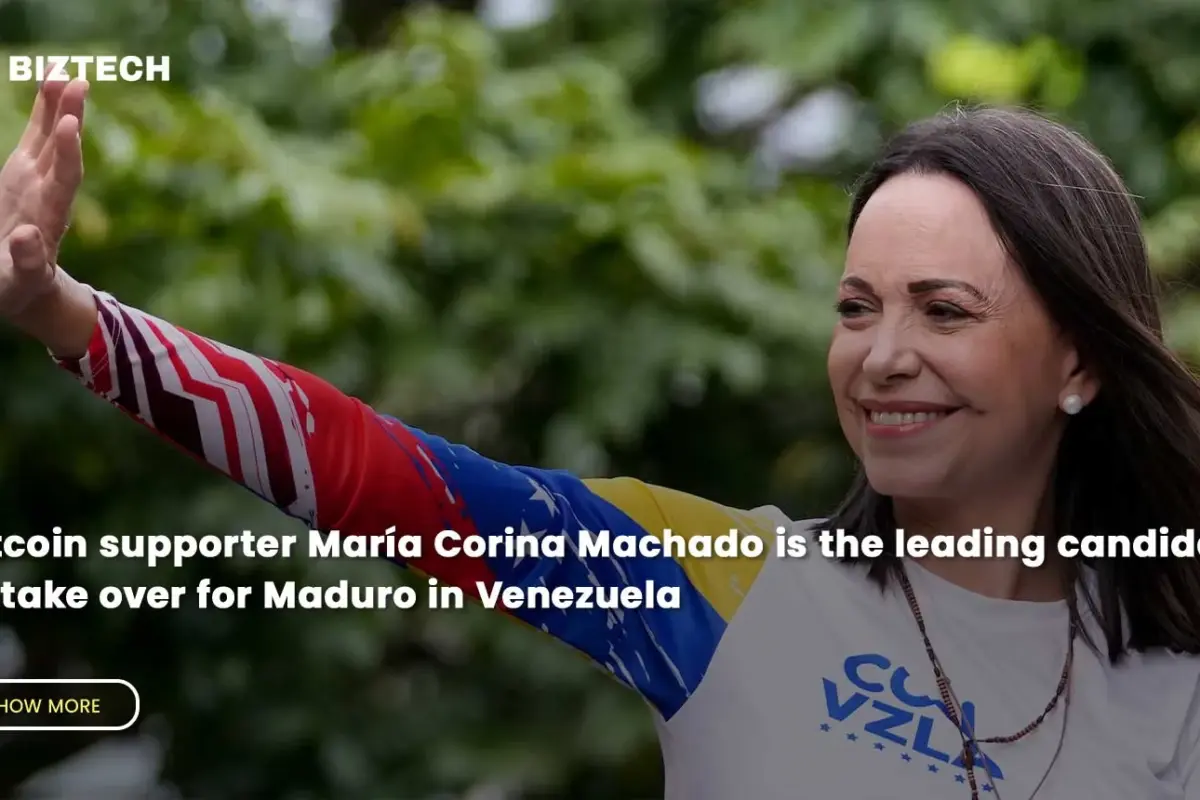
The dramatic capture of Venezuelan President Nicolás Maduro by U.S. forces over the weekend has made the country’s political future very clear. María Corina Machado, a Nobel Peace Prize-winning opposition leader, has quickly become a top candidate to lead the country through the transition. Prediction markets now say that she has a good chance of becoming Venezuela’s next president by the end of 2026. This is because she has been popular with opposition supporters for a long time and since Maduro’s removal has left a hole in the government.
Kalshi data from January 5, 2026, suggests that Machado has a 28% chance of being Venezuela’s president by the end of the year. He is just behind Unitary Platform candidate Edmundo González Urrutia, who has a 32% chance. González Urrutia was widely thought to have won the May 2025 election, but Maduro’s administration stopped him from taking office. Delcy Eloína Rodríguez, who was declared acting president by the Supreme Court when Maduro was arrested, is in third place with 27%. After the announcement of the capture, Machado’s chances momentarily rose beyond González’s, but then they settled back into a close three-way race.
The change has big effects for the economy of Venezuela and its relationship with bitcoin. Machado has called Bitcoin a “lifeline” for Venezuelans during years of hyperinflation and dictatorial rule. In a conversation with Alex Gladstein, the chief strategic officer of the Human Rights Foundation, in late 2024, she talked about how people used Bitcoin to preserve their wealth and pay for ways to get out of the nation. “It has changed from a tool for helping people to a crucial way to fight back,” she stated at the time. She went on to say that Bitcoin will be more formally accepted in a democratic Venezuela, maybe even as a national reserve asset.
A Pro-Bitcoin Plan for Getting the Economy Back on Track
Machado’s views on bitcoin are very different from those of the Maduro regime. The United Socialist Party has shut down Bitcoin mining companies from time to time during the previous 10 years, usually because they were using power illegally or didn’t have the right permits. In several reported cases, state security officers have broken into mining facilities, taken equipment, and arrested operators. The dictatorship saw decentralised finance as a threat to centralised control, therefore they were hostile to crypto in general.
Read also: Bitcoin Mining’s 2026 Outlook From AI Diversification, Tight Margins, and Ways to Stay Alive
If Machado becomes president, many think he will make a big change in policies. She has pushed for reforms to the free market, dollarization (or at least partial dollarization), and getting rid of currency regulations that have caused black-market prices to rise and capital to leave the country. Incorporating Bitcoin more fully into the financial system—through things like legal recognition, tax breaks for miners, or setting aside reserves—would fit with her larger goal of bringing back economic freedom and drawing in international investment.
Hyperinflation in Venezuela has already led to a lot of people using Bitcoin. Since 2013, more than eight million people have left the country. Many of them used crypto to send money back home when regular ways of doing so became unreliable or too expensive. According to local economists, stablecoins, especially USDT, have become the most popular way to pay for oil exports and do business in the US. They account for about 80% of crude earnings. Instead of shutting them down, a Machado administration might make these channels official and grow them.
The Political Scene and Reactions from Outside
There is still a lot of uncertainty about the changeover. President Donald Trump, whose administration helped capture Maduro, said he didn’t think Machado would be able to hold on to power. Trump told The Atlantic on Sunday that she was “a very nice woman” but “doesn’t have the respect within the country” to be a good leader. Analysts who know a lot about Venezuelan politics quickly pushed back against the claim. Liz Rebecca Alarcón, the creator and CEO of Project Pulso, told ABC News that Machado already has a lot of support from both in Venezuela and from Venezuelans living abroad. She remarked, “We also want our will as Venezuelans inside and outside of the country to be respected.” “That will is for María Corina Machado and Edmundo González Urrutia to eventually take hold.”
Many people thought Machado would beat Maduro in the 2025 election, but the Supreme Court prevented him from running because of allegations of administrative errors and breaking electoral law. Her disqualification brought together opposition groups and generated criticism from throughout the world, making her the most important democratic figure even more.
Acting President Rodríguez first said he would work with U.S. officials after Maduro was sent to New York to face federal drug trafficking and corruption allegations. Later, she changed her mind and called the operation a “illegal kidnapping” that violated Venezuela’s sovereignty. Trump said, “If she doesn’t do the right thing, she’s going to pay a very big price, probably bigger than Maduro.”
What this means for the market and crypto
Bitcoin’s price has stayed very constant throughout the weekend, trading at about $95,123 as of January 5, 2026. Unlike traditional risk-on assets, which tend to drop quickly following geopolitical shocks, this one didn’t react much. Analysts say that Bitcoin’s strength can be traced back to a number of things:
- Institutional buying through spot ETFs has kept the market steady.
- The timing of the weekend kept institutional selling pressure down right away.
- After months of increasing tensions, the occurrence was partly expected.
A government led by Machado might have big effects on how quickly Bitcoin is adopted in Latin America in the long run. Following El Salvador’s lead, officially recognising BTC as legal cash or a reserve asset will certainly bring in more mining investment, increase remittance flows, and promote financial inclusion. On the other hand, ongoing political uncertainty or a Rodríguez-led government that follows current socialist policies could limit crypto activity.
The scenario is still changing for now. Prediction markets don’t show that any one candidate has a clear chance of winning, which shows how unclear Venezuela’s political future is in the near term. No matter what happens, the country’s experience with hyperinflation, sanctions, and grassroots Bitcoin use will continue to be a real-world example of how cryptocurrencies may be used in times of economic and political crisis.