Stay connected with BizTech Community—follow us on Instagram and Facebook for the latest news and reviews delivered straight to you.
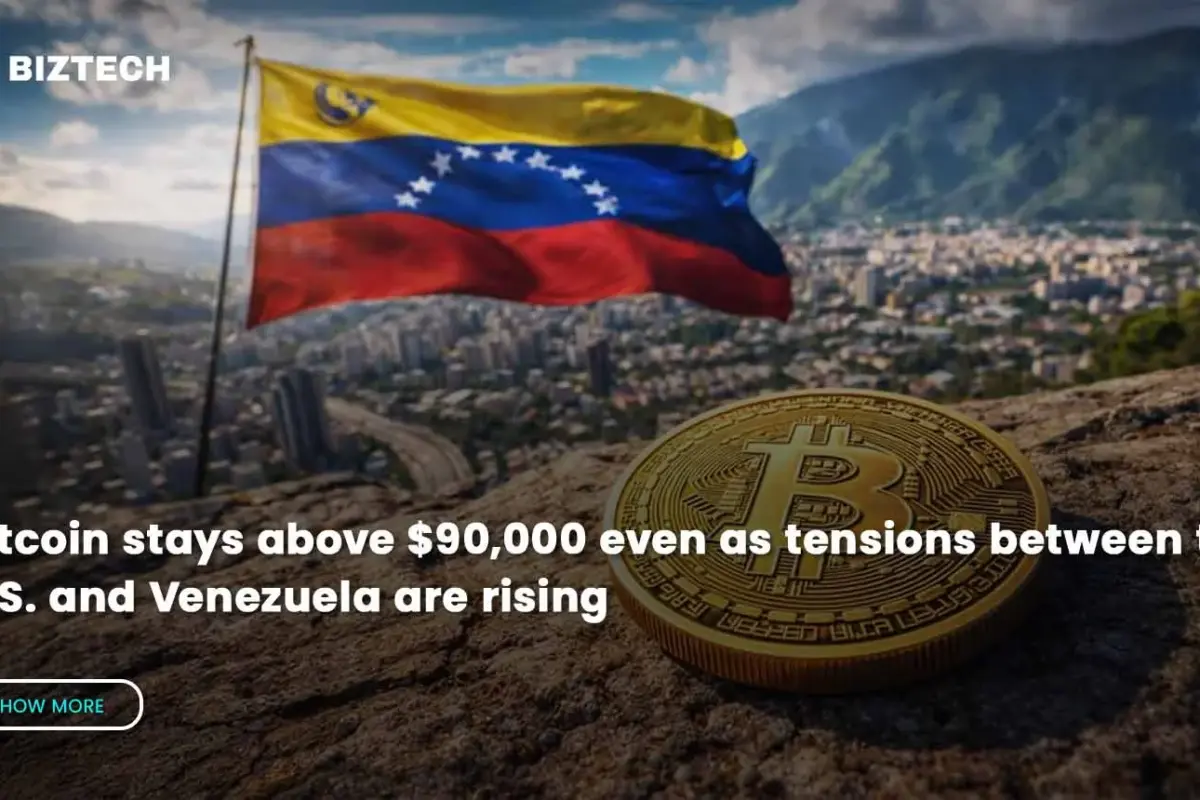
Bitcoin has shown amazing strength in the face of rising tensions between the US and Venezuela. On January 4, 2026, reports broke that U.S. airstrikes had hit Caracas and President Nicolás Maduro had been captured. The top cryptocurrency temporarily fell below $90,000 before swiftly rising again and staying above that level. Bitcoin is trading at about $94,949 right now, and its muted reaction is very different from what most people think happens when geopolitical events happen. Usually, risk-on assets drop drastically during these times.
Nic Puckrin, the creator of Coin Bureau, wrote in an X post that immediately garnered popularity in the crypto world, “The US bombed a country and took its leader on a weekend, and yet Bitcoin has barely moved.” The observation reflected a wider feeling: in past cycles, similar headline dangers would have caused fast liquidation cascades, but Bitcoin’s price behaviour has been orderly.
Technical analysts have said that Bitcoin’s position above the 21-day moving average is a good indicator for the short term. Market pundit Michaël van de Poppe said that keeping this dynamic support level would leave the door open for more gains in January, which might approach resistance zones near recent highs. The controlled decline and rebound show that there is underlying bid power, especially from institutional investors who don’t seem to react as strongly to geopolitical events that happen over the weekend.
Geopolitical Shock Meets Market Apathy
Over the weekend, the U.S. military’s actions against Venezuela were the most talked-about news story throughout the world. President Trump said that airstrikes would be carried out on the capital of Venezuela. He said that the operation was necessary to deal with security threats coming from the Maduro government. The reported detention of President Maduro is a big step up in the long-standing tensions between Washington and Caracas, even though details of the operation are still scant.
But thus far, the financial markets have been calm. Before the market opened, equity futures were just slightly worse, while traditional safe-haven assets like gold and the U.S. dollar index didn’t move much. Bitcoin’s behaviour falls into this larger pattern of less volatility. The total value of the cryptocurrency market stayed rather constant, with just little changes in the value of key altcoins.
There are a few reasons why this might not be a big deal:
- Weekend Timing: Institutional investors, who now make up a large part of the crypto market through ETFs and corporate treasuries, usually don’t trade on weekends. This makes it harder to get cash right away and stops people from reacting too quickly.
- Event Anticipation: The U.S. and Venezuela have been at odds for years, with past rounds of sanctions, asset seizures, and diplomatic clashes. The markets may have already taken into account a number of possible increases.
- Bitcoin’s Changing Story: As Bitcoin has grown up and attracted more long-term institutional capital, its relationship with traditional risk assets has sometimes gotten weaker. When there are big problems in the economy, BTC has acted more like a “digital gold” store of value than a risky asset with a high beta.
Lennaert Snyder, an analyst, said that the real test might come when traditional markets reopen: “There’s a lot of geopolitical tension, and the big players will be back next week.” After the weekend, Bitcoin will probably be more volatile. The flash crash in October 2025, which wiped out $19 billion in leveraged positions, is a good reminder that news over the weekend can cause big changes when institutional desks come back.
Venezuela’s Crypto Presence and What It Means for the Market
Venezuela’s relationship with cryptocurrencies has been complicated and not simple. The government has utilised USDT a lot to get around sanctions on oil exports. Estimates say that up to 80% of crude revenue was settled in the stablecoin. This has led to a large “shadow” Bitcoin reserve through conversion channels, but the exact numbers are still up in the air.
The present rise makes people wonder what will happen to their possessions. If the Venezuelan government-controlled wallets face more penalties or attempts to seize them, it might, in theory, take some Bitcoin out of circulation. But it’s hard to figure out just how much of an impact the network has because it’s decentralised and the state’s holdings aren’t clear.
In a broader sense, the incident shows that stablecoins have two roles in geopolitically limited areas: they are useful for keeping trade going, but they are also open to regulatory pressure from big financial institutions. The U.S. has already gone after mixers and privacy protocols that help people get around sanctions. If these efforts were to be expanded, they might indirectly damage the stablecoin liquidity conduits that sanctioned firms employ.
Read also: Bitcoin and Tether (USDT): Are Major Stablecoins Doomed to Depegging?
Bitcoin’s Macro Strength
The fact that Bitcoin stayed above $90,000 over the weekend shows that it is becoming more and more seen as a macro asset that is somewhat shielded from certain geopolitical headlines. In 2025, the cryptocurrency has already gone through a number of crises, including as the October tariff-induced liquidations and the recovery that followed. This shows that the market structure is more mature than it was in earlier cycles.
Institutional positioning is still helpful. Spot Bitcoin ETF inflows have stayed positive even while prices have been stable, and corporate treasuries keep getting bigger. This consistent demand sets a floor that could keep prices from going down too much during exogenous shocks.
In the medium run, technical indications are still positive. Bitcoin’s rise after the weekend fall has kept it above important moving averages, and momentum oscillators are exhibiting neutral-to-bullish readings. If the price moves decisively over recent resistance near $100,000, it might start going up again. If it doesn’t hold $90,000, it could test lower supports around $85,000.
Looking Ahead
The rise in tensions between the US and Venezuela is a reminder that geopolitical risks are always present in global markets. Bitcoin has been strong so far, but Snyder’s warning about possible turbulence on Monday should be taken seriously. Next week, the tone will probably be set by institutional flows, options posture, and what happens in the physical oil market over the weekend.
Bitcoin’s capacity to handle headline risk without major damage for now shows that both the asset and its investors are becoming more mature. One of the main stories to monitor in early 2026 will be whether this strength holds up in the face of more geopolitical changes or macroeconomic problems.