Stay connected with BizTech Community—follow us on Instagram and Facebook for the latest news and reviews delivered straight to you.
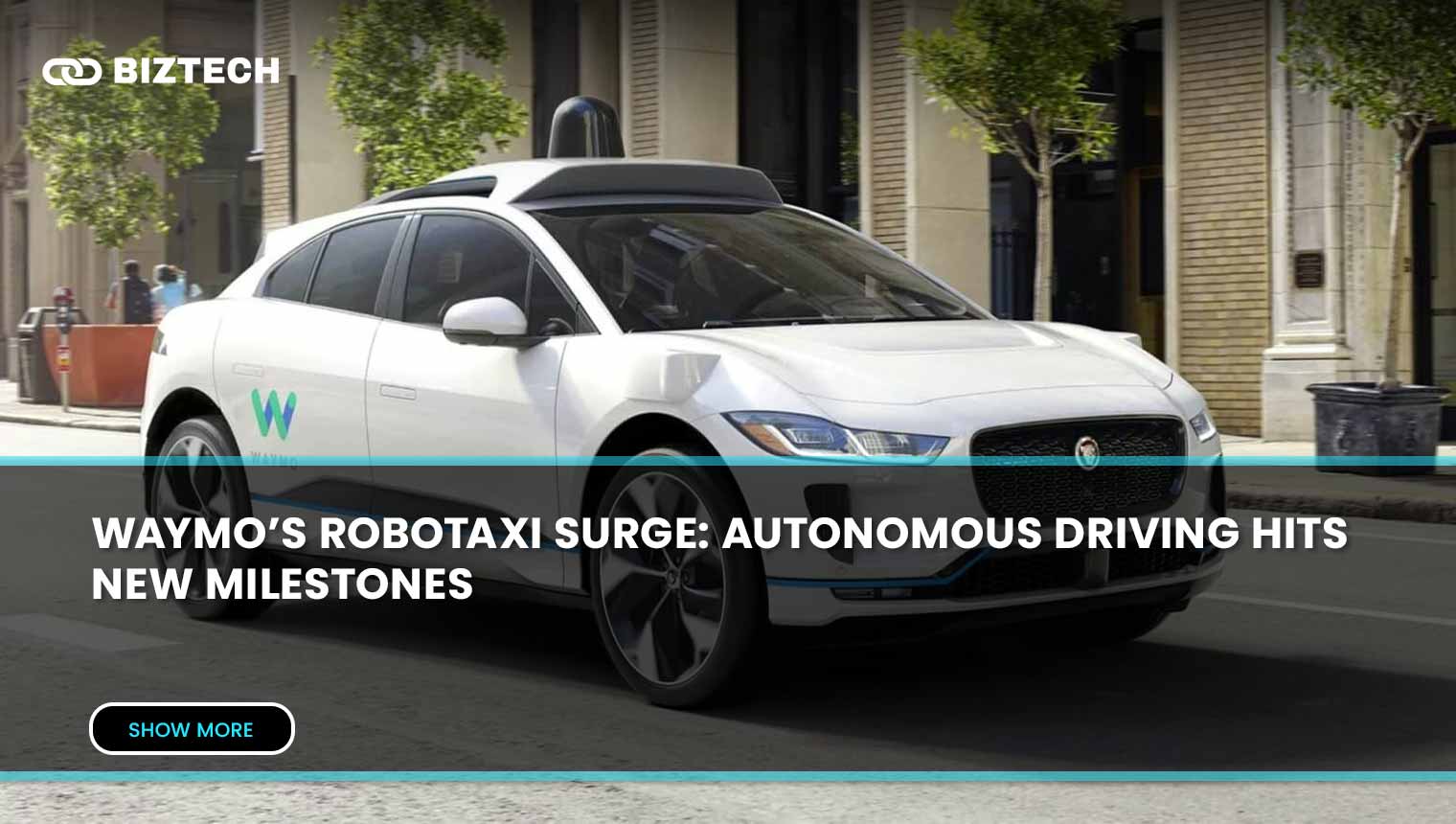
Waymo, Alphabet’s autonomous vehicle division, announced a major expansion of its robotaxi service, adding 500 new self-driving vehicles to its fleet in Phoenix, Arizona, and planning to launch services in Miami by early 2026. This follows a $5.6 billion funding round, one of the largest for a self-driving company, signaling strong investor confidence in Waymo’s vision.

The announcement, shared at a tech mobility conference in San Francisco, sparked excitement across the transportation and tech sectors, with Waymo’s valuation reportedly climbing past $45 billion. The expansion comes as Waymo’s robotaxi service hits a new milestone: over 2 million paid rides completed in 2025 alone, doubling its 2024 numbers.
Why It Matters
Waymo’s self-driving technology, powered by advanced AI and LiDAR systems, promises to reshape urban mobility. By removing human drivers, the company aims to cut costs, reduce accidents, and ease traffic congestion. Data from Waymo shows its vehicles have driven over 50 million miles with a safety record surpassing human drivers, with zero fatalities reported in its operational history. This milestone bolsters Waymo’s claim that autonomous vehicles could soon outperform traditional transport.

“This is a game-changer for cities,” said Dr. Maria Chen, a transportation analyst at Stanford University. “Waymo’s scaling up shows that robotaxis aren’t just experimental—they’re ready to compete with Uber and Lyft.” The expansion also aligns with growing consumer acceptance, with a recent survey indicating 65% of Phoenix residents are open to using autonomous rides.
Market Reactions
The news sent Alphabet’s stock up 3% on July 2, reflecting optimism about Waymo’s contribution to its parent company’s portfolio. Related sectors also saw gains: LiDAR manufacturer Luminar rose 5%, and chipmaker Nvidia, a key supplier for Waymo’s AI systems, gained 2.8%. On X, sentiment was largely positive, though some users expressed concerns about job losses for traditional drivers, with one post stating, “Robotaxis are cool, but what happens to the 3 million ride-share drivers in the U.S.?”
Skeptics warn that regulatory hurdles and public trust remain challenges. Recent incidents involving competitors, like Cruise’s temporary suspension in California after a pedestrian accident, have heightened scrutiny. Waymo, however, has avoided major setbacks, thanks to its cautious rollout and robust safety protocols.
Broader Implications
Waymo’s expansion could accelerate the adoption of autonomous vehicles across industries. Logistics companies are eyeing Waymo’s tech for last-mile delivery, while urban planners see potential for reducing car ownership in dense cities. The environmental impact is also significant—Waymo’s all-electric fleet aligns with sustainability goals, potentially cutting urban emissions by 10% in operational cities, according to a 2025 study by the Environmental Defense Fund.
However, the rise of robotaxis raises ethical and economic questions. Labor unions are pushing back, citing potential job displacement, while privacy advocates worry about data collection from Waymo’s camera-heavy vehicles. The U.S. Department of Transportation is reportedly drafting new guidelines for autonomous vehicles, which could shape the industry’s trajectory.
Read also: AI Could Cut Global Carbon Emissions by Billions of Tonnes, Study Finds