Stay connected with BizTech Community—follow us on Instagram and Facebook for the latest news and reviews delivered straight to you.
Apple has unveiled the M5 chip, heralding what it describes as “the next big leap in AI performance” for its silicon lineup, with enhanced neural processing capabilities designed to accelerate machine learning tasks across its ecosystem. Announced on Monday during a virtual keynote, the third-generation 3-nanometer processor promises over four times the GPU compute power compared to its predecessor, the M4, positioning Apple to compete more aggressively in the burgeoning on-device AI market. The launch comes amid intensifying rivalry with chipmakers like Qualcomm and Intel, as consumer demand for AI features in laptops and tablets surges.
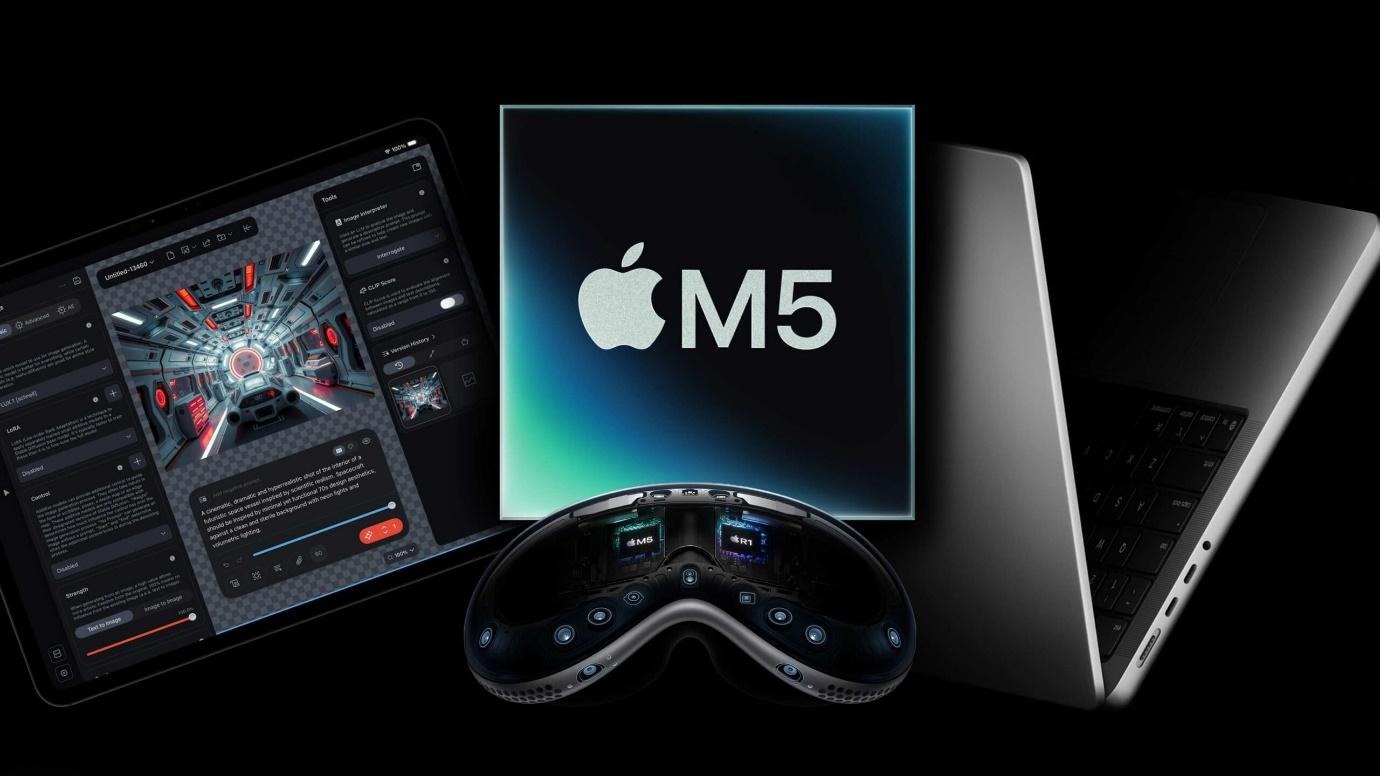
The M5, which will power upcoming models of the MacBook Pro, iPad Pro and Apple Vision Pro, incorporates a novel 10-core GPU architecture featuring a dedicated Neural Accelerator in each core. This innovation enables faster execution of GPU-based AI workloads, such as real-time image generation and advanced natural language processing, without relying on cloud servers. Apple executives highlighted benchmarks showing up to 45 per cent improved graphics performance, including third-generation ray tracing for more realistic rendering in creative applications. “M5 isn’t just faster—it’s smarter, delivering AI where it matters most, right at your fingertips,” said Apple’s senior vice-president of hardware technologies, Johny Srouji.
Architectural Advances and Performance Gains
At its core, the M5 boasts the company’s fastest performance core to date, configured in a 10-core CPU layout comprising up to six efficiency cores and four high-performance ones. Built on refined 3nm technology, it emphasises power efficiency, reducing overall energy consumption across device lifecycles—a key factor as regulators scrutinise the environmental impact of tech hardware. Independent testing cited by Apple, conducted in September 2025, demonstrated the chip outperforming rivals in industry-standard benchmarks for AI inference and graphics-intensive tasks.
Read also this: Perplexity AI Makes $34.5bn Bid for Google Chrome
The rollout extends to broader integration: Developers will gain access to updated APIs for Metal and Core ML frameworks, facilitating seamless AI enhancements in apps like Final Cut Pro and Xcode. Early demonstrations included on-device Stable Diffusion models generating high-resolution images in seconds, and enhanced Siri capabilities powered by larger local language models. Pricing details remain under wraps, but analysts expect the upgraded MacBook Pro to start at around $1,999, with shipments slated for early 2026.
This development aligns with Apple’s ongoing shift towards vertical integration, following the M-series transition from Intel processors in 2020. It also responds to market pressures: Global AI chip demand is projected to exceed $200 billion by 2027, per Gartner, with on-device processing gaining traction for privacy and latency reasons. However, challenges persist, including supply chain constraints from TSMC—the sole manufacturer of Apple’s advanced nodes—and potential antitrust scrutiny over ecosystem lock-in.
Market Reactions and Industry Context
Wall Street responded positively, with Apple’s shares climbing 3 per cent in after-hours trading. Analysts at Wedbush Securities raised price targets, citing the M5 as a “game-changer for Apple’s services revenue through AI subscriptions.” Yet, some caution overreach: Qualcomm, a key supplier for non-Pro iPhones, warned of competitive threats to its Snapdragon lineup.

As October’s tech innovations accelerate—from TSMC’s record earnings to the IMF’s global growth warnings—the M5 underscores Apple’s bet on AI as the next computing frontier. With pilots for enterprise AI tools already underway, the chip could bolster Apple’s position in sectors like healthcare diagnostics and creative industries. For consumers and creators, it signals a future where powerful AI is as ubiquitous—and efficient—as the devices we carry.